The Climate Compatible Growth Transport team (with Fatima Afifah, Ph.D., Festival Godwin Boateng and Juan Pablo Orjuela) were in Accra, Ghana, as part of our “Access in Motion” (AIM) project. James Dixon from that team, shares his experience.
We were joined by Kwame Nkrumah University of Science and Technology, Kumasi (KNUST) represented by Charles Adams, Gift Dumedah, Emmanuel Dzisi, and Mary Amoah.
The project was made possible by CCG’s Southern Partner research funding (SPF). In this project, the team are working to develop an open transport model to assist urban transport planning in Ghana, with a direct link to whole energy system-scale modelling vis-à-vis CCG’s Data-to-Deal framework.
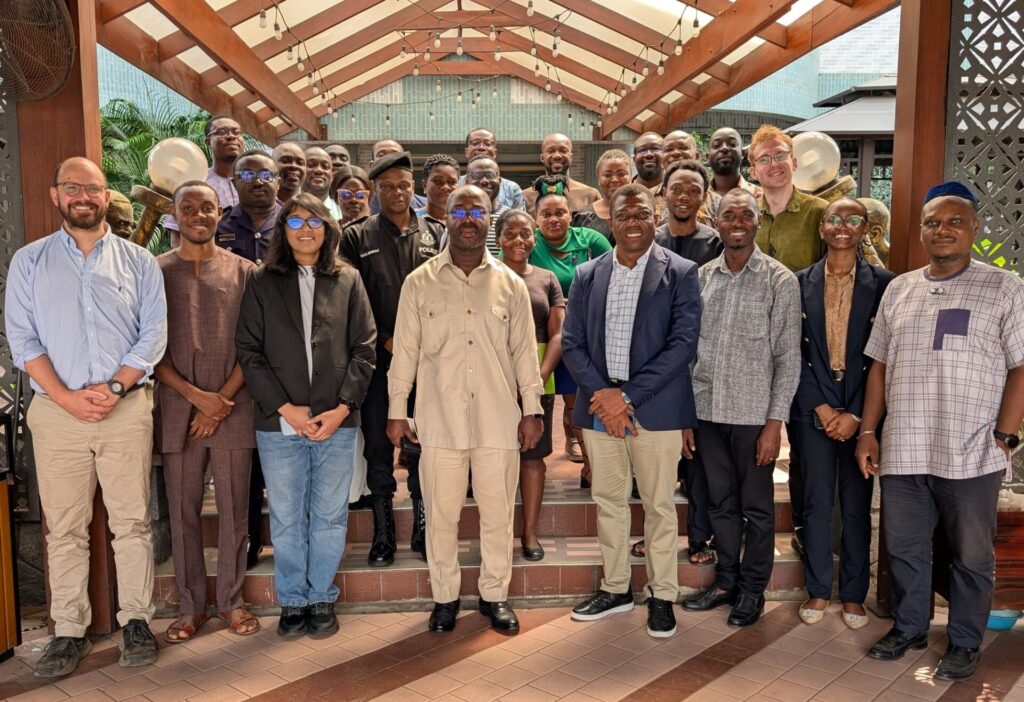
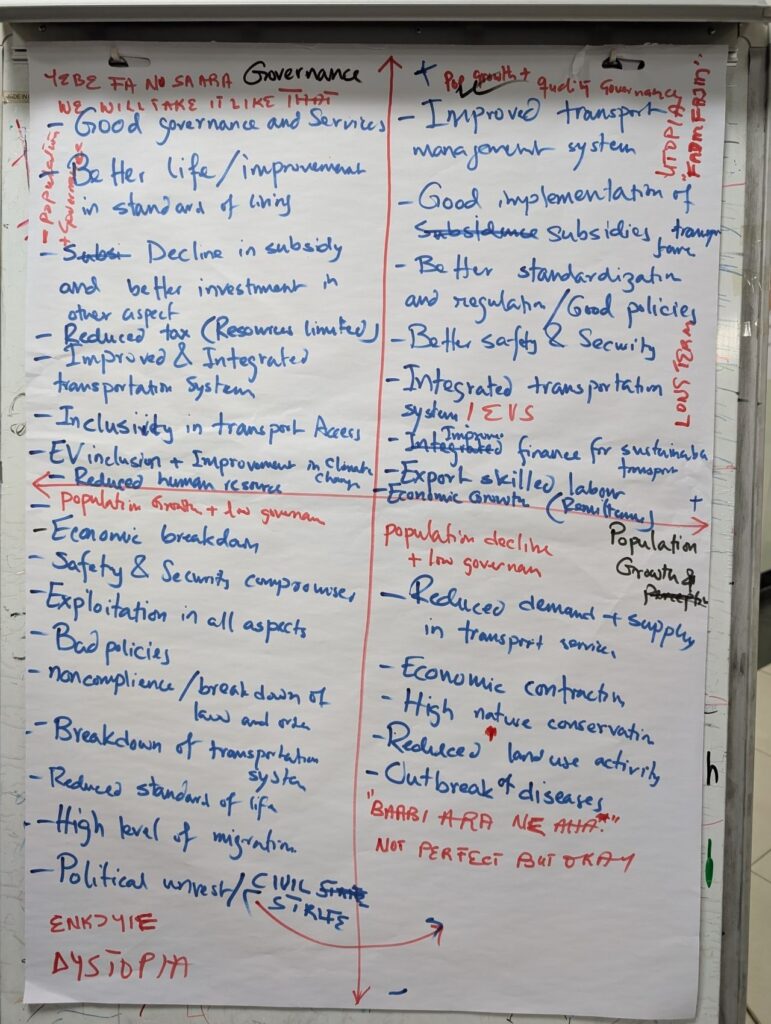
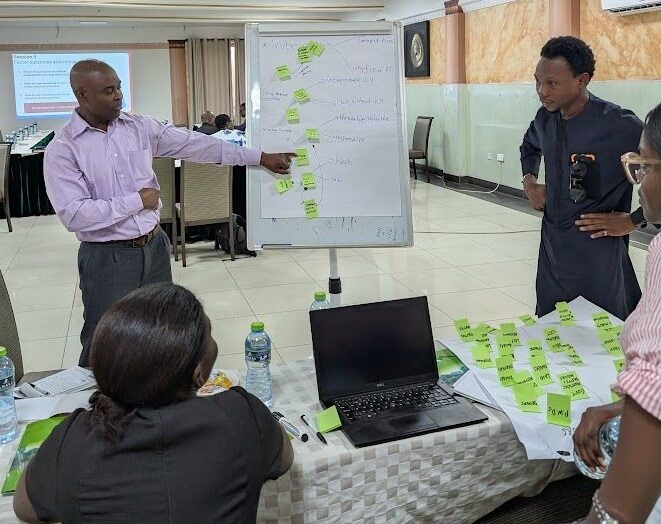
The first stop on this visit was a transport futures scenario development workshop, with government officials, NGO representatives, academics and commercial companies.
I’ve done scenario development exercises before; they’re a crucial part of data collection, in that expert stakeholders can apply their knowledge and imagination in developing future pathways to feed into the modelling. This informs desirable policy/project/investment pipelines whilst remaining rooted in existing government commitments.
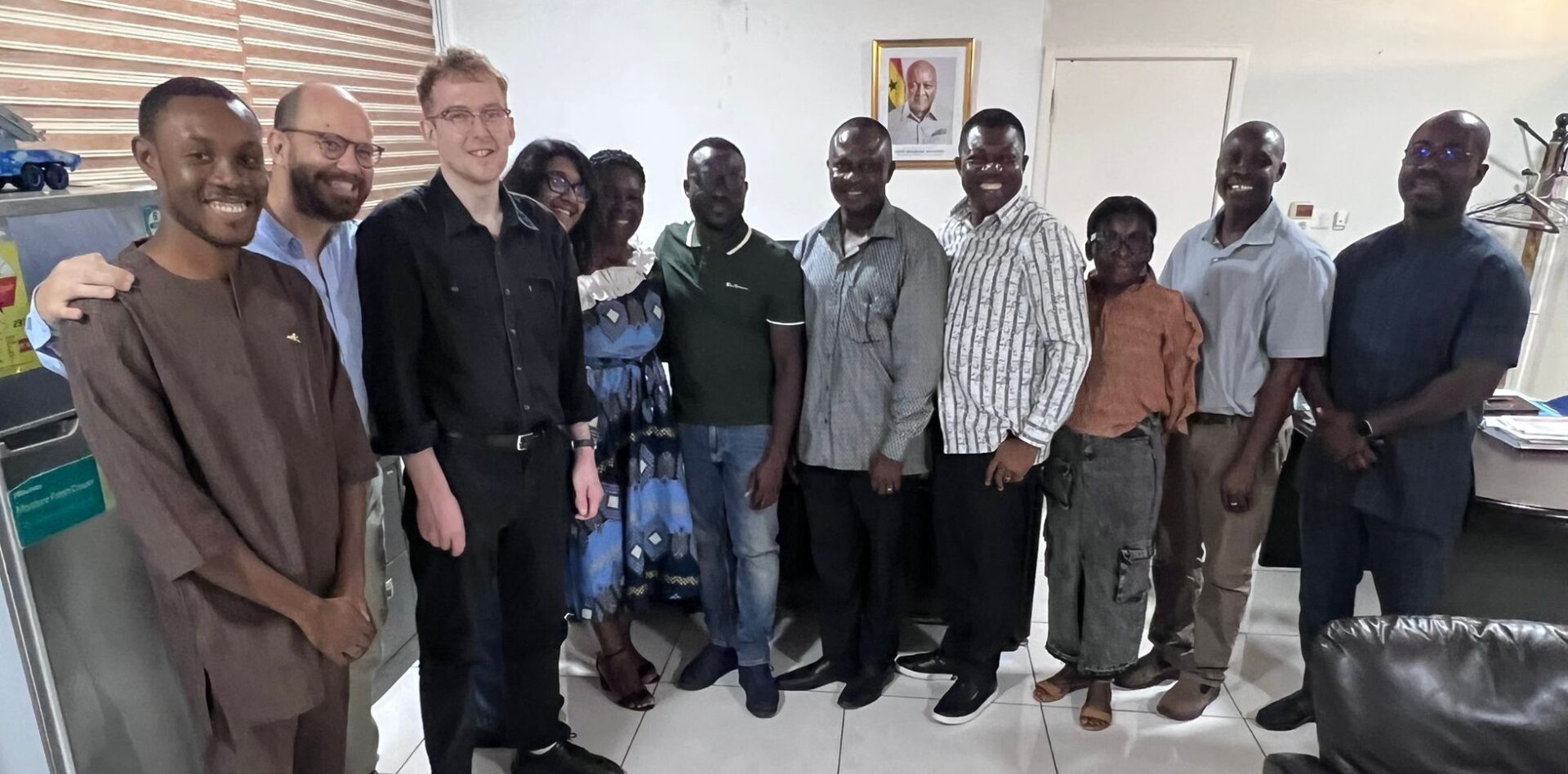
This was a particularly successful event, with direct engagement from the Ministry of Transport and several other national and sub-national government agencies.
This time though, it was different!
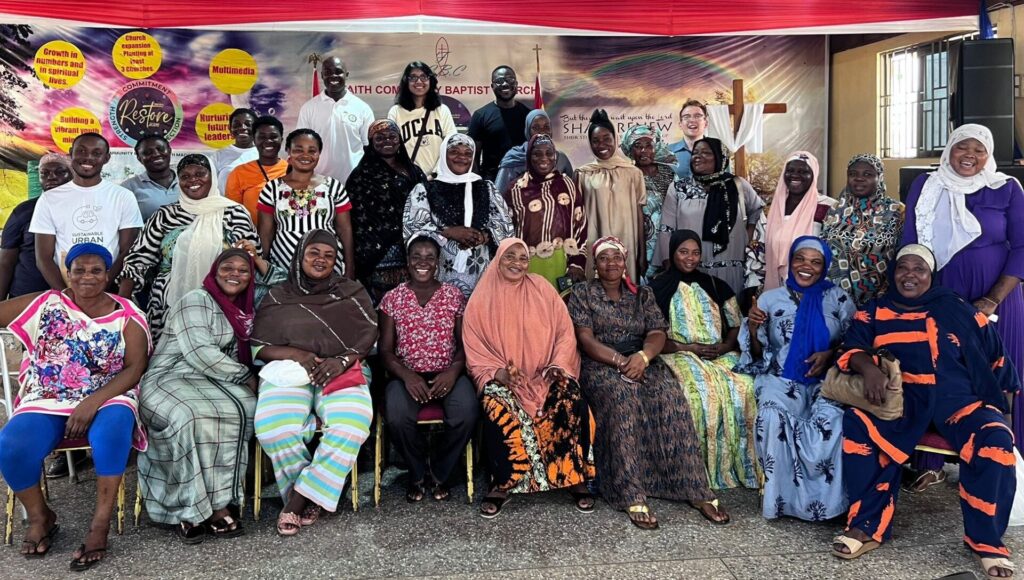
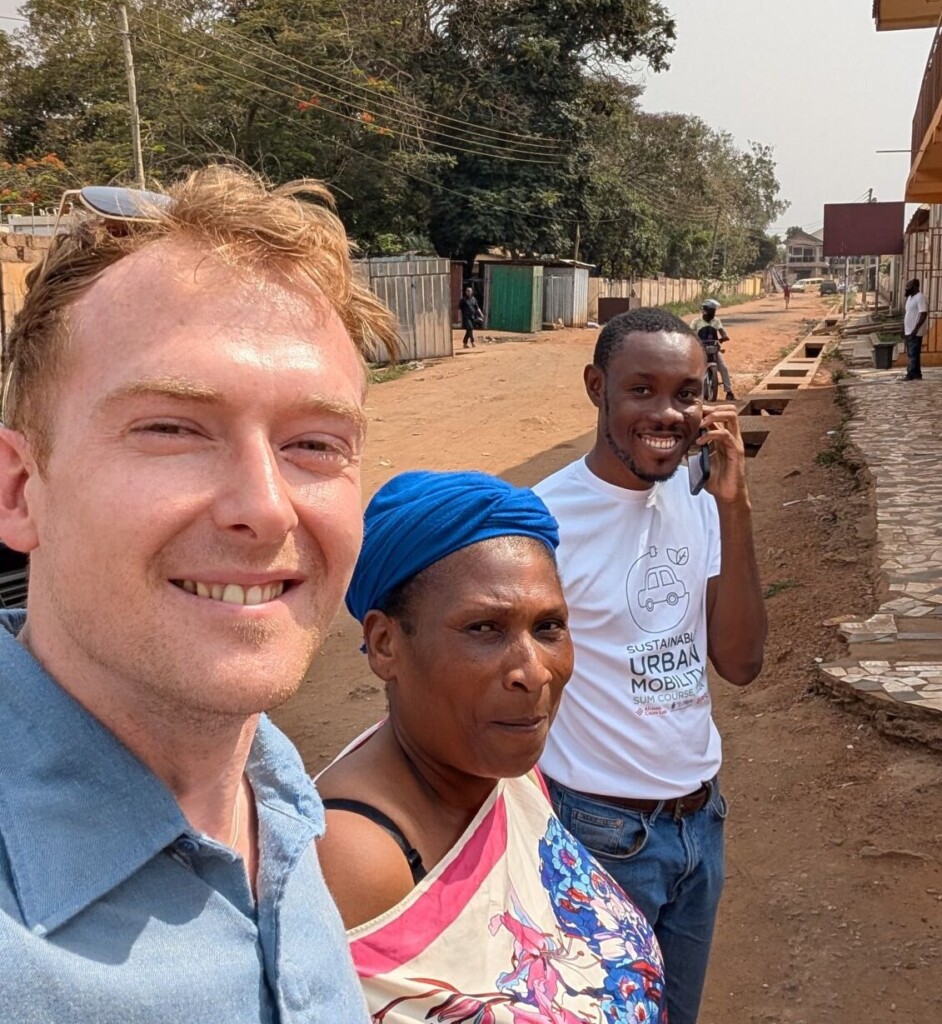
In addition to this workshop, we ran two workshops in Madina and Kaneshie (organised by the excellent Festival Godwin Boateng, Mary Amoah, Juan Pablo Orjuela, Gift Dumedah and Emmanuel Dzisi).
These explored the everyday mobilities – and barriers thereof – of low-income women in those areas.
Of course, women make up half the population, but it doesn’t take much time spent in transport planning to know that (particularly low-income) women’s mobilities are generally sidelined in a system designed for peak-time commuter, business/employment-centric travel demand.
As part of the AIM project, we’re looking to bring these worlds together with GEDSI transformative modelling – informed by our recent collaboration (https://lnkd.in/ez6957BV) with Marissa J. Bergman of UCL. This will widen the discourse around inclusivity in transport planning, and the implications of this on energy demand, emissions and climate financing. It’s a difficult question and we don’t claim to have the answers yet – but watch this space!
Many thanks to everyone involved – but particularly to i) Deputy Chief Director Daniel Essel, for hosting us at the Ministry of Transport and contributing directly to the project, and ii) the women who gave up their time (on a Saturday!) to come and speak to us about how they get around in everyday life, and what needs to change.