
12 November, 14.45-15:45, SDG Pavilion, Blue Zone
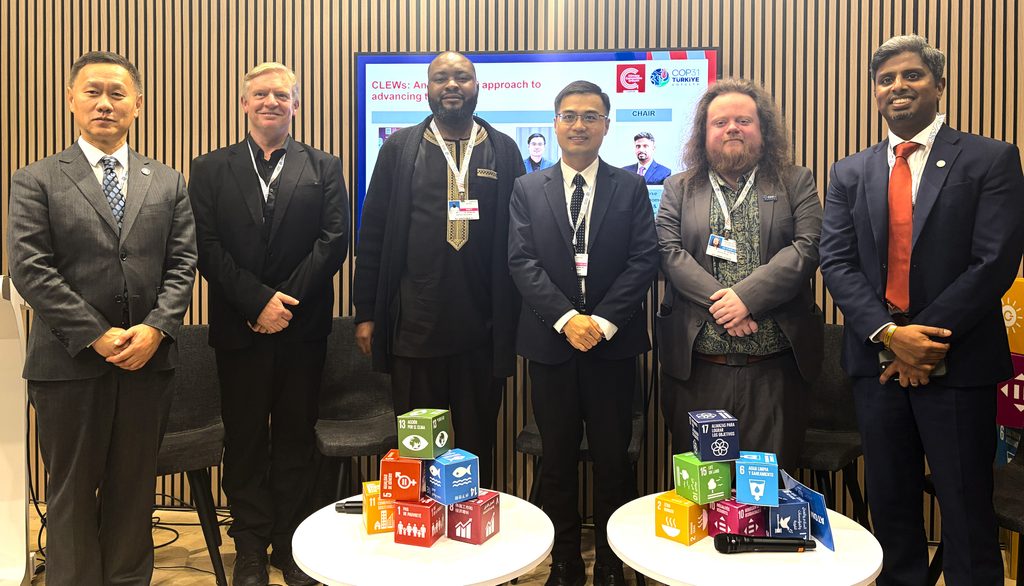
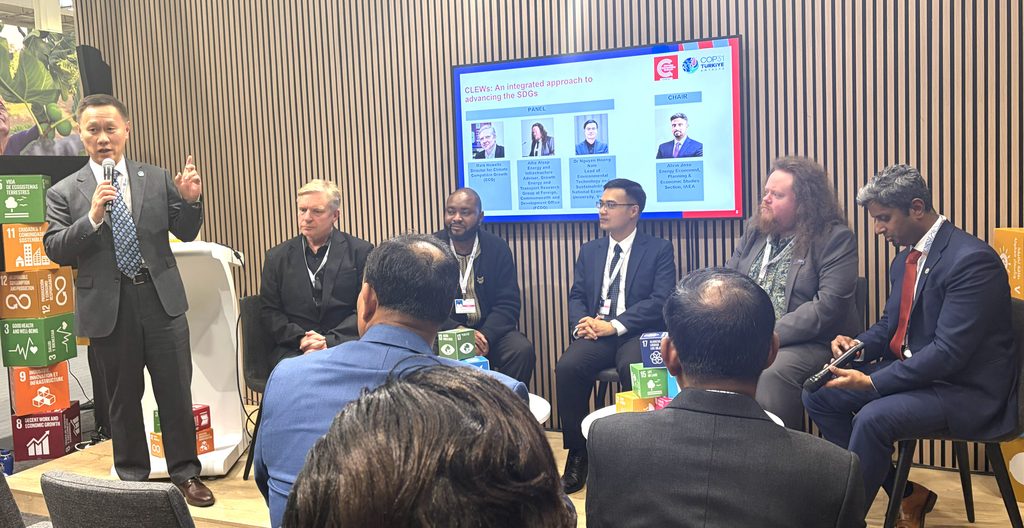
Hosts: CCG & IAEA with Mark Howells (Keynote Speaker), Clement Sichimwa (Panellist), Nguyen Hoang Nam (Panellist)
Mark started by explaining CLEWs++. Türkiye is presented as a successful example of implementing CLEWs++. This model is co-created and developed by the Turkish government, and it is used to develop the LTSe and NDC. It also supports development of the BRIDGE where they build local capacity for national planning and mobilising finance. Mark continues to share CLEWs++, which the audience seems to be very engaged with. CLEWs++ as an open-source tool with free courses allows building local capacity in governments, and connecting economy-wide GHG modelling.
The panel explores country experiences in using CLEWs.
Nam: Thanks to CCG and UNDESA in supporting capacity building in the ministries and parliament in Vietnam. They recently merged the Ministry of Agriculture and the Ministry of Natural Resources and Environment into one ministry, and they are using CLEWs. Next year they will have a project using CLEWs with deep involvement of in-house experts to develop a strategy to 2045 (Long-term strategy). Capacity building made this happen. They are also exploring using the tool with the Ministry of Water Management and the Department of Climate Change (for this one particularly for the finance plan for NDC 3.0).
Clement: Their experience with CLEWs derived from a situation of no choice. They were facing a drought, and CLEWs appeared as a platform that bridges the needed sectors. Now they are using CLEWs to model different sector scenarios. CCG was introduced to Zambia in 2022, and in 2023 they were introduced to open-source tools including CLEWs. They trained the first cohort of government workers to use OSeMOSYS at the time the drought happened, followed by CLEWs, so they think of it as a tool that integrates the different sectors, which is exactly what they needed.
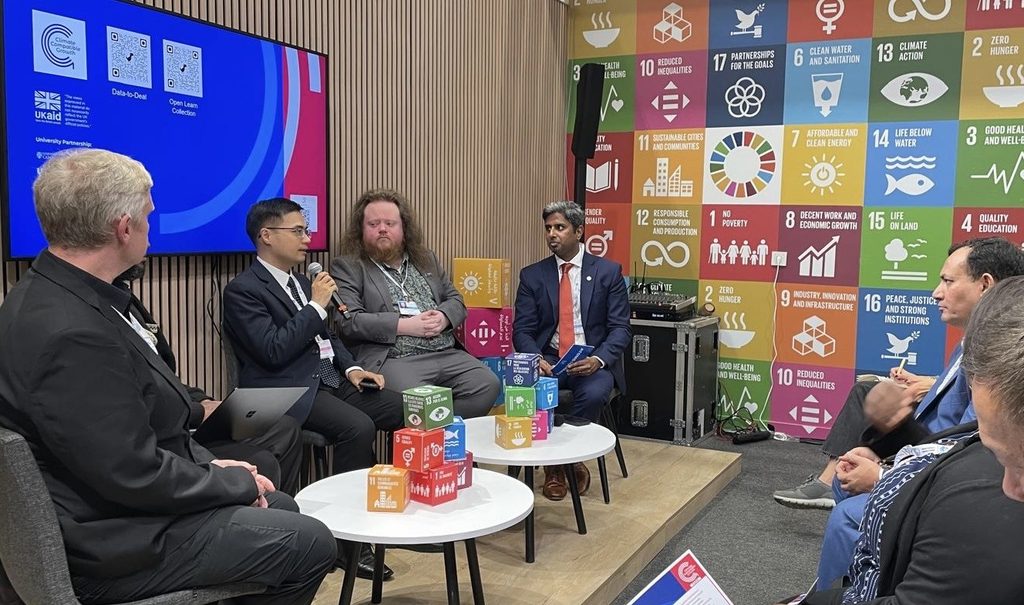
Mark said that having the big picture of the entire country helped to mobilise finance as it provides an integrated overview and evidence. The Panel then explored where CLEWs sits in country planning.
Nam: Within the Ministry of Agriculture, for example, it helps understand rice production and water management. The pattern of climate change is also within the Ministry of Environment, so they’re taking specific models of rice, etc., to showcase what CLEWs can do and connect it to others.
Clement: In Zambia, it sits in the centre of research and they have trained people now ready to take on the tools.
Alfie: The graduates from universities are empowered with tools such as CLEWs and ready to work in ministries as champions. On behalf of FCDO, one of the big selling points of CCG is the intent to ensure there is capacity in institutions within partner countries to make decisions better and faster with local capacity / experts.
The Panel then explored how to ensure sustainability of the capacity.
Nam: They develop Master’s programmes in energy modelling using CCG courses and CCG’s set of tools. The programme aims to build an interdisciplinary programme where these tools are used to learn. It began with integrating FinPlan and CLEWs in curricula. The programme also provides short courses for government staff and young academics. In Vietnam, top universities are working very closely with the government for implementation plans. They also train government staff. This creates a stream of in-house experts which brings long-term value.
Mark: Government and priorities do change, but if the knowledge and skills exist in academia or research institutions, then the new government can pick this up, which increases the chance of longevity. Even if governments have quick turnover, it is great to invest in local universities and research labs as it often can help steer the boat instead of following the change. Although there is no silver bullet, we can still figure out a direction for the future.
What do you want to see in the next 2-3 years?
Alfie said he would like to see building capacity in local institutions and government to ensure longevity.
Nam hoped that CLEWs will be well known in Vietnam and absorb local experts.
Clement aimed for longevity and integrated efforts, as governments often work in silos.
Mark added: This is all driven by champions and organisations; credit to them, and people in CCG who developed this and many partners that helped.
Wei Huang (left) closes, acknowledging CCG’s success and how it is a great demonstration of how to apply and disseminate these tools.