In this article, Hannah Luscombe introduces a brand new, free, open-access course on Data-to-Deal, hosted on The Open University’s OpenLearn Create platform. It will teach governments and practitioners how to turn climate ambition into bankable, implementable investment plans.
Many emerging and developing economies have strengthened their climate and energy transition strategies in recent years. Yet translating these strategies into investment on the ground remains a persistent challenge. The missing link is often the connection between planning, policy and finance. Without these elements working together, ambitious strategies can struggle to attract capital and move into implementation. Climate Compatible Growth’s new Data-to-Deal (D2D) course explores how to close this gap.
Unlike many of CCG’s courses, which focus on modelling tools, this course provides a qualitative framework and practical guidance on how countries move from climate plans to finance.
From Data to Deal
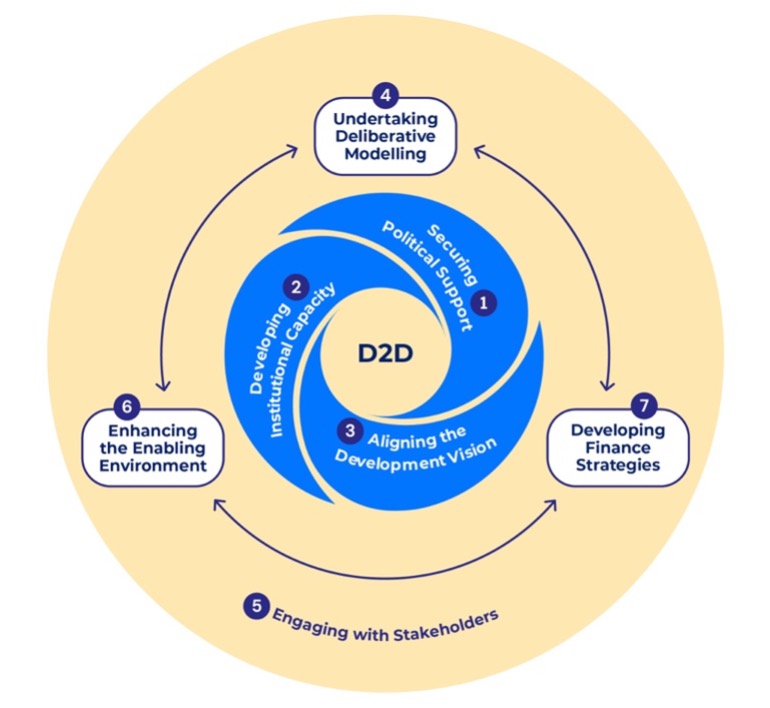
The course is built around the Data-to-Deal framework, which has so far helped to secure around $11 billion for the countries that have used it. D2D distils lessons from real-world country experience into seven interconnected components:
Politics, Capacity, Vision, Modelling, Engagement, Policy and Finance.
Rather than a theoretical framework, D2D draws on close observation of and participation in national climate and energy planning processes. It identifies the elements that help countries move from setting ambitions to developing investment plans and mobilising capital.
Together, the seven components provide a practical framework for understanding how governments can turn climate commitments into fundable projects and programmes.
Who is the course for?
The course is aimed at public officials in ministries of finance, environment, energy, transport and planning. It is also designed for practitioners and development partners who support governments in developing and financing climate investment plans. No technical background is needed.
Whether you work directly on national climate planning or support countries in mobilising investment, the course provides a structured introduction to the processes, institutions and tools that help align all the essential elements needed to make a project investible.
What will you learn?
The course examines the practical challenges countries face when developing and financing their climate transition plans. It addresses the following questions:
- What political leadership and institutional arrangements are needed to coordinate a national transition?
- How can governments build the capacity to develop credible investment plans?
- How can long-term climate ambitions be translated into a costed pipeline of projects?
- How can modelling inform investment priorities and financing requirements?
- How can governments engage investors and development partners more effectively?
- Which policies and financing mechanisms can help make projects financially viable?
Across the seven components, learners explore how decisions on planning, policy and finance interact, and why progress in one area often depends on action in others.
Learning from practitioners and country experience
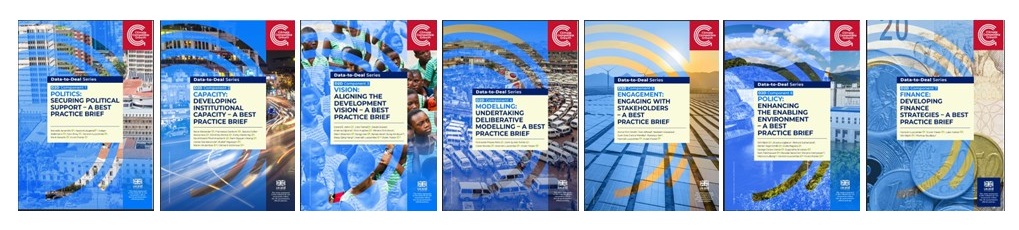
The course draws on expertise from across government, academia, international organisations and the climate finance community. It builds on the seven D2D Guides launched at COP30, which brought together more than 50 named contributors from institutions including UCL, Imperial College London, the University of Oxford, the World Bank, UNDP, IRENA, the International Atomic Energy Agency and the 2050 Pathways Platform, among others.
The course brings this expertise directly into each session, through video interviews with practitioners and officials, alongside case studies from 19 countries. These explore different aspects of the D2D framework, from political leadership and institutional capacity to modelling, policy development, stakeholder engagement and financing.
Country case studies span Africa, Asia, Europe and Latin America, with examples from Brazil, Chile, Costa Rica, the Democratic Republic of the Congo, Ecuador, Eswatini, Georgia, Ghana, India, Kenya, the Lao People’s Democratic Republic, Peru, Senegal, South Africa, Togo, the United Kingdom, Viet Nam, Zambia and Zimbabwe.
Together, these contributions and case studies connect the framework to the realities of national climate planning. You can explore how countries have approached these challenges, hear directly from practitioners involved in the work, and consider how the lessons might apply in your own context.
What’s included?
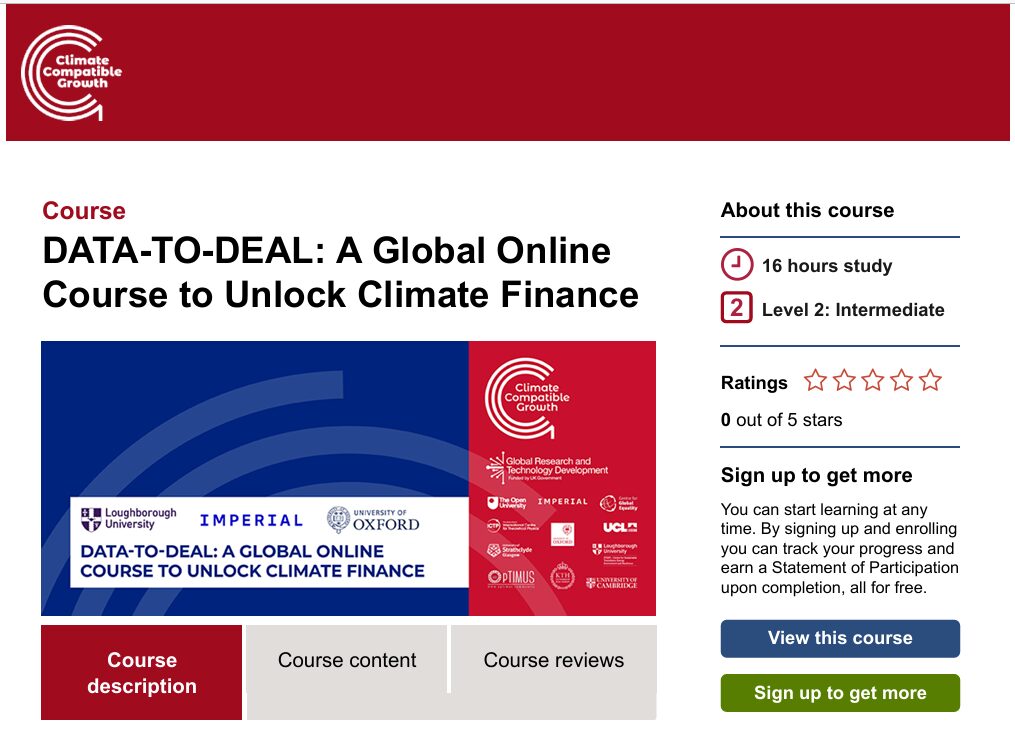
The course takes approximately 16 hours to complete and includes:
- An introductory lecture and seven lectures covering the D2D components
- Video interviews with practitioners and officials on how the framework is applied in practice
- Seven hands-on exercises
- Quizzes after each lecture
Learners who complete all lectures and exercises and achieve an overall quiz score of at least 70% receive a certificate of completion.
The course is free and self-paced, allowing you to work through the material around your existing commitments.
Why this course matters
Countries need more than climate ambitions to mobilise investment. They need the institutional capacity, technical evidence, coordinated policies and engagement with financiers to turn those ambitions into credible investment plans.
As countries update their nationally determined contributions (NDCs) and seek to mobilise finance through multilateral development banks, climate funds and other sources, the ability to develop and implement these plans is increasingly important.
By making the D2D framework freely available through OpenLearn Create, CCG aims to give governments and practitioners a practical basis for tackling these challenges. Finance is the missing piece for many climate projects, and this course directly addresses this crucial issue.
Start learning today
Data-to-Deal is now live on OpenLearn Create. It is free, self-paced and open to all.
Take the course: https://www.open.edu/openlearncreate/course/view.php?id=16936
Read the briefs: https://climatecompatiblegrowth.com/data-to-deal/