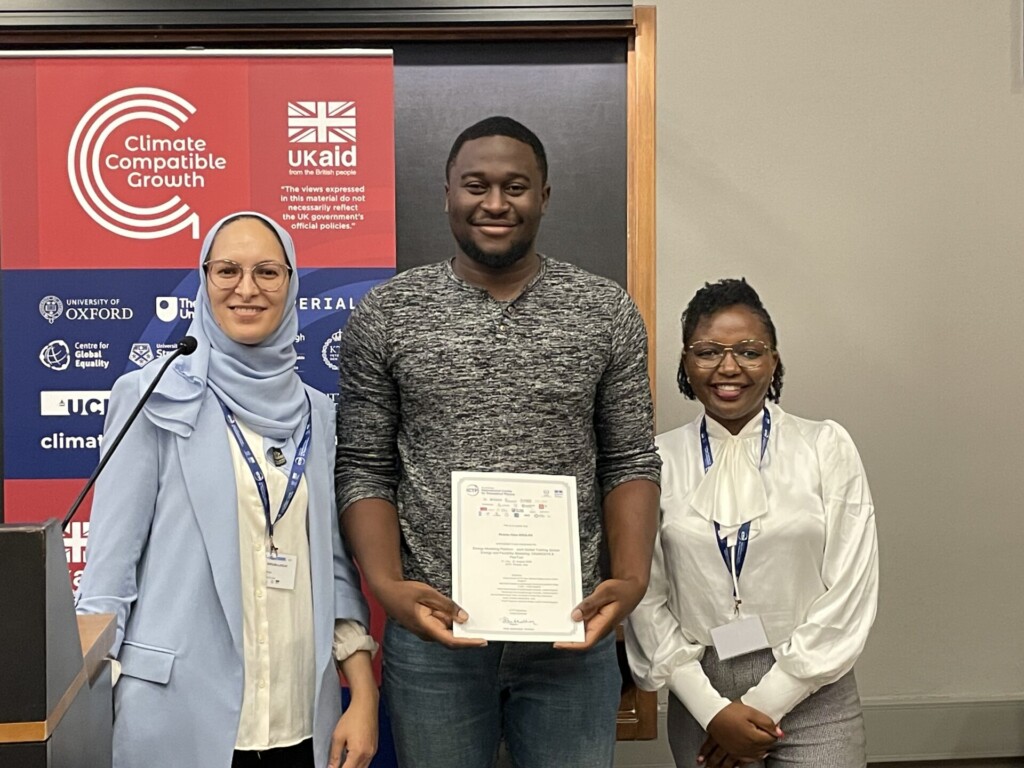
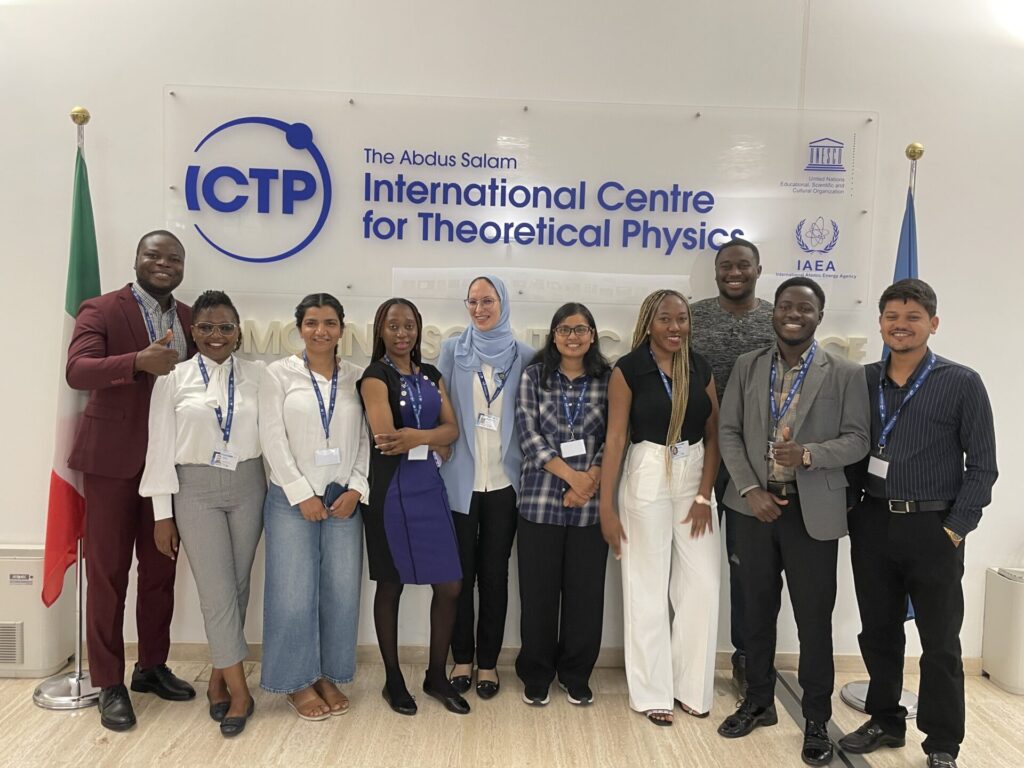
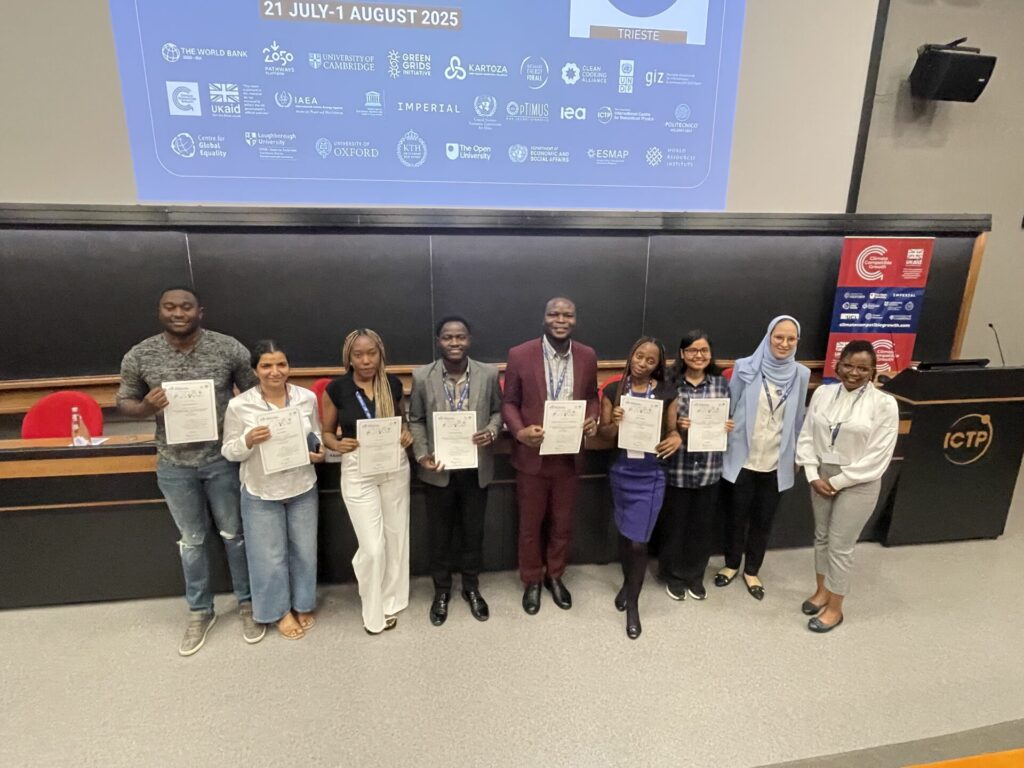
Eng. Museta Daka Mbulwe is aRenewable Energy officer specialising in Solar, Wind and Geothermal technologies, at the Ministry of Energy in Zambia. He recently attended the EMP-Global at ICTP where he followed the OSeMOSYS track. Here he talks to CCG’s Peter Allen.
What is the main focus of your Ministry at the moment?
It’s ensuring that we have an enabling environment for the private and public sector to develop energy projects and also, ensuring security of supply of electricity for the nation. Our focus is on driving policy reforms that will make this vision a reality and ensure sufficient energy supply to meet the growing demand. Mainly we have targets in solar and wind and we have made some quite remarkable progress in the solar sector. We are still doing some feasibility studies with the private sector on wind. This is a little slower because of the logistics issues around getting the turbines to land-locked Zambia. We’re trying to understand which types of equipment would overcome this.
We also have a few companies that have expressed an interest in geothermal. One very interesting project we have at the moment is the Kalahari geothermal power plant in Monze Southern Province. It’s going to be a pilot project of 250 kilowatt plus, with a view to upgrading it depending on resources.
Finally, we also have mini hydro (Run Off River) plants around the rivers in the northern part of Zambia. We have some feasibility studies from a few years back which we’re now updating so that they can speak to the changes that we’ve made in the energy sector, such as the Open Access scheme and the Grid Code that we’ve had since 2008 which was updated in 2021. This code changed the requirements around connections, frequency, voltage regulation and types of technology.
Your particular role involves off grid renewable energy solutions, energy modelling and sustainable policy reforms. Do you focus on each of those areas equally?
Yes, it’s equal though I’m focusing mainly on solar projects at the moment. my primary focus is on solar energy projects, particularly off-grid solutions implemented through partnerships with UNICEF, the World Bank, and UNDP. These include solar-for-health initiatives designed to electrify rural health posts in remote, hard-to-reach areas with solar systems of up to 10 kWp, supported by battery storage. I am also currently serving as the focal point for the GET FiT Zambia project, which targets the deployment of 120 MW of solar power. This project is funded through bilateral aid from the German government to the Government of Zambia, with approximately €40 million in grant aid dedicated to technical assistance and the development of standardized project documents such as the Government Consent Agreement (GCA), Power Purchase Agreement (PPA), and Implementation Agreement (IA). A key achievement has been the standardization of these documents, making them applicable not only to solar but also to other renewable energy projects such as mini-hydros. In addition, we have developed a new Grid Connection Agreement aligned with the amended Grid Code, in collaboration with the Energy Regulation Board.
What kind of factors are you aiming to standardise in your documentation?
We are working towards establishing a benchmark for solar energy pricing. In recent cases, developers of potential generation projects have expressed interest in selling electricity to ZESCO at their proposed tariffs. However, following detailed calculations, we found that the sustainable tariff level differs from these initial proposals. Our current focus is therefore on creating a pricing range that will serve as a reference point, enabling companies to model their projects within this band and ensuring both commercial viability and affordability.
So they know that price range from the very beginning and they’re able to adjust their project to still make it profitable for them and good for you.
Exactly. That will save a lot of work and inconsistencies in pricing in future.
How has your experience at EMP influenced your professional approach?
Policy can either take a structured approach or a political approach. If, for example, a Minister announces a new project, our response to that can be data-driven. If you know the Minister wants 500 mw, then you’re able to model that into projects like Power Factory and all the other options we are considering, and see how much it would cost and whether it’s sustainable.
The only way to know where this 500mw is coming from is through software with the data that we’ve been given. With my training, I can see the targets and translate them into financing the actual variable cost of energy, the cost of the power plants and everything else in OSeMOSYS. Before, we would have had to wait for the private sector to propose something but now with the analysis from OSeMOSYS, we’ll be able to say this is the amount of energy we need. This is the amount government is willing to put in, so how much more can the private sector provide and work together?
How much modelling experience is there in your team?
We have had a few introductory training sessions with CCG, but the way it was approached at the EMP, using our own data, allowed us to actually have that data speak to the Zambian context.
Yes, it’s a real-life project. And why did you choose OSeMOSYS?
I have been looking at OSeMOSYS for some time and I chose it because it’s open-source and we had faced challenges with data retrieval in the past with other software. But also because it gives you a birds-eye view of the entire energy sector, rather than focussing on one aspect too narrowly. If we want to, we can interact with other software like Antares or Power Factor to explore say, transmission, and feed those findings into OSeMOSYS. That’s why we chose it.
Do you have a sense of other models that you might want to use in the future? Sometimes a project can get so far with OSeMOSYS and then you want more detail on land or water use for example.
Yes, I’m hoping to get on the geospatial platform as well and get into how best this would translate to electrification because our target for universal access means 100% electrification. It would be good to see which parts of the country are best for decentralised energy projects, solar home systems, mini grids and so on. For example, one side of Zambia may be more cost effective when we use solar home systems, another side is more cost effective if we’re using biomass.
How did you find the EMP global experience? What were the things you enjoyed most about it?
I loved it when the system crashed – I just wanted to go home! Seriously, though, being able to interact with the people who have defined these models and have done research with them was a great experience, really eye-opening.
I noticed from your LinkedIn profile that you studied solar energy technology for your bachelor’s as well. Where did that interest come from ten years ago?
Actually, my interest stemmed all the way from primary school. I was part of what we called the Junior Electricians, Technicians and Engineers Club – JETs. We were able to get into projects like simple food warmers, simple electric motors and everything else powering up bulbs from lemons and so on. I was part of JETs from my fifth grade, all the way to my high school. So, I graduated my O level certificate, and I went all the way to the provincial competition where I came second with a simple food warmer I designed. From there I said I think it’s best that I continue on the energy side, but focus more on solar. Solar was really growing even at that time – renewable energy isn’t actually that new, it’s one of the oldest sources of energy ever.
One or two people I’ve spoken to have said that a big challenge now is with implementation; that perhaps some of the energy projects do not strike a big enough chord with government ministers to make them be implemented. Governments have lots of different priorities to balance, and they only have so much money. How do you feel that the story could be told better?
Currently we are telling the story with the few projects we’ve implemented starting from close to only 1MW worth of solar, (which was actually a pilot project), and now we’re all the way up to 300 MW with a target to reach 1000MW by end of 2025.
We recognize that the journey has not progressed as quickly as we had hoped, largely due to limited political buy-in for solar and renewable energy in the past. However, with the recent directive from the highest office—the President—there has been a decisive shift in support, creating a stronger foundation for advancing these initiatives
Now we’ve been able to deliver the benefits to justify the investment. So we’ve brought in carbon offsetting, we’ve reduced environmental impacts and people are able to see that when you do solar, it’s not just about the income that you’re getting from selling power but also about how much they’re able to gain by producing energy with us and trading on the energy market. This is mainly because of the reforms we’ve put in the energy sector such as Open Access.
How have people’s day to day lives improved with the availability of electricity?
We have had a couple of amazing stories from clinics and from schools. Where we did these installations with our cooperating partners such as UNICEF and USAID, people have been able to use electricity productively and generate income. This income is used for the sustainability of the projects themselves because the electricity is affordable. Before, we would hear people say that solar is expensive, the technologies are not yet mature and so on. But now that they can buy electricity at a certain affordable price and use it in rural areas such as food production, there’s irrigation and there’s farming, so they’re able to make income. This income is able to sustain their lifestyle. The mini grid is benefiting them, and everybody is benefiting from the community economy.
Recognizing this impact, the government has taken steps to further enable growth in the sector by deregulating mini-grids. This shift replaces the previous complex licensing procedures with a light-handed regulatory approach, focusing instead on quality assurance, equipment standards, and basic environmental inspections. We’ve had an overwhelming expression of interest and a huge number of feasibility studies done by the private sector. So we are hoping that by the end of year, we will see maybe 30 to 50 more mini grids that have been developed by the private and public sector.
Excellent news. What would you like to see happening regarding clean energy in Zambia in the next five years?
Number one would be getting our project for mini hydros all implemented. I think we have so much potential with the mini hydros. We have one called Zengamina up in the northern circuit and it’s able to service a very large community. And we have close to 20 potential sites on the northern side. Imagine if we are able to implement all these twenty. That would give us base load and then we’d be able to infuse solar, then we’re able to expand the grid and we’ll be able to interconnect with Eastern Power pool and also the Southern power pool thus bringing to reality Zambia’s goal to be a major electricity trading hub in Africa with interconnectors spreading from the north to south. Connecting these two power pools is one of our major priorities. And if money wasn’t a problem, I would say focus on interconnection, regional trade, and then move into exploring more ways of introducing geothermal power as a baseline for us to introduce more solar instead of going to fossil fuels such as coal, for us to be able to uptake that solar. For grid stability, we rely on geothermal energy as a baseload source instead of coal, while carbon offsetting and additional renewable sources, including solar, can feed into the system. This combination ensures sufficient stability to sustain the grid reliably.
Another thing I would like to see is to have this modelling culture introduced into our curriculum, such as electronic engineering degrees, because most people come out of university and their focus is on the Power Factory or designing solar systems. They don’t know about OSeMOSYS or OnSSET, CLEWs etc that are very important for that intersection in the energy sector, because energy is everything. It’s cross-cutting; it goes into agriculture, it goes into education. So how best to bring in that type of CLEWs modelling that would be good for our universities or our trade schools where people are hands-on.
Yes, that’s interesting because it is part of our approach to encourage universities to include energy modelling modules in their curricula and we’re doing that in Kenya through Strathmore University. Several other universities are talking to us about it or have taken it up. We are going to be publicising the Flatpack curriculum more in September so watch this space.
Thank you so much for your time, Museta.