
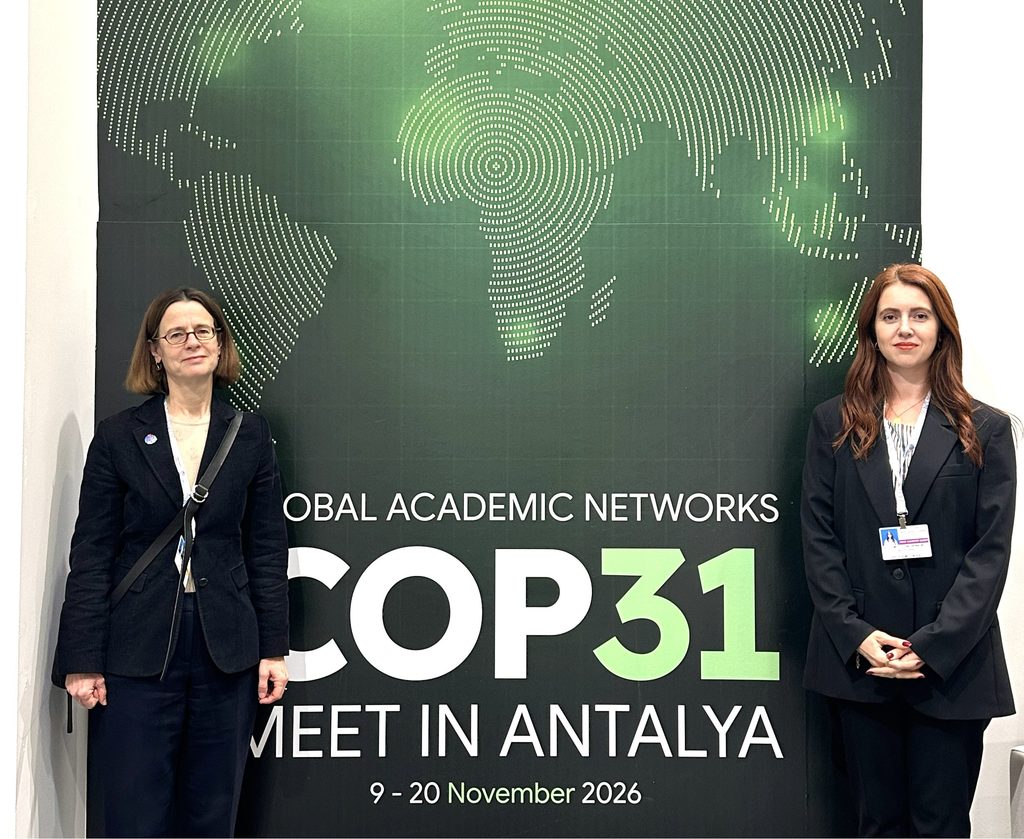
Tuesday, 10 November, 10.30-11:00, Türkiye Academy Pavilion, Blue Zone
This event was hosted by Türkiye’s Council of Higher Education (YÖK)
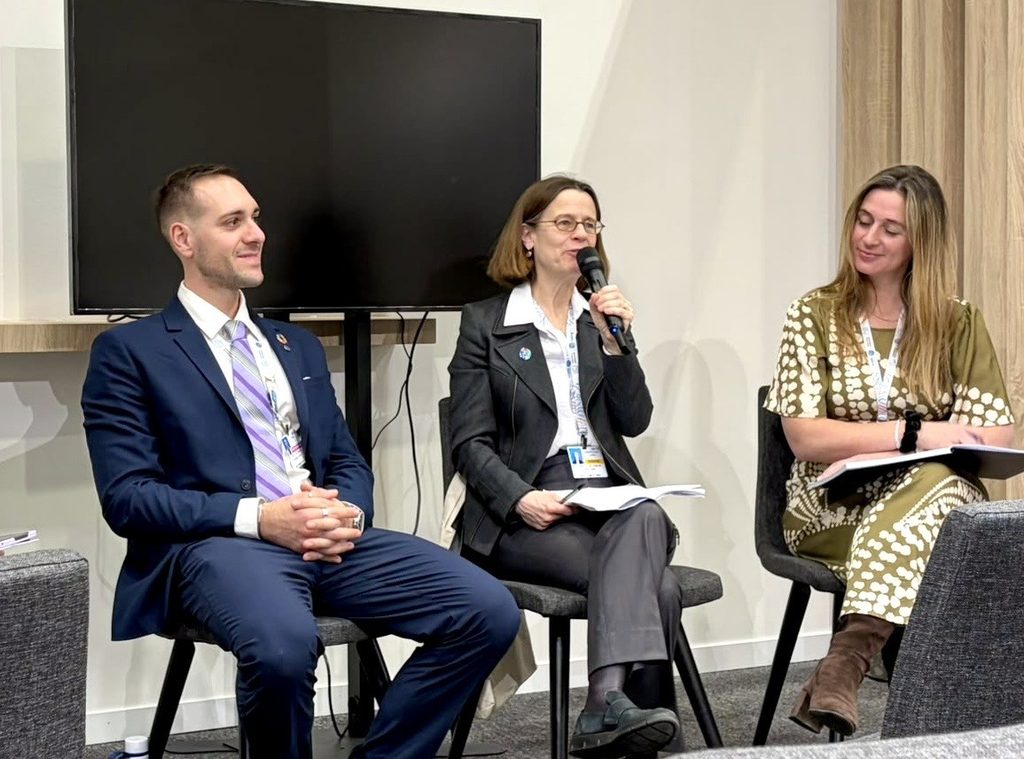
The discussion focused on CCG’s work with universities and policymakers, including open-source modelling, shared data, the Data-to-Deal framework and tools for assessing whether energy transition plans can be financed. The discussion also covered how countries can use energy research to make decisions about national strategy and investment, as well as two applications with different investment challenges: transport electrification and electric cooking. CCG was represented by Vivien Foster from Imperial College London.
Vivien described CCG’s work to build a science–policy interface so that researchers and policymakers can work together on the questions that shape national energy strategies. Energy modelling tools give them a way to examine different pathways and make the assumptions behind those pathways visible. Universities are part of that effort too. Vivien referred to supporting academics and sometimes helping incorporate energy modelling into programme curricula. This builds a pipeline of people who can develop and apply models in their own countries and continue working with policymakers as planning needs change. She identified access to usable data as a barrier to putting that capacity to work.
Vivien mentioned the risk of analysis paralysis when teams spend too much time assembling data before they can address the policy question. CCG develops starter data kits that bring together information from different organisations and organise it for different country contexts and modelling approaches. The kits give national teams a starting point they can adapt to their own data and planning needs. The platform also serves as a practical and user-friendly data access tool, allowing users to select their preferred energy model, filter datasets by country, and download tailored data packages for further analysis.
She also pointed to the practical difficulty of sharing data across institutions. Data sharing is often voluntary, and common protocols are still lacking. Vivien described work on an interface through which organisations could share data, making it easier for national analysts and ministries to access and reuse it.
Vivien described Data-to-Deal (D2D) as a seven-component framework that CCG uses with countries. She drew a parallel with Türkiye’s Climate Implementation Bridge (BRIDGE). Both address the work needed to move from climate ambition and analysis towards implementation.
She grouped the work into two connected areas:
- Institutional and policy work. The framework includes capacity building, work with the institutions responsible for policy and meaningful stakeholder engagement. Vivien referred to modelling support for Türkiye’s work on its Nationally Determined Contribution (NDC) as an example of analytical work tied to a national policy process.
- Technical foundations and financial mobilisation. The framework connects the analysis behind a transition pathway to the work of preparing and financing investments. This involves using modelling to clarify what needs to be built and then examining how the investment can be mobilised.
Vivien noted the progress made in energy planning through least-cost optimisation. A pathway can be least-cost over the modelling horizon and still require substantial upfront investment. Its implementation depends on whether the country can raise that capital under the financing conditions it faces.
She referred to MINFin in discussing the financial feasibility of transition plans. The planning question includes how the proposed investments can be funded, which technologies should be prioritised and what mix of finance could support the portfolio.
FinTrack also came up in this part of the discussion, alongside investment cost estimates and portfolio planning.
The discussion also covered the cost of project preparation in emerging markets and the difficulty of scaling investment. A technically viable plan still needs projects prepared in enough detail for investors to assess and finance them.
Finally, Vivien referred to ongoing work in Tanzania on the costs and benefits of electric cooking. She highlighted electricity tariff design as a central consideration. Tariffs affect what households pay to cook with electricity and the revenues utilities can expect as demand grows.
She also stressed the need to assess likely cooking demand alongside the network investment required to serve it. That analysis helps determine where grid upgrades are justified and what it would cost to provide a reliable service as more households adopt electric cooking. Vivien linked this to the wider debate about how much finance developing countries need, the risks investors face in those markets and the cost of preparing projects that can be scaled.