

Host: Clean Air Task Force (CATF) Tuesday 11 November
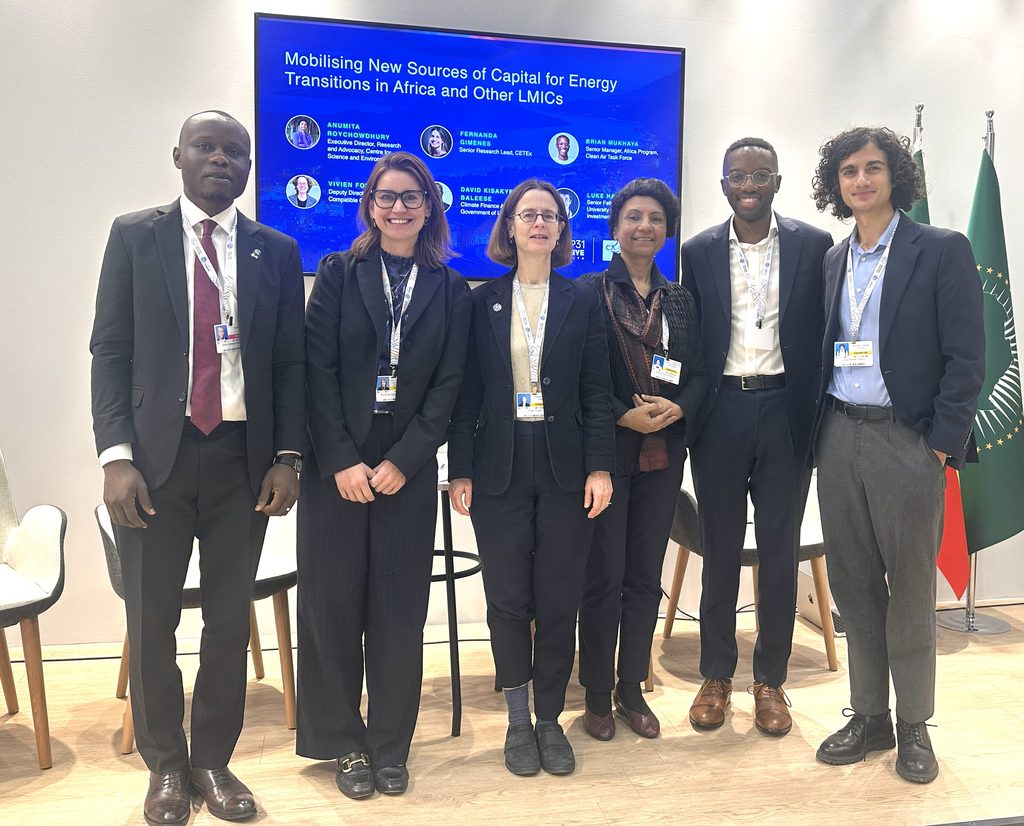
Luke Hatton – Senior Fellow, Columbia University Center on Sustainable Investments
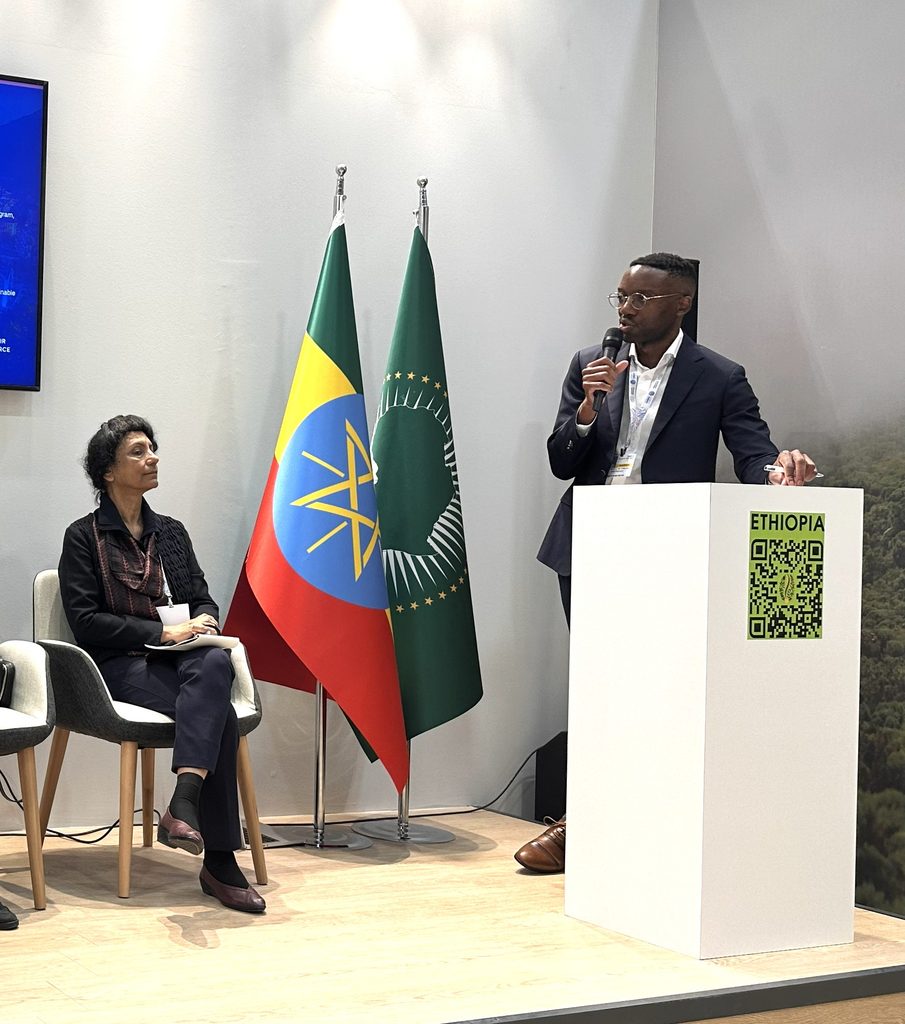
Brian Mukhaya – Senior Manager, Africa Program, Clean Air Task Force
Vivien Foster – Deputy Director, Climate Compatible Growth
Fernanda Gimenes – Senior Research Lead, CETEx
Anumita Roychowdhury – Executive Director, Research and Advocacy, Centre for Science and Environment
David Kisakye Baleese – Climate Finance Advisor, Government of Uganda
Luke opened by setting out the scale of financing needed for climate action and energy transitions, with particular attention to African countries. The USD 1.3 trillion a year by 2035 figure has two related uses: the Independent High-Level Expert Group on Climate Finance estimates external financing needs at that level for emerging markets and developing economies other than China. The Baku to Belém Roadmap uses the same annual figure for climate finance to developing countries from public and private sources. Brian then asked questions for the panellists to respond to.
Vivien Foster distinguished three broad groups within emerging markets and developing economies: BRICS++ economies, other middle-income countries and low-income countries. She compared the scale, tenor and quality of financing available to them.
Some larger emerging economies have domestic capital markets deep enough to finance a substantial share of their energy transition. In lower-income countries, banks may have less long-term funding available and charge more for it. Pension funds and insurers hold domestic savings, but regulations and investment practices can concentrate that capital in government securities and real estate. Local banks also need the expertise to assess projects using unfamiliar technologies.
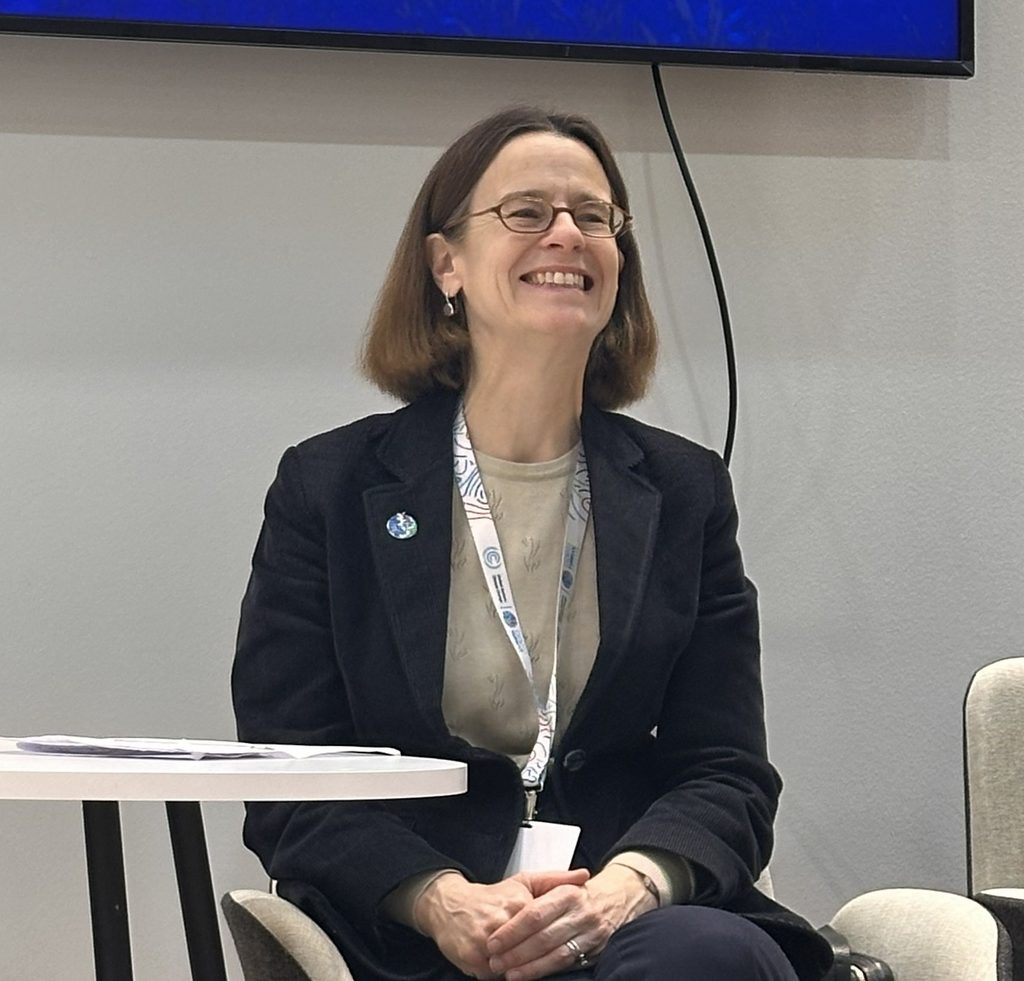
Vivien discussed the Cascade approach, which gives priority to mobilising commercial finance before deploying scarce public resources. She highlighted an efficiency–equity trade-off. Development finance may mobilise more private capital per dollar in a large, established market. In lower-income countries, the same public contribution may attract less private capital even when the development case is strong. She also noted that infrastructure finance and domestic capital-market development often sit in separate practice areas within public development banks, although infrastructure investment depends on access to long-term finance.
She pointed to credit lines for rooftop solar in India and energy-efficiency investment in Eastern Europe. Alongside making funds available for local banks to lend, these programmes can train lenders to evaluate projects and understand their risks. That expertise can support further lending after the programme ends.
Fernanda Gimenes, Senior Research Lead at CETEx drew on their work on private capital mobilisation and blended finance. She identified limited access to reliable data as a barrier to investment and referred to the Global Emerging Markets Risk Database (GEMs), which pools data from multilateral and development finance institutions on loan defaults and recoveries. Such data can help investors assess credit risk. Sovereign credit ratings also matter. Below-investment-grade ratings can narrow the pool of eligible investors, particularly where institutions have rating thresholds in their mandates.
Fernanda also used Eco Invest Brasil, developed with support from the Inter-American Development Bank (IDB), to illustrate how blended finance and currency hedging can mobilise investment. Even in a country with an established domestic capital market, projects earning revenue in local currency can face higher debt-servicing costs if they borrow abroad and the local currency weakens. The programme uses concessional public finance and works through local financial institutions to help manage that risk and attract private capital.
Fernanda concluded by stressing that the constraint varies by country. One market may need more equity, while another may have debt available at rates projects cannot sustain. Even where countries have a project pipeline, financing depends on whether the projects meet investors’ requirements and whether the instruments on offer address the risks they face.
Anumita Roychowdhury discussed the challenge of expanding infrastructure while meeting sustainability goals. She pointed to a substantial gap between India’s financing commitments and the investment needed, and to the role of international support in closing it. She also raised poorly targeted subsidies and the risk of a debt trap when countries must borrow at high rates to respond to climate impacts and finance the transition. Sovereign credit ratings and the capital banks must hold under rules such as Basel III can affect how much lenders charge.
- Bank risk weights during construction and operation. Anumita explained that banks face greater uncertainty while projects are under construction and have yet to earn revenue. The Reserve Bank of India’s published rules, due to take effect on 1 April 2027, illustrate how that distinction affects bank capital. For covered project finance exposures without an issue-specific external rating, the pre-operational risk weight is 130%. It can fall to 100% once cash-flow and repayment conditions are met, or to 80% for qualifying high-quality infrastructure projects. A lower risk weight reduces the regulatory capital a bank must hold against a given exposure, which can ease the cost of lending.
- Payment security for renewable power. A generator can face cash-flow problems when a distribution company pays late, even after the generator has delivered electricity. India’s payment security framework uses instruments such as letters of credit under power purchase agreements to protect these payments. CSE’s research with Indian financiers and developers identifies distribution-company payment delays as a major factor shaping lending terms.
- Payment security for electric buses. Amnita also discussed the government’s role as a third party in securing payments for electric mobility. Under India’s PM-eBus Sewa Payment Security Mechanism, a central fund can cover an operator’s monthly payment if a public transport authority defaults. A direct debit mandate provides for recovery from the relevant state or union territory. This helps protect operators’ cash flow and makes contracted payments more dependable for lenders.
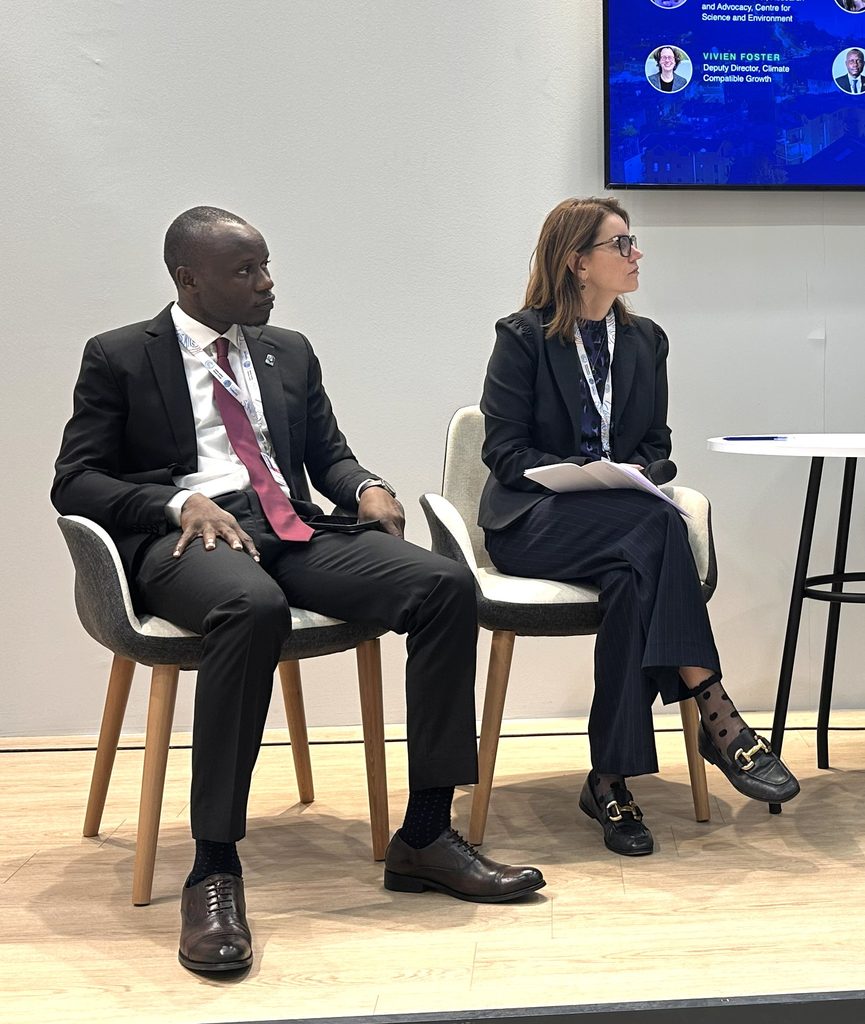
David Kisakye Baleese said energy transitions take different forms depending on the country and its starting point. In Uganda, a gradual transition includes moving households towards higher levels of energy access and cleaner technologies. David referred to the Energy Transition Plan launched at COP28 and stressed the importance of assigning responsibility for climate finance within government.
Uganda established a Climate Finance Unit within the Ministry of Finance, Planning and Economic Development. David described coordination with the ministries responsible for energy and the environment, alongside regional forums where East African officials discuss how to mobilise climate finance. He referred to electric mobility and carbon markets and said the government was considering debt-for-nature swaps, whereby debt terms can be renegotiated in exchange for conservation commitments.
The World Bank-supported Electricity Access Scale-up Project illustrates how finance is channelled into delivery. The Ministry of Energy and Mineral Development and the Uganda Energy Credit Capitalisation Company implement the project, which supports grid and off-grid access, financial intermediation and clean cooking. David stressed the importance of developing projects to the point where financiers can assess their risks and decide which instruments are appropriate.
Asked how financing reaches the electricity system, David referred to Uganda’s late-1990s power-sector reforms and the roles of public and private actors. Those reforms separated generation, transmission and distribution. The Uganda Electricity Trans-mission Company became the bulk buyer for the national grid and now enters into power purchase agreements with independent generators. David also cited subsidies and incentives, including support for electric cooking, as ways to expand access and stimulate demand.