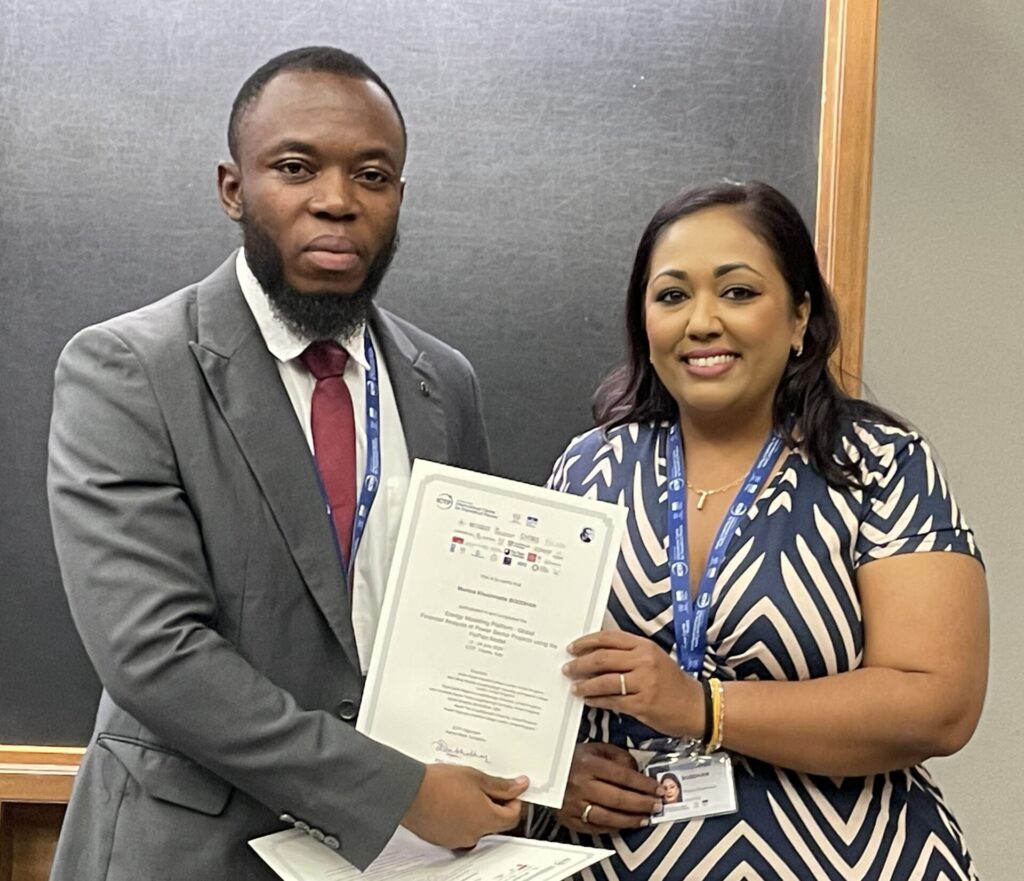
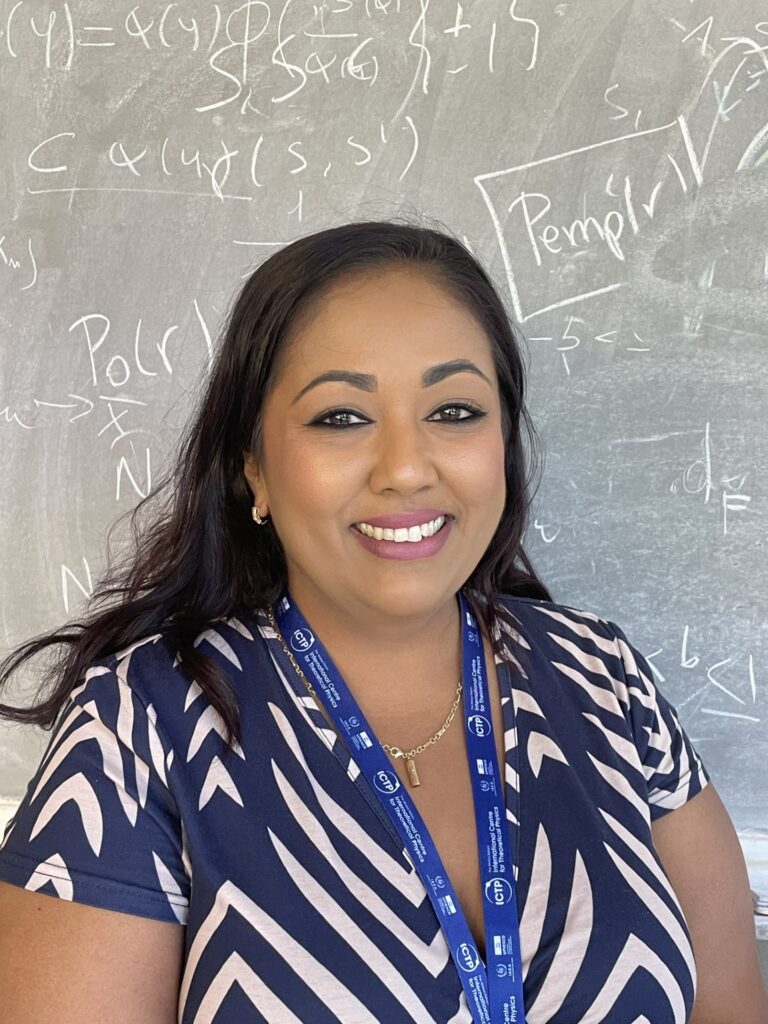
Monica Boodhan is a senior lecturer in physics at the University of Trinidad and Tobago. She attended EMP-G to study the FINPLAN energy modelling tool. Here she discusses the reasons for attending, her experience, and how she intends to use her learning.
I’ve been involved in renewable energy technologies since 2007 and I’ve explored solar energy, wind energy, and other forms of renewable energies for grid penetration into the country. Our grid is 99% powered by natural gas, which is not sustainable. We have a rich hydrocarbon history, but with depleting reserves, we need to explore alternatives. The country has energy transition plans but, in my opinion, we need to have a macro approach with clear steps to follow. So, my main research emphasis right now is looking at decarbonisation strategies for Trinidad and Tobago.
Does Trinidad and Tobago have policies in place that perhaps haven’t been implemented?
We have policies and several committees; we have a lot of things in place including the very first utility level solar farm in the country. But it’s taken a long time to get there. I feel that, because we are oil and gas rich, there’s resistance from the general population who pay very little for electricity and don’t see the need to have to pay a higher price for clean energy.
That being said, many of us realised that we need to build capacity in the country, so my university got involved in a national level project where I personally went around to a lot of remote and vulnerable communities across Trinidad and I educated the communities about renewable energy, and energy efficiency. I taught them how to lower their electricity bill using simple experiments showing them the difference between LED bulbs, CFLs and incandescent. I told them, you’re using electricity here; what do you want from a bulb? Everybody says light. I said, okay, what would you do if I told you that you are paying money to heat the room? They said that’s not possible and I showed them with the different bulbs. After 45 minutes, they were sold on the concept that we need to move towards energy efficient technologies and also transition towards renewables. So, I think while we have policies, while we have a sort of a direction, and have done some things, there’s still a disconnect.
Are the business interests in your country also putting the brakes on the transition?
Historically we attracted a lot of companies because of our very low costs but in 2025, the country had to increase the price of natural gas sold to the industry from $3 per million BTUs to between $5.30 and $6.20 and we have seen some companies leaving the country because it’s no longer economically feasible for them. Now, the strategy would be to show them that we can provide renewable power at a good price and get companies to return.
So, it’s had an economic impact on the country as well.
Yes, and that is really what drove my current research topic, because our economy is strained right now. We need to find ways to keep investors in the country and to grow our economy. Although our GDP looks good still, the cost of living is increasing literally every day.
Prior to coming here, did you have experience in energy modelling?
Only the online CCG courses, so I came here a bit intimidated because I’m not a modelling person. I had a bit of exposure last year with very simple Excel-based modelling through the IAEA as I attend their conference right here at ICTP last year.
Why did you choose to study FINPLAN this time?
Because I have all of the knowledge behind what has to be done, but I needed the actual skill set to model it for what I’m going to do next. I found that the hands-on with somebody who’s more experienced was extremely valuable. I went from not knowing anything to presenting yesterday. I am the only person, I think, in my group with no prior knowledge so I would say the experience here has had a significant impact on my ability to use the model and to understand what I was doing in greater depth.
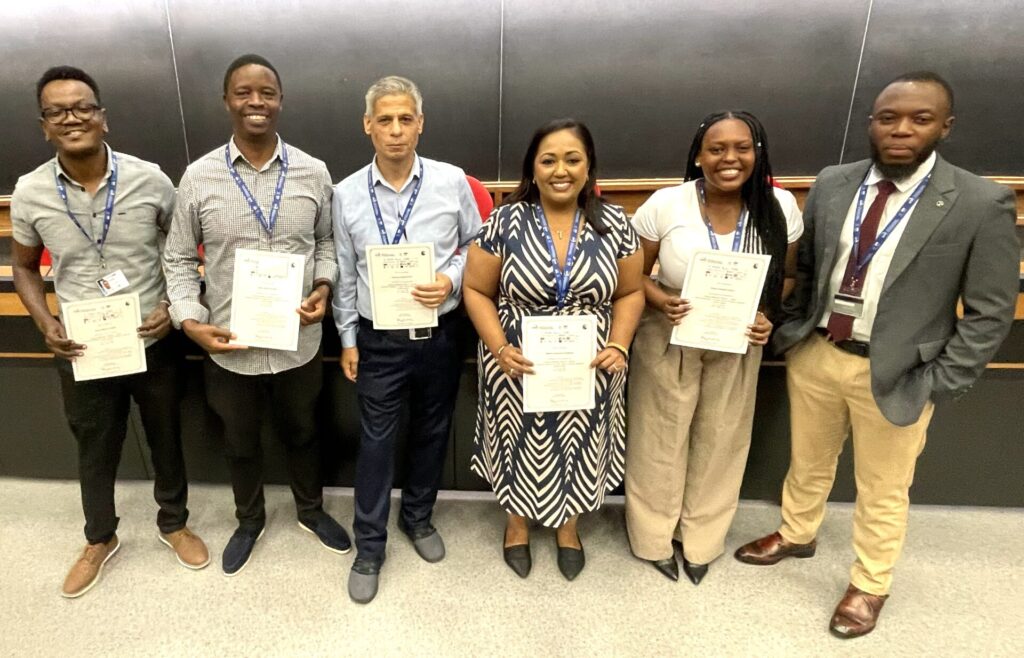
I’ve been following CCG a long time now and looking at the different tools. My original plan was to do MAED first and then move on to OSeMOSYS or MESSAGE through IAEA. I was going to study FINPLAN last but after my experience at the IAEA conference, I looked at FINPLAN and thought, I have no experience in any sort of financial modelling; let me try to apply for this one.
Initially, I thought, maybe I’m doing this thing wrong but in retrospect, doing FinPLAN first has helped shape my thought process. Because now I know what the reality of the situation is. I didn’t know before. Now that I’ve played around with the parameters, I optimised the system, I looked and I realised we are not doing great. If we stress the model itself, we see that the current arrangement we have does not work.

Excellent. That’s why FINPLAN was introduced, because it’s the reality check on the finances – can you afford all this? How are you going to manage it?
Agreed, because for me as somebody who’s been involved in the energy research arena for a long time, it was eye-opening. I said, wait, this system is actually not profitable if they have to pay for fuel. What happens when we can no longer supply at zero cost? The entire electricity system I’m boasting about will crash and we will be without power. We need to ensure that we change things before that happens.
What will you do with this knowledge now? You have a plan to go and talk to your government, I think.
What I love about the University of Trinidad and Tobago is that because we are a young university (we recently celebrated 20 years), the media are very interested in everything we do. I had a big accomplishment, and they published it in the national newspapers which resulted in a lot of visits to my LinkedIn and people reaching out to me. I believe I’m strategically poised to be the person to pitch this. I was the person who did the capacity building in the country, and I’m already known by relevant stakeholders so this makes it a bit easier.
And you’re an excellent communicator. Any final thoughts on your experience here?
Thank you. One key takeaway from when you attend these sorts of capacity building opportunities is that you understand and you appreciate your own situation better. We have close to 100% electrification at home, so I’m grateful for that, as I met colleagues here whose countries have 60%, 30%, 40% access rates.
They also have so much renewable energy power even though they don’t have high GDPs and have struggling economies. It has really motivated me and shown me we can do it because, if these countries who don’t have the economic backing, are finding ways, we could do it too.
Something else that I really appreciated here is that it’s like the first time I’ve been away from my country, and I’ve felt at home. Everybody here has common interests. Everyone here is helpful, considerate, happy to share. It’s an open community and that is what I love about ICTP and now CCG; it’s a good experience.
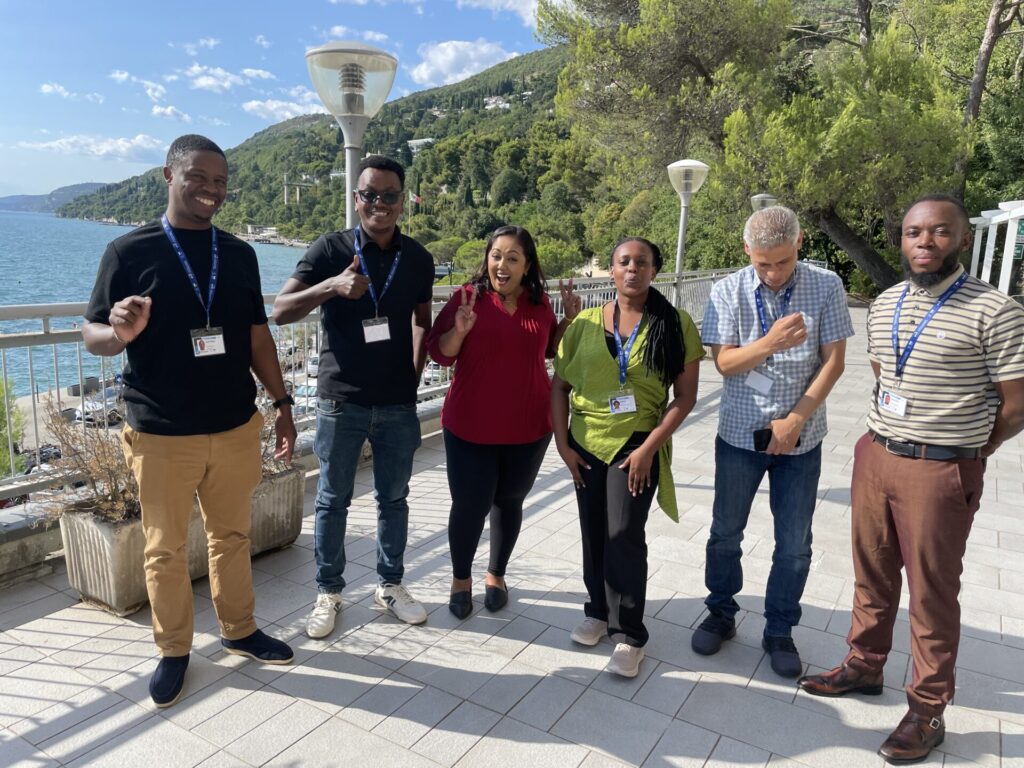
This is what the world needs. When organisations like CCG, the ICTP, the IAEA, know how to do these things and when they help us who are trying to accomplish the exact same things they’ve accomplished, that is how the world progresses.
It’s not just about one person progressing. It’s holistic; when the entire world progresses, everybody benefits. We reduce climate change effects; we help the economies. Together, as a world, we can do so much more than just one person.