

Saturday, 14 November, 17.20-18:00. Sweden Pavilion, Blue Zone
Host: Business Sweden
CCG were involved: Mark Howells (moderator), Maryna Henrysson (Panellist), Clement Sichimwa (Panellist)
The discussions were opened by Mark Howells as the moderator. One of the challenges in supporting climate action is the prevalence of “fly-in, fly-out” consultants. While they may produce good work, that work is not always owned by the country in which it takes place. Once the project ends, reports can end up “on a shelf”, without the in-country capacity to take them forward.
A recurring challenge raised by the speakers was coordination. Sung-Ah Kyun from EBRD highlighted the need to bring together the different stakeholders involved in translating policy into action. This includes coordination across ministries, development partners and financial institutions. The process starts with diagnostics, setting targets and ambition, and developing pathways. These then need to translate into sectoral, national and corporate plans, before moving towards implementation. Finance also needs to be involved in the process, rather than brought in only at the end.
Wondwosen from Ethiopia’s Ministry of Finance similarly noted that, while the country has planning and policies in place, technical capacity within government sectors remains limited. The challenge is translating those plans into actual implementation.
For Clement, one of the main gaps is the lack of permanent in-country analytical capacity. Countries need people and institutions that can turn climate evidence into actionable policy and finance options, including after project cycles have ended.
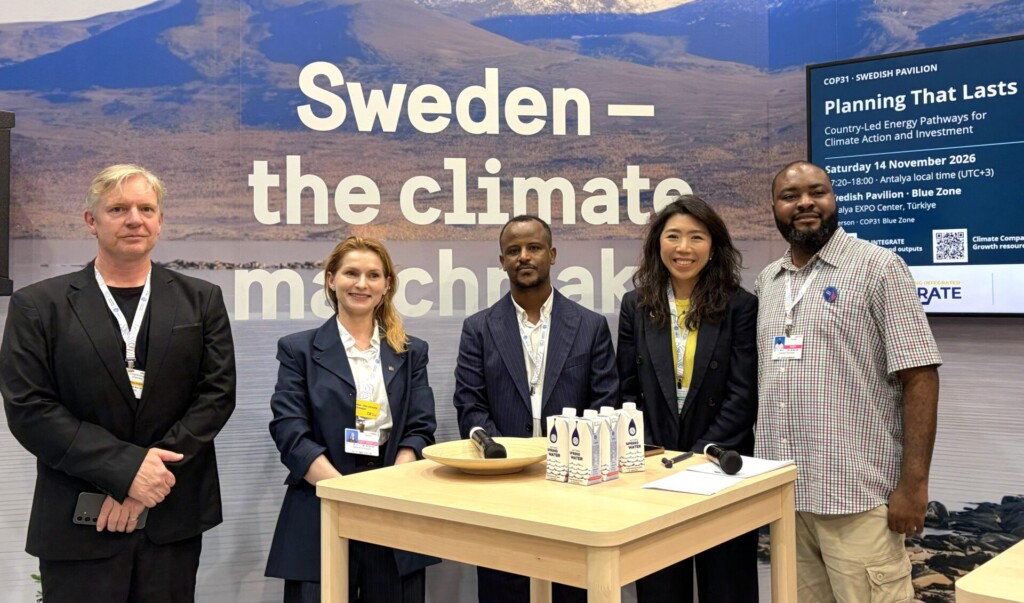
Maryna highlighted the importance of institutional continuity. There may be political will, policies and analysis, but without continuity, knowledge and capacity can be lost. This is one reason why academia can play an important role: universities provide an opportunity to retain people and knowledge over time. Capacity development should not be limited to individual training, but should support country ownership and longer-term institutional capacity.
Clement also emphasised the importance of continuous engagement between universities and government. Technical working groups, embedded support and platforms for co-creation can help universities and government work together on practical problems. Universities can provide a permanent base for generating new analysts, while young graduates can learn how to navigate the interactions between academia and policymakers. This also requires making research more accessible. Technical research and modelling outputs need to be translated into documents that policymakers can understand and use.
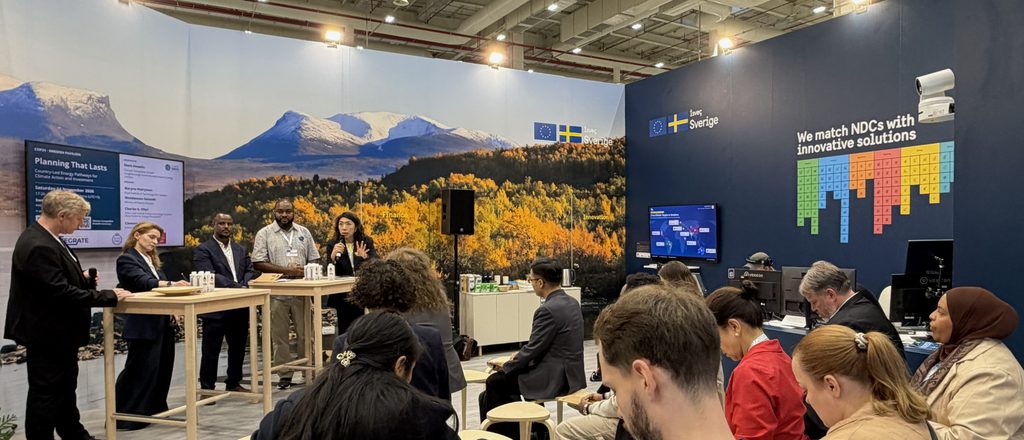
The discussion also explored how countries can better connect their plans and priorities to financing. Mark introduced CCG’s D2D approach, which aims to help governments understand who needs to be involved, when to involve them, and how to bring international financial institutions into the process at the right time.
Sung-Ah explained how development banks can support countries from upstream policy engagement and analytical tools through to implementation. She shared Türkiye’s industrial decarbonisation work as an example. The initiative began with the country bringing development partners together, with EBRD supporting the Ministry of Industry to develop sectoral low-carbon pathways for steel, iron, aluminium, fertiliser and cement, and more recently glass and ceramics. These analyses have helped Türkiye consider its level of ambition for industrial decarbonisation while maintaining economic competitiveness. They have also informed the Türkiye Industry Decarbonisation Platform and the energy transition country platform.
Sung-Ah stressed that this kind of work requires strong political will and country commitment. It is a multi-year effort that requires significant resources and active engagement. Country leadership means setting the strategic direction and priorities, while also bringing different partners together in an inclusive and integrated process.
From the Ministry of Finance perspective, Wondwosen described how Ethiopia’s country platform receives pipelines from different sectors. These are assessed against national development priorities, including the ten-year development plan, the medium-term development and investment plan, and the homegrown economic reform. The Ministry of Finance then considers the appropriate financing approach, including public finance, MDBs, green bonds, blended finance and joint financing. He also emphasised that sectors should not limit their ambitions based only on the available public budget. Instead, they should bring forward their full ambitions and pipelines so that different financing options, including private sector engagement, can be considered.
A key question throughout the discussion was what external partners should leave behind when a project ends.
Maryna emphasised the importance of aligning with national priorities, training teams rather than individuals, and leaving behind usable tools. Open-source and open-code tools can help teams continue using and developing their analytical capacity. The aim is to use these tools for planning, identify credible priority investments, and translate model pathways into finance-ready investments.
However, not all climate and energy priorities are necessarily bankable. Some projects have public and societal value but may not offer the commercial returns required by investors. This means countries also need to understand where different sources of finance can be found and how to communicate the value of these priorities.
The discussion also highlighted the risk of losing capacity when experienced people leave government or universities. Wondwosen described how Ethiopia uses secondments and project-based hiring to retain technical experts, while also recognising the need for further ways to keep capacity within government and sectors. Clement suggested deliberate leadership and mentorship programmes, allowing younger professionals to learn from experienced experts, as well as practical industry placements for students.
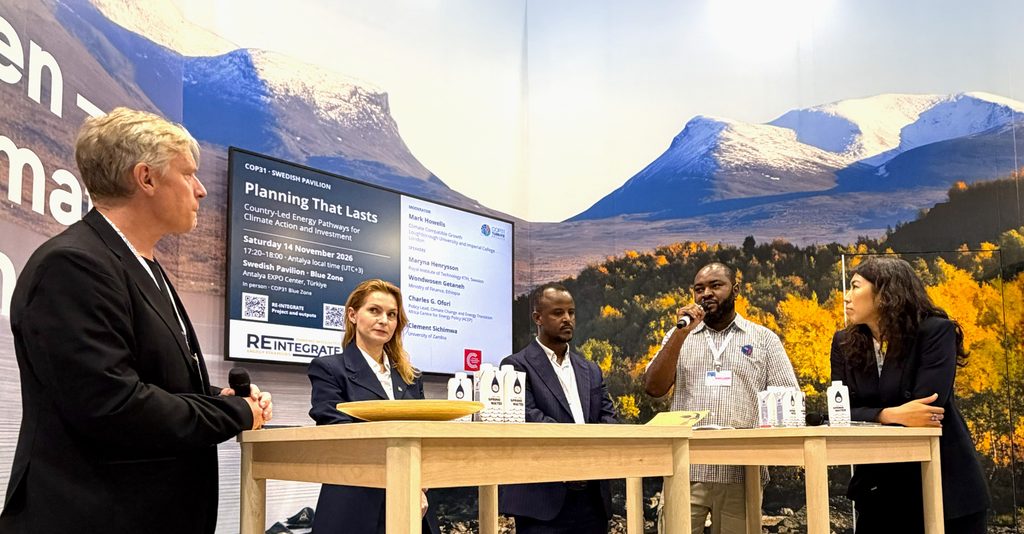
Another challenge raised was that knowledge and information generated through years of technical assistance are often not properly organised or retained. Sung-Ah noted that studies can remain in individual folders or PDFs, meaning that countries sometimes have to start again because previous work cannot be found or reused.
Countries therefore need to organise their information and own their knowledge. This is closely connected to the wider coordination challenge. As Sung-Ah explained, coordination is also a language barrier. People need to be able to communicate across academic, financial, public and political languages. This requires a range of sophisticated skills and competencies, as well as champions from different parts of society, rather than relying on one individual.
In closing, Clement summarised the need to “invest in institutions, not events”, highlighting centres of excellence in universities and platforms for co-creation and exchange between stakeholders.
The discussion reinforced that building country capacity is not simply about producing technically sound models or delivering individual training. It is about ensuring that countries can retain knowledge, coordinate stakeholders, develop their own analytical capacity and translate priorities into implementation and financing.
Mark noted that CCG has trained more than 1,000 modellers face-to-face, including financial modellers. He also highlighted the popularity of training on political economy and navigating real-world challenges, rather than focusing only on the technical aspects of modelling.
CCG’s ambition is to bring these experiences together into a functional body of knowledge that can support governments, inform new curricula, enable more seamless engagement with IFIs and underpin partnerships that build the literacy and capacity needed to move from analysis to action.