


Thursday, 12 November, GAUC Pavilion, Blue Zone. Hosts: CCG and Imperial College London
Vivien introduced the session and Mark then presented the Catalyst Facility, highlighting NUOL in Lao and Kenya’s Strathmore University as strong examples of where the Catalyst Facility has worked well. Clement emphasised the need for the facility to function as a platform for training researchers while ensuring the sustainability and excellence of research capacity. Nam highlighted the growing value placed on scientific approaches to policymaking in Vietnam over the past two years. The task of connecting policy makers to academics to write policy recommendations has been facing difficult challenges. They often speak different “languages” and answer questions differently. Nam described his university as playing an intermediary role, interpreting academic research for policymakers and vice versa.
Steve stressed that modelling capacity is critical for developing credible implementation pipelines. He saw the Catalyst Facility as a way to bring local voices into these processes. He also raised the risk where researchers trained in the global south move to the north for employment. Creating stable career pathways in their home countries could therefore be an important incentive for researchers to return and remain. Catalyst facility as a platform could be designed to do that.
Alfie highlighted the importance of institutional sustainability and trust. Institutional champions may be more effective than relying on individual champions because they can create impact at greater scale. Building and strengthening these institutional champions could therefore be an important role for the catalyst facility.
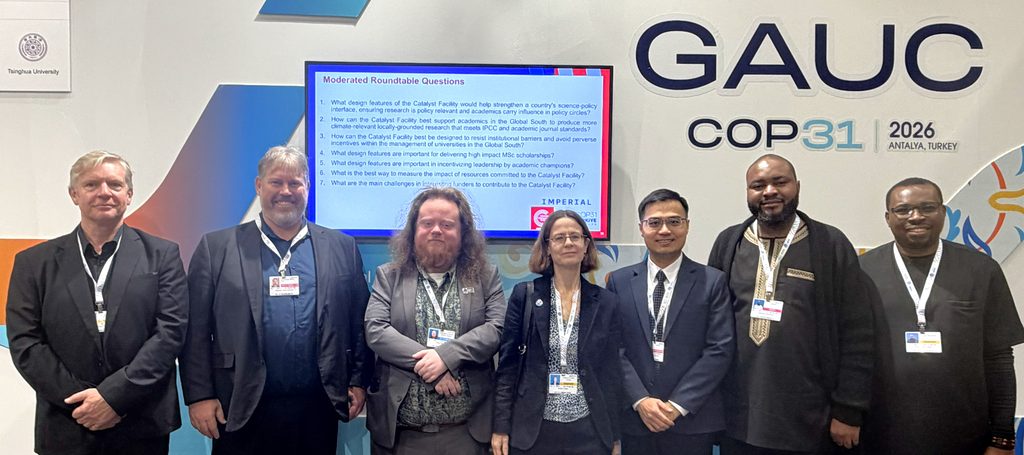
Moderated Roundtable
The discussion started with how analytical work can better inform NDCs and national planning processes, including how research findings are communicated to policymakers. The objective should be for academics to contribute directly to improving government planning. Student research should have clear policy relevance, while academics should have sufficient trust and autonomy to develop the research and engage with policymakers, avoiding making them feel restricted. A participant from Ghana emphasised that research and capacity-building efforts need to be locally led. She mentioned how approaches designed and operated primarily by Global North institutions does not sit right. Building local capacity and improving the uptake of research findings are therefore both important. She echoes the importance of the scheme of the catalyst facility in fostering local champions.
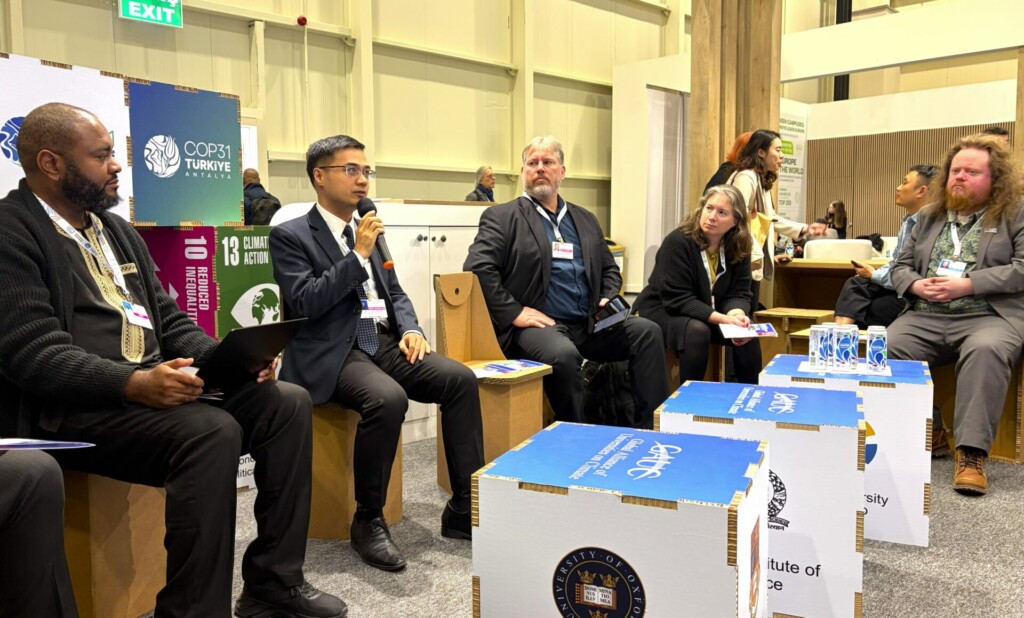
Clement highlighted GESI and interdisciplinary representation as important considerations for MSc programmes. At UNZA, government needs are considered when designing programmes, with the curriculum then structured around those needs. Internship opportunities are also aligned with the programme, meaning employment perspectives are considered from the outset.
Nam noted that Vietnam provides incentives for students through two-year government-funded study opportunities, with an expectation that they return to the country afterwards. Policymakers are involved in designing the programmes, and civil servants are already being selected to undertake relevant Master’s programmes. This provides a direct link between education, government needs and retention of skills.
Maryna noted that researchers in the Global South often do not have the resources to lead their own research or cover publication costs, meaning western counterparts often end up taking the lead / a more prominent role. Creating the right enabling environment remains a significant barrier to locally led research.
Chinagorom highlighted the importance of curriculum design and practical technical skills. The programme should ensure that students are exposed to relevant tools and approaches, including open-source modelling tools, but this should go beyond simply teaching software. Students need to understand how to apply these tools to real planning questions and develop the broader analytical skills needed to work in policy and technical environments. The discussion also pointed to the value of shorter, intensive training programmes alongside formal Master’s degrees, allowing students and researchers to build specific technical capabilities without requiring a full degree programme.
Alfie mentioned thinking about impact beyond simple output metrics. The facility should demonstrate how relatively small investments can create broader systemic effects and build on existing successful examples. Impact stories and longer-term case studies could be particularly useful alongside quantitative indicators. Rather than only counting publications, scholarships or people trained, the facility could track whether researchers subsequently influence policy, secure employment, build institutions, attract further funding or contribute to national planning.
Nam responded to Alfie’s point on assessing results, highlighting the importance of considering the longer-term value of bringing researchers through the programme and what happens to them afterwards.
Steve mentioned the importance of sustaining data and modelling capacity over time. For example, one master’s student could develop a model, while the next student builds on it using better data or approaches. Relationships with policymakers should similarly be maintained through continued research engagement. He encouraged the facility to focus on developing local champions and strategically allocating resources rather than simply competing for funding.
Mark highlighted that researchers and institutions also need the capacity to understand how Global North funders operate and what they are looking for. This is important for accessing and sustaining international funding.
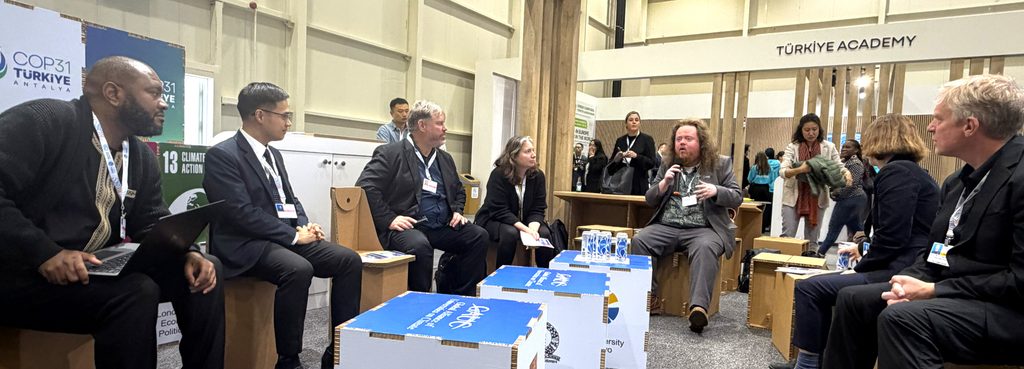
Clement emphasised the importance of mentorship and flexible funding for young academic leaders. Young researchers need support not only to conduct research but also to develop leadership mandates, train other young people and build programmes within their institutions. Flexible funding could allow champions to respond to specific institutional opportunities rather than being restricted to tightly defined project budgets.
The Ghanaian participant highlighted changes in government as an important challenge. Changes in political leadership and government priorities can affect the continuity of research-policy relationships and programmes, so the facility needs to account for this institutional and political turnover.
Vivien responded that while governments and political priorities may change, the underlying machinery, including tools, skills and institutional capacity, can remain. This reinforces the importance of investing in durable capabilities rather than relying solely on individual policy relationships.
Alfie argued that the Facility should demonstrate existing successes and build from proven examples rather than presenting itself as an entirely new model. A relatively low-cost, catalytic approach could be attractive to funders if it can demonstrate that small amounts of funding unlock institutional change and additional resources.
The Facility could potentially operate as a multi-donor fund with a menu of interventions, allowing different funders to support different components while avoiding an overly complicated structure. Clear agreements around intellectual property, partnerships and roles would also be important.