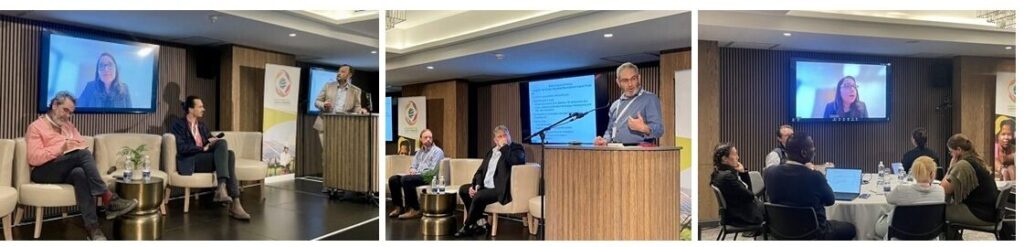
The Energy Modelling Platform for Africa (EMP-A) Joint High Level Community Meeting started today in Cape Town, South Africa. The meeting, which takes place from the 16th to the 18th of March, is convened by African Energy Futures (AEF), Climate Compatible Growth (CCG) and the South African Presidential Climate Commission (PCC) and it brings together researchers and policy makers involved in energy planning and modelling across Africa.
The event will facilitate learning exchanges, promoting South–South collaboration and strengthening human and institutional capacity for integrated energy modelling and investment planning. The workshop will deliver case studies, including presentations on Turkey’s use of Climate, Land, Energy and Water Systems (CLEWs) modelling in the design of its Nationally Determined Contributions (NDCs), and the PCC’s experience in establishing and coordinating a Community of Practice (CoP) of researchers across a range of modelling areas in South Africa. Finally, the conference will provide a matchmaking ‘marketplace’ where researcher needs will be matched to resources, including: peer mentoring, coaching, tool and data support, curriculum assets, policy linkages, facilitating ongoing learning and networking between institutions, across multiple countries.

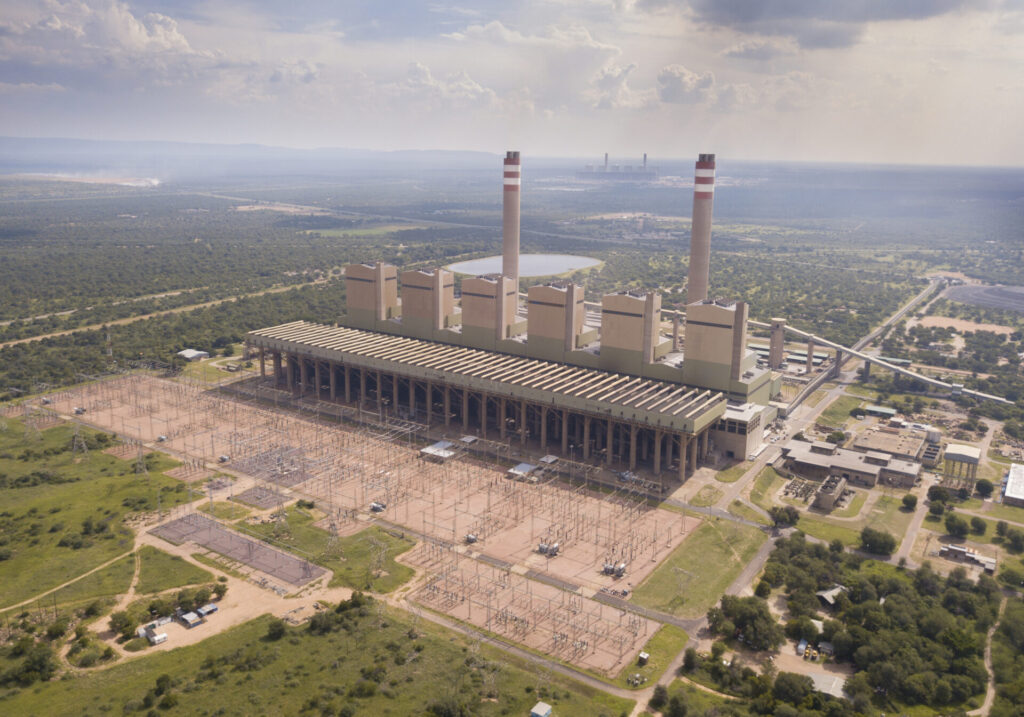
Jurgen Olivier, Secretariat of the PCC, comments: “From our perspective we want to encourage our colleagues – from academics to policymakers – to remember when they are doing their analysis and planning, that people will be affected by the decisions they take. These choices are not theoretical, they have real impact on people’s lives. We’re excited to see this dynamic conference take place”.
Steve Nicholls, Project Director at AEF, adds: “AEF was established to build institutional capacity, and our goal is to establish a continental network of energy planning and research hubs that will continually exchange knowledge and resources. This event brings together the nascent African network to begin to learn from each other.”
Prof. Mark Howells, Programme Director at CCG, concludes: “It’s crucial that our potential philanthropic and funding partners understand that this conference is where they will find the climate solutions they are looking for: the clean energy projects with credible business cases, and the data-driven realities that enable them to know that their investment will make a difference because it’s targeted in the right place, for the right people. And they’ll find a community grounded in economic reality and using data to provide real actionable insights to support projects that will benefit all aspects of life – health, education, economic growth, female empowerment – fuelled by sustainable solutions. We need them, now, to help African countries scale up and reinforce this momentum through investment – to deliver the change the continent needs.”
To get updates on the conference, follow AEF, CCG and the PCC on LinkedIn.
DAY ONE REVIEW
The first day of the joint high level meeting was packed with insightful presentations and questions from a probing audience.
The co-hosts opened the meeting. Mr. Errol Mlambo, a Commissioner on the Presidential Climate Commission (PCC) welcomed the researchers, saying that energy models provide decision makers with evidence to analyse alternative policy scenarios. Steve Nicholls of African Energy Futures (AEF) added that AEF is supporting the development of robust modelling frameworks which can only be built and maintained by sustainable research institutions, AEF will use the conference to understand what would be useful to the energy research community. William Collier from Climate Compatible Growth shared lessons from having implemented several Energy Modelling Platforms (EMPs).
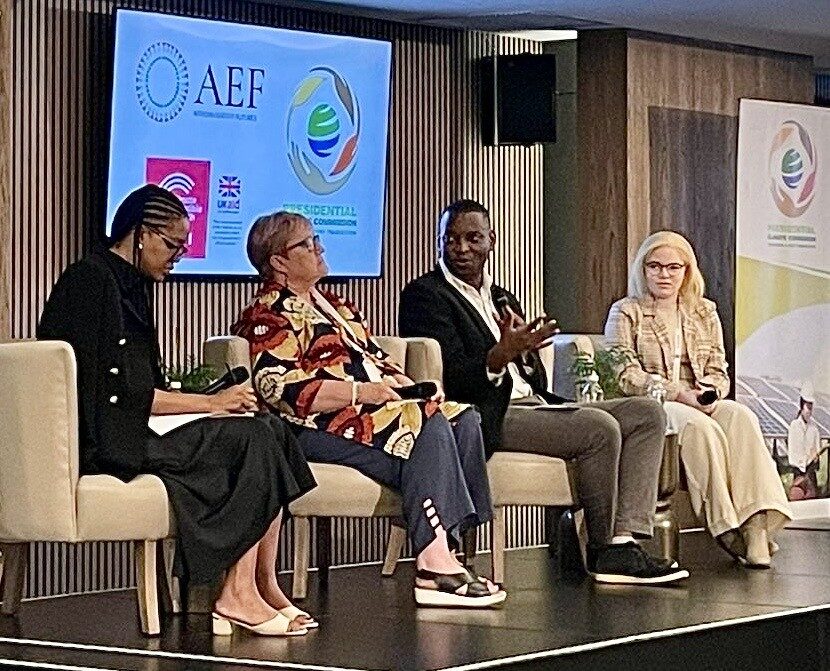
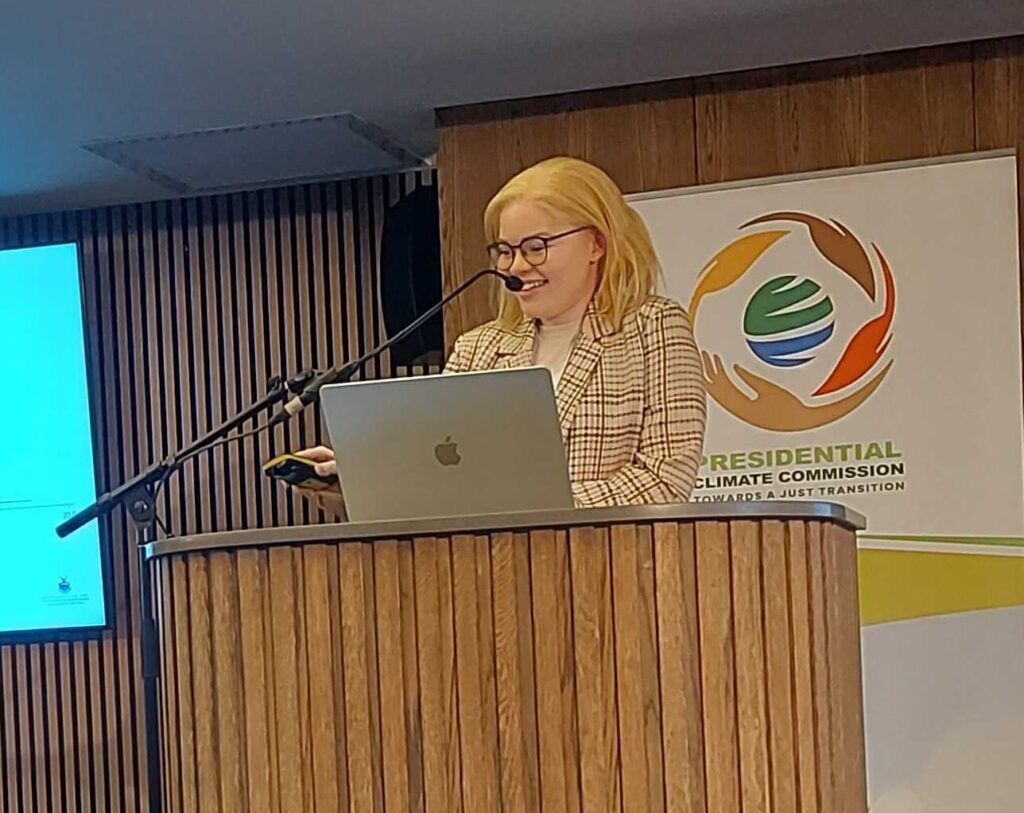
The first presentation of the day was by Prof. Adeola Oyenubi and Ms. Natashya Dikola of Witwatersrand University, who gave a summary of their results using CGE-Microsimulation to analyse the just energy transition’s effect on the labour market in South Africa. Prof. Oyenubi argued that microsimulation is necessary to understand who the winners and losers of particular policy decisions may be even when the aggregate results demonstrate an overall positive outcome. Prof. Coleen Vogel joined Prof. Adeola and Ms. Dikola for a panel discussion, moderated by Ms. Lebogang Mulaisi, where she reflected on the limits of microsimulation studies, emphasising that more data collection and sharing needs to happen in order to build contextually relevant models.
The last two presentations in the morning focused on the use of Climate, Land, Energy and Water Use (CLEWs) models in Turkey and South Africa. Mr Abdurrahim Durmuş from Turkey explained why and how Turkey decided to use a CLEWs model for the development of their NDC 2. Ms. Ashleigh Dingwall has developed a CLEWs model for South Africa for her research which allows her to model different cross-sector interactions, identifying the benefits and trade-offs offered by different policy pathways.
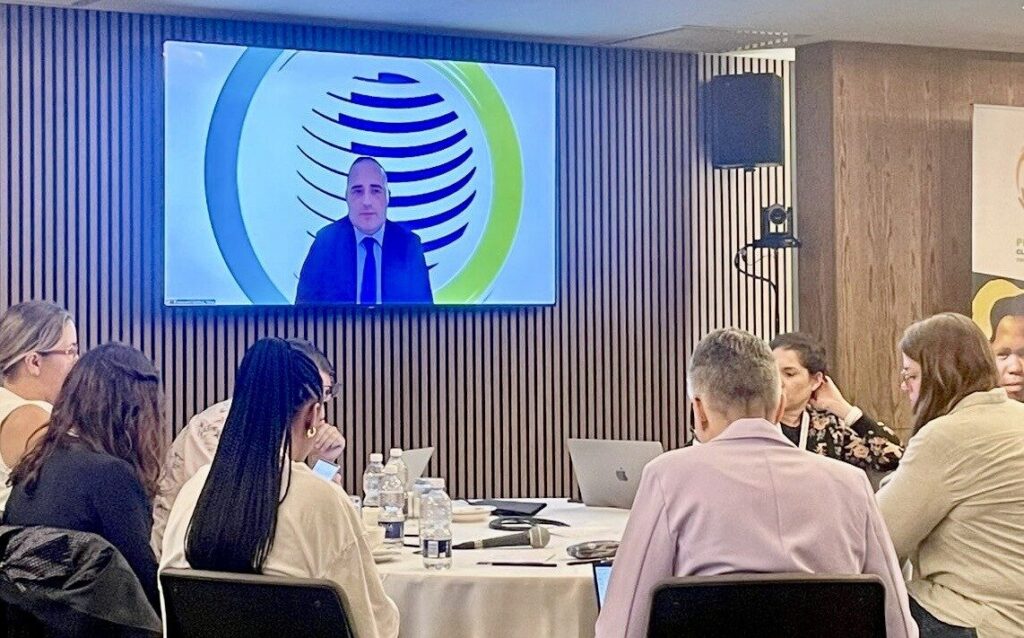
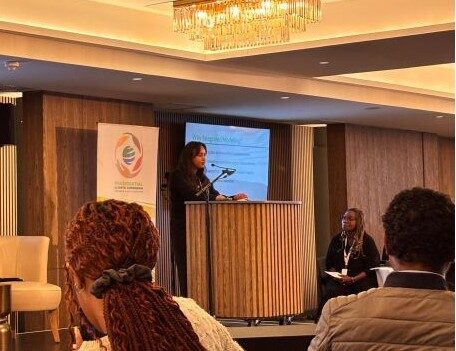
After that session, Dr. Chris Trisos made the argument that Africa urgently needs an African-led Integrated Assessment Model (IAM) because the model outputs are crucial in climate negotiations and an African IAM would produce analysis that reflects the continent’s realities and priorities.
Prof. Debra Roberts followed with a rousing keynote address in which she presented a summary of key scientific reports on climate change. Prof. Roberts pointed out that global temperatures will likely overshoot the 1.5 degree limit, with devastating consequences. She warned that even the full implementation of NDCs would not prevent the planet from being pushed beyond its adaptation and mitigation limits. She ended the speech on a hopeful note, saying that disaster could be averted if we over-deliver on current commitments.
Dr. Abhishek Shivakumar ended the day with a presentation on TransitionZero’s no-code energy planning software. Although open-source models are free, they are still slow and difficult to use, and the tools that TransitionZero is building could reduce the amount of time spent on model development from months to days.
Ms. Lebogang Mulaisi concluded the workshop by highlighting the key takeaways as well as next steps.
We’re looking forward to Day 2!
DAY TWO REVIEW
Day two was moderated by Steve Nicholls of the AEF, who started the meeting by setting the scene and outlining the key objectives for the day.
The first presentation was by Prof. Bernard Bekker who walked the audience through Stellenbosch University’s grid modelling project, and he shared the preliminary results that showed that a grid-aware model makes counterintuitive recommendations for where to locate new wind, PV and battery capacity. He ended the presentation with some advice to researchers about how to influence policy, including developing relationships with policymakers and choosing audiences for communication carefully.
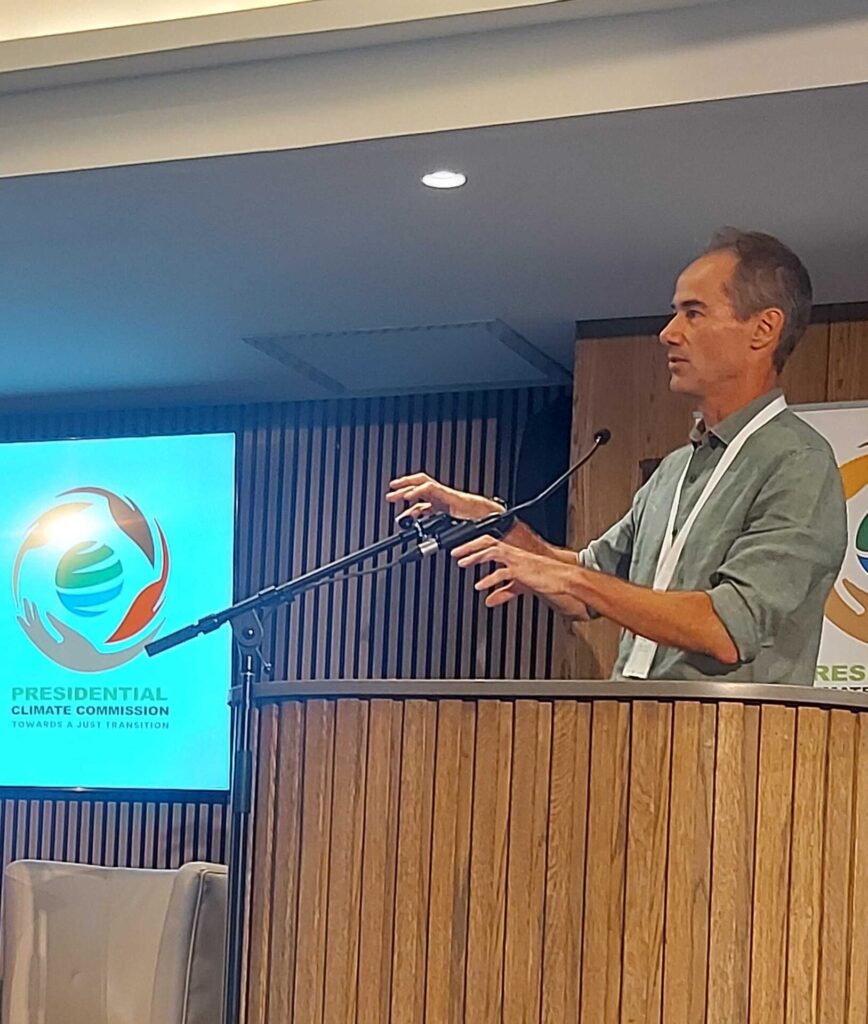
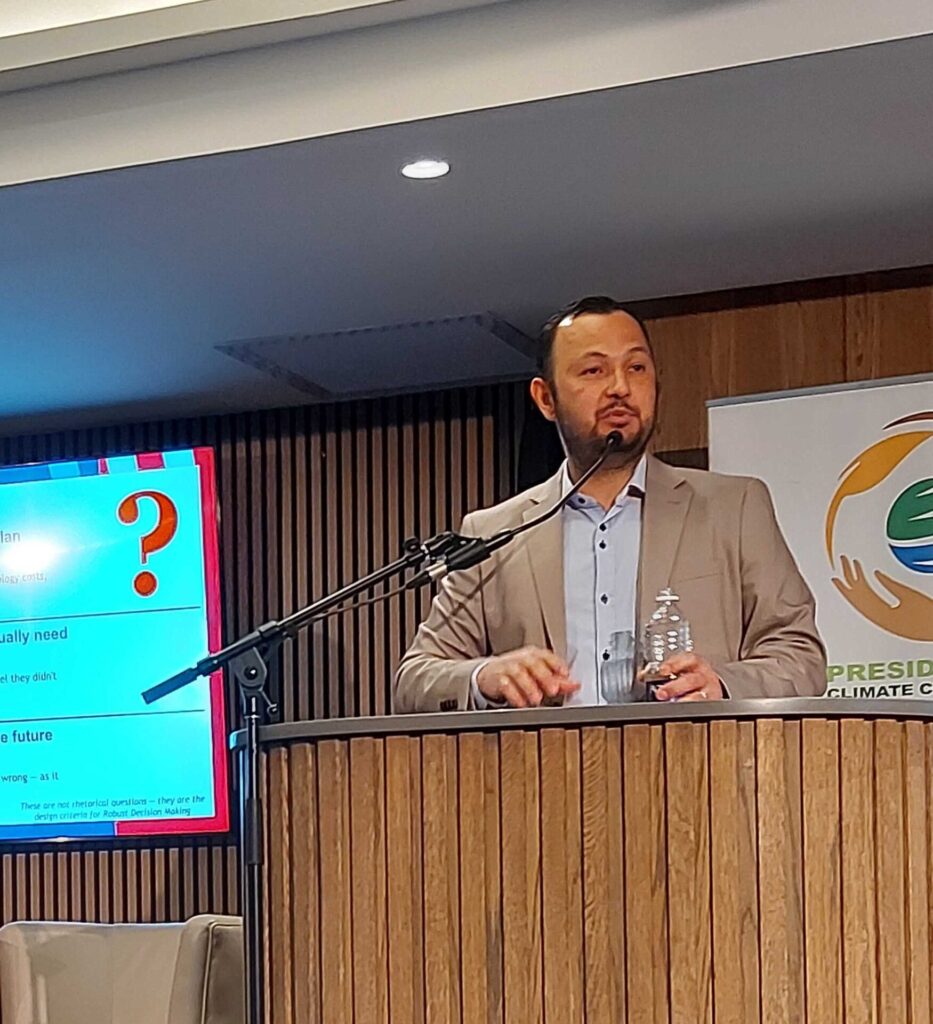
Prof. Mark Swilling followed with a talk on the financing of infrastructure, arguing that South Africa has sufficient domestic financial resources to fund the construction of infrastructure, and that the real challenge is that there is an inadequate pipeline of projects into which investors can invest. He concluded by saying that financial sector companies need to do more in order to create demand for their investments.
Prof. Jairo Quiros-Tortos from the Climate Compatible Growth (CCG) spoke next on Robust Decision Making (RDM), a risk management framework developed to incorporate uncertainty across technology, commodities, climate, and governance into the modelling process. The RDM process has three phases: exploration, discovery, and was developed with the 2050 Pathways Platform, and the 10-step guide is available online.
Will Collier from CCG gave an overview of three open-source modelling tools developed by CCG: FinTrack, FinCORE, and MINFin that have been deployed in various countries to support energy planning.
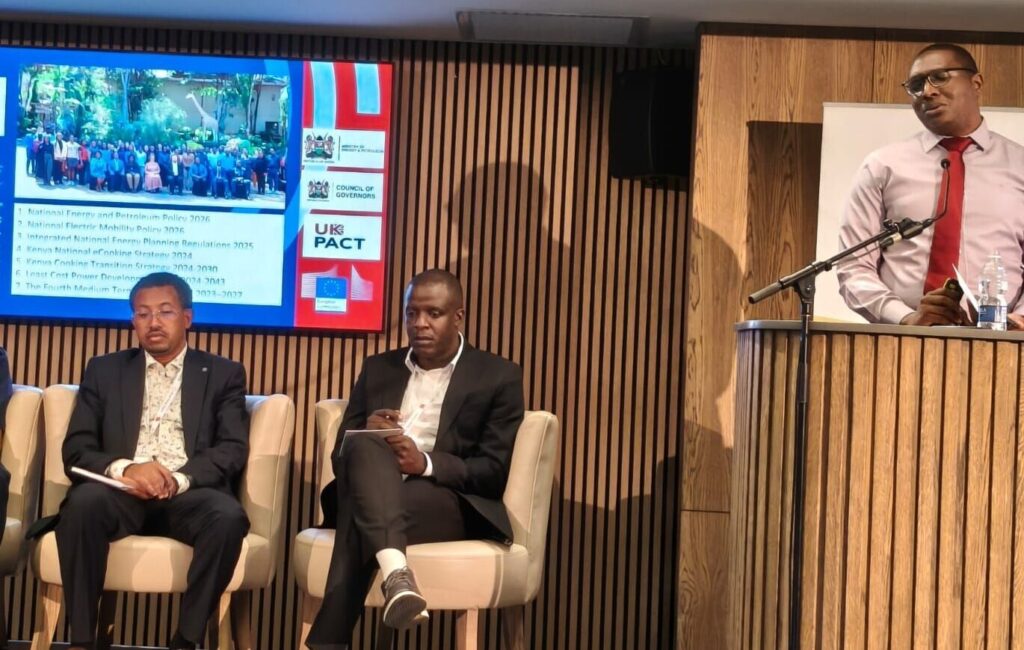
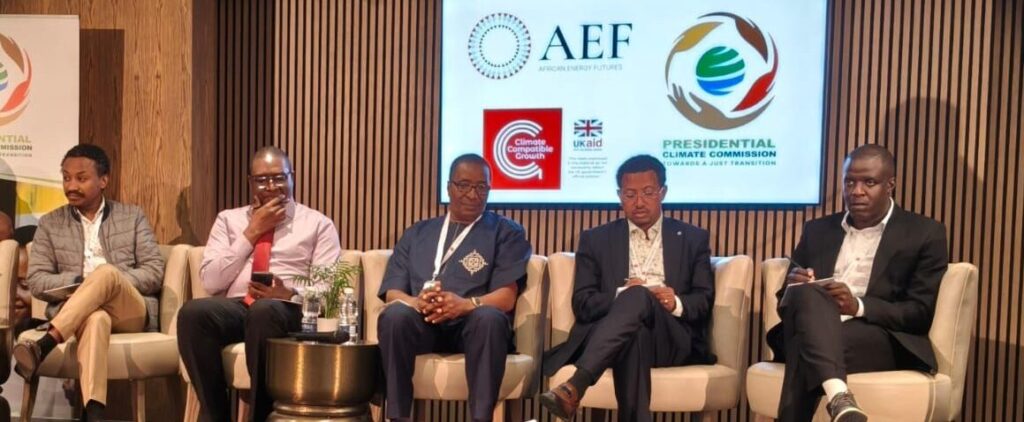
The last session in the morning was delivered by Martin Gitonga, Samba Sesay, Fitsum Salehu Kebede, Felix Amankwah Diawuo, Emiyamrew Molla, and Benard Ouma Alunda, who are all researchers from universities in Kenya, Ghana, Ethiopia, and Sierra Leone who have deployed modelling tools, including CLEWs and OseMOSyS in courses at their academic institutions. They shared insights with the group on deployment, progress as well as some of the challenges they have encountered.
After lunch, Sneha Agrawal presented the International Monetary Fund’s (IMF) DIGNAD model which is a user-friendly, Excel based toolkit that models the macroeconomic effects of natural disasters. The model comes with indicative data and can be recalibrated to work at regional and provincial levels.
Prof. Swilling joined Ms. Agrawal and Mr. Collier for a panel discussion on how to finance the transition. There was a discussion on standardisation of modelling tools, and the panel agreed that local ownership of the models should be prioritised.
Nimrod Zalk shared insights from the Green Industrial Development Expert Panel, which aimed to identify green industrial opportunities. The key takeaway is that there are industrial sectors that have thrived and created jobs in the last decade, and those sectors need to be supported; policymakers should not pick winners, but rather, they should identify and work with winners.
Travis Franck gave the last presentation on developing tools for policy analysis, and he made the point that models need to follow key principles to be adopted, namely: they should model problems, not systems; the models should be iterated with stakeholders; and, modellers should generate metrics that stakeholders care about.