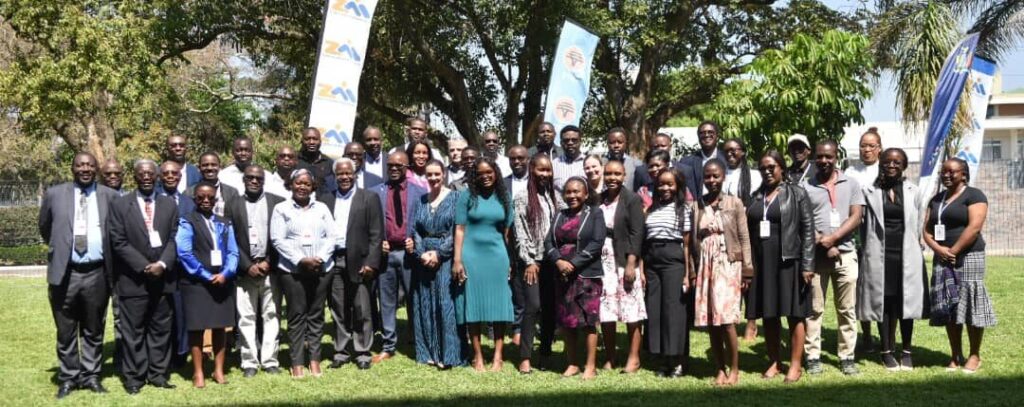
We spoke to Lynnly Mayenga (Operations Manager), Jumbe Ngoma (Communication for Development) and Emmanuel Simpasa (Research Assistant) from Lloyds Financials, as well as Alex Money and George Carew-Jones from CCG and Oxford’s Smith School to discuss the Southern Partnership Fund project “Building Pipelines of Bankable Climate-Compatible Growth Projects in Zambia”, the report for which was published recently.
For people who don’t know Lloyds Financial, tell us more about your mission. It sounds very different from other financial organisations.
Lynnly: Lloyds Financials is a financial advisory firm. Our main aim is to be the bridge between funders and the projects that are looking for funding. We are strong on consultancy and research. This project presented the entire scope of what we cover. We are currently working with the Beyond the Grid Fund for Africa (BGFA) which provides financing to the private sector companies in the Off-grid space in Zambia. Through our experience and constant engagement with the project developers we noted the the need to support them with getting to the point where they could secure funding.
Jumbe: We also support capacity building in the private sector, helping organisations to prepare bankable documents to obtain funding. And there’s another arm of Lloyds that looks at very big projects in terms of development. We are also very keen on climate change and resilience as Zambia very much feels the effects of climate change. So, this is why CCG basically was the answer to quite a big problem.
This is a Southern Partnership Fund project – how did it come to be launched?
Lynnly: We participated in the initial workshop when CCG first came to Zambia. We met Alex Money who spoke on the investment side opportunities that are there for Zambia, specifically ones that align with the objectives of CCG. We’ve had a relationship ever since.
We had this concept of bringing together the players in different sectors to try and identify the gaps that are there when it comes to financing, particularly for SMEs. That was the concept and when an opportunity presented itself to apply for SPF funding, we took it. We particularly like the fact that we would see the impact in a very short time.
George: The value that Lloyds bring for CCG is enormous. We rely upon organisations like them, with an exceptional understanding, not just of the financial sector, but also of entrepreneurship and the political sector in Zambia, and their extremely strong research and financial capability. So, when it comes to CCG’s Data-to-Deal pipeline, Lloyds covers all of those different areas. That’s quite unique and very valuable.
Alex: As Oxford’s Smith School repositions itself to support the D2D approach, our big focus is on making sure that we have trusted local implementation partners who we can work with in the execution of that plan.

Alex, you said in the report, your main takeaway is the need to reevaluate the investment risk and return paradigm in Zambia. You said equity participation is too low relative to debt. Tell me more about this as risk is a big issue that prevents investment. What needs to happen for risk to be reduced in people’s minds?
Alex: The point that we’re making is that we know the core ingredients for equitable and sustainable growth are in place in Zambia in terms of demographics. This is a young aspirant population that will grow from 20 million to 40 million by 2050. Zambia is strategically and geopolitically located in an important place, and it has a very big critical resource endowment. The challenge is translating that into inclusive, sustainable, equitable growth. And this requires capital which is what CCG’s mission is largely about.
Historically a lot of these development paradigms have predicated the use of debt as the primary source of financing. Debt is a very effective instrument to mobilize capital but in the Zambia context, we also need to understand Zambia’s own recent history. That’s one with quite high levels of public sector indebtedness, and the cost of servicing that debt has made development very challenging. It has also starved capital from SMEs and the private sector.
So, our approach is that, rather than purely relying on debt, countries like Zambia should be able to avail of other sources of capital, particularly equity, which more closely aligns the risks of a venture for equity investors who are incentivized to see the enterprise succeed. We want to understand what policy incentives need to be strengthened to do that.
Our aim over the next year and beyond is to use this report as a foundational piece of research to advance the objectives of systematically encouraging the use of equity as a source of climate inclusive sustainable growth.
In the report there were several very comprehensive recommendations. If you had to choose one area to focus on, what would it be?
Lloyds team: There is a desire to move, and we are moving very fast, but it’s putting structures into place that will make it more conducive for the dots to connect better and help the private sector, entrepreneurs and the government itself.
I saw that the report said there is a confusing, overlapping landscape of government departments and approaches.
Jumbe: Precisely. We know what the problems are, what must we do next to make the dots connect properly? If we can start from the top – from policy itself and making that much clearer – it will help everyone below.
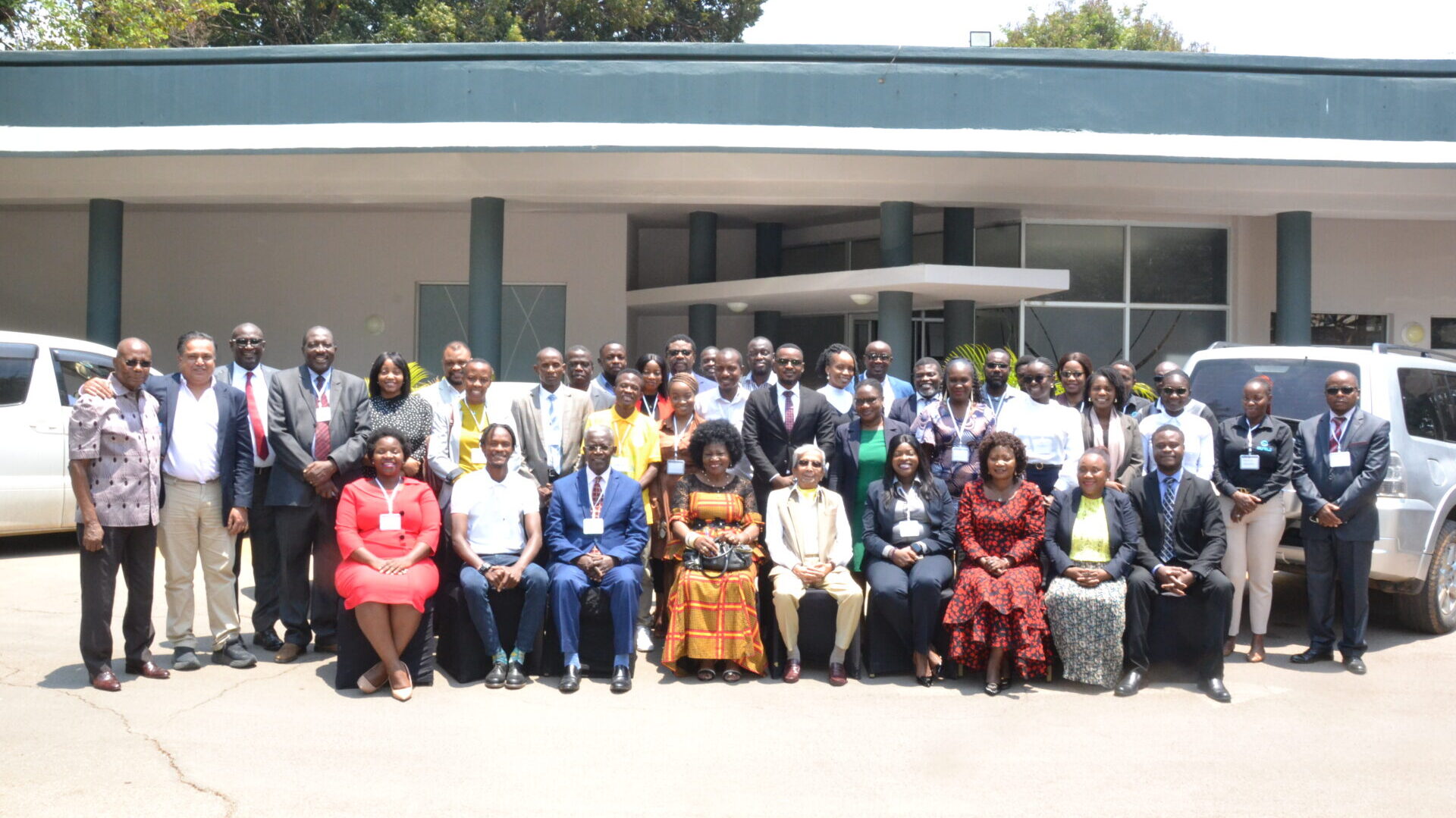
I was interested to see mention of the final workshop where there were proposals to a panel of investors. What came from that because the report also said that a lot of the entrepreneurs don’t have the skills for financial modelling.
Jumbe: We continued interacting with the private sector companies that were in the last workshop, to build momentum and ensure they have some support when it comes to applying for financing. We had a similar assignment last year working with Renewable Energy and Energy Efficiency Partnership (REEP). It’s a scheme called the Southern Renewable Energy Investment and Growth Programme, and we manage the database of companies.
We brought together six private sector companies with financial institutions to build capacity in them to make sure they align with the standard criteria for securing any form of finance, but specifically commercial financing. Two of those companies are speaking to the banks right now and one looks like it could be funded by the local financial institution.
Our aim is to ensure that everyone that participated will get support.
In the longer term how do you fill the gap of the financial planning skills on a larger scale? Is there a training body that could offer that?
Lynnly: Training, like you say, is the missing link. That’s what’s needed right now and this is what Lloyd is good at because we know the market very well. Already there’s a demand for it.
Would Lloyds be looking for a source of funding to make that training program happen more quickly?
Lynnly: Of course. We are working with different associations and through our interaction with the Ministry of Energy, to find ways of having some form of training. What we’ve also achieved is by working together with CCG, we have earned the ears of everyone from government, private sector and people who want to develop their own programs. So the project has put us on a higher pedestal so people will listen.
Thank you so much. That’s a really nice thing to say. What would you like to happen next?
Jumbe: We would like policy makers, decision makers, financial institutions and private sector companies to read the report and see value in it because we believe they are the ones that are going to help us address some of the challenges that were identified.
We would like to see the policy framework improve and if there’s a need for us to provide some small guidance on how that can be done, we would be happy to provide that.
George: One of the more interesting aspects of this report was that CCG is always trying to tread the line between doing research for the sake of knowledge generation and doing research that’s actually useful for people.
The Southern Partner Fund is a one-off short-term funding opportunity so we were keen to think about how the research could be useful to Lloyds. The workshops provided training for entrepreneurs as well as just yielding research insights that can be taken forward.
Lynnly: Our idea is to bring in a wider group of participants to ensure that the progress doesn’t stop with the research but continues until we reach the intended goal.