Mario Heredeia Salgado is an associated researcher at the Pontifical Catholic University of Ecuador (www.puce.edu.ec/). He works at WasiLab (Interdisciplinary Center for Sustainability Sciences) (https://wasilab.puce.edu.ec/). From there he has been providing consultancy services for international cooperation agencies in Ecuador and advising the Environment and Energy Ministry of Ecuador.
How was the EMP-LAC experience for you?
Being a participant of the EMP-LAC was a great opportunity to connect with other researchers and practitioners that are working on the energy modelling side. I was enrolled in the CLEWs track which is a software that allows you to model not only in the energy system, but also land, water and climate.
It was interesting to connect with people with the same interest in trying to link all these different branches of knowledge that are typically analysed by separate teams. I also enjoyed meeting people from other countries in Latin America who are working on these comprehensive and complex approaches to better understand the energy transition.
Concerning the event as a whole, the organisation in Quito and the logistics were magnificently managed by Rosie McGrane (CCG) and my colleague Santiago Vaca at the National Polytechnic University. I won’t deny that the course was intense, but immensely beneficial.
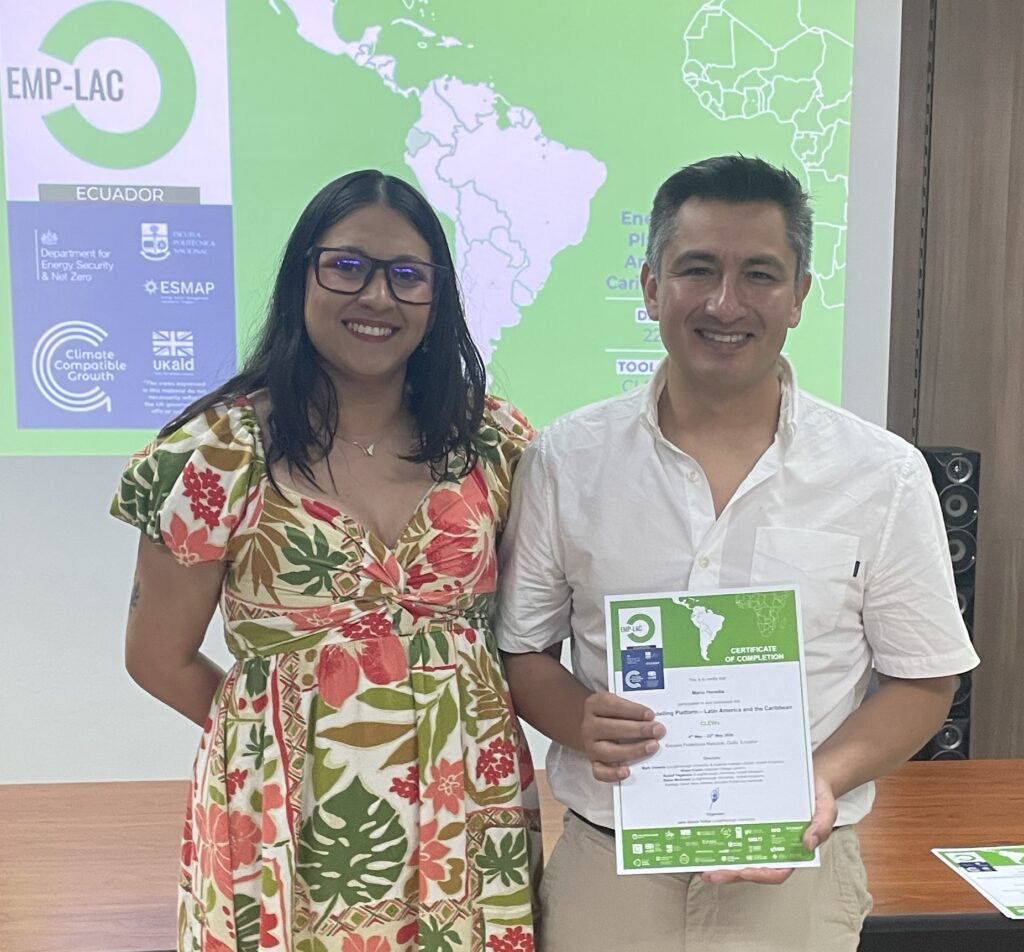
And how did you find your trainer – Yoselyn Seas?
Yoselyn made quite an excellent job. Probably the best part was the discussions we had about the current trends and future paths in modelling energy and terrestrial systems. I had the opportunity to share with her and my fellows my deep interest for example in the integration of agent base simulation to better represent the socio-technical system that lies behind every energy transition underway.
Tell me about your project
At the beginning I wanted to explore the use of CLEW as a tool to explore carbon market dynamics. However, after realizing the power of CLEW to capture water dynamics decided to explore how we can use CLEWs to translate the effects of climate change towards financial terms, specifically in terms of losses and damages. In Ecuador, during the last five years, there’s been an intense discussion about the loss and damages fund of the United Nations Framework Convention on Climate Change (UNFCCC). It’s unavoidable that countries in the global south as Ecuador will suffer the worst consequences of climate change. Thus, compensations from the loss and damages fund are expected although they must be demonstrated with robust and transparent methodologies.
For example, reduced rainfall patterns -as expected due to climate changes- will result in reduced power production from hydroelectric power plants. This lack of -particularly cheap- form of energy most likely will be covered with expensive thermal power plants. Likewise, a reduction in the rainfall patterns will reduce irrigation water. To cover this water deficit in the agriculture sector (land) and the subsequent loss of crop yields, water will be pumped from underground creating a positive feedback bucle of increased power consumption. All these dynamics can be modelled using CLEW and then translated into cash flows.
Based on this type of tools and analysis we may have an analytic platform and methodology to make a quantitative estimation of the losses and damages that come from the consequences of climate shock.
And was your project successful?
Yes. Using a water stress scenario (a 15% reduction in precipitation by 2050, consistent with IPCC AR6 SSP2-4.5), I found that the energy sector reports a significant increase in electricity production costs, as it inevitably has to resort to more expensive energy sources to compensate for the decline in hydroelectric production. However, the greatest impact was seen in the agricultural sector due to the drop in crop production. The commercial losses linked to a reduction in food production capacity for food sovereignty and export crops are quantitatively much higher.
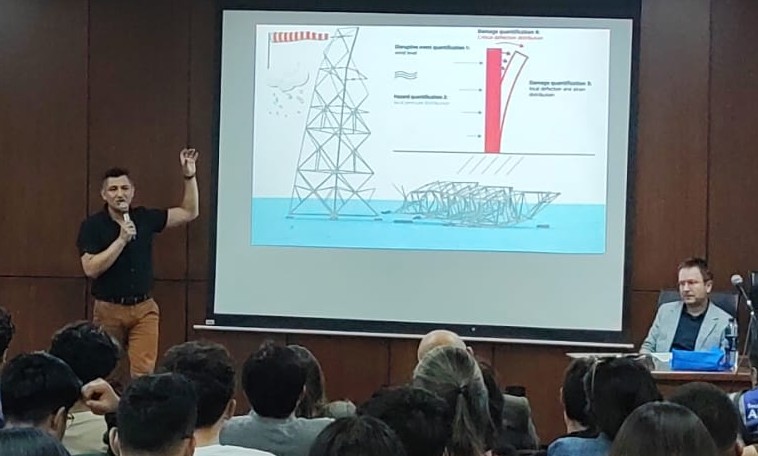
Let’s talk about the research role that enables you to be a consultant to the government on Article 6 and carbon markets. How is that going?
In Ecuador we have a very particular policy context for carbon markets. Let me explain: the Ecuadorian constitution establishes that nature has rights, just like any other citizen in the country. Furthermore, Article 74 indicates that environmental services cannot be appropriated; only the government can regulate its use. This means that we can trade carbon credits -under general UNFCC market rules- linked to mitigation activities such as energy, waste, industrial processes and agriculture. Agriculture must follow several rules to avoid interfering with this natural balance. Recently, I was supporting this technical discussion as part of a team led by the Undersecretary of Climate Change. The policy that regulates the participation of Ecuador in carbon markets under Article 6 of the UNFCCC was released a few weeks ago.
Thinking about the wider population of Ecuador, what is the view about climate change? Do people view it as a priority?
As in many other countries in the Global South, climate change impacts are not the main issues for the population. Recently, concerns about crime and violence linked with drug dealing are dominant.
After that comes the financial situation, of course, working conditions and job opportunities. Nonetheless, I believe that the population is also aware of environmental issues.
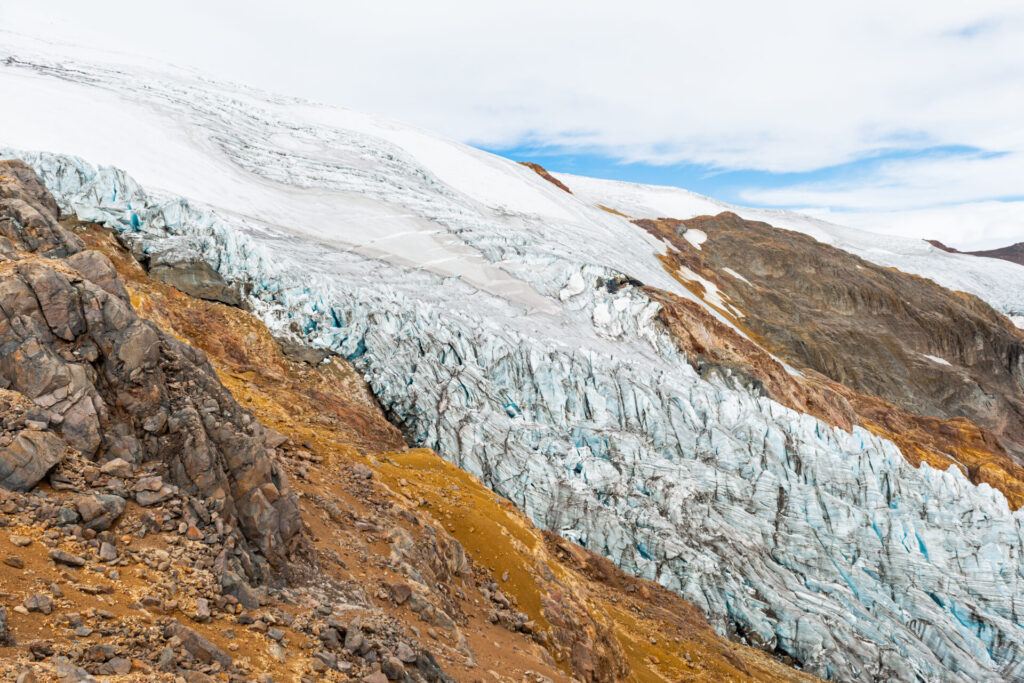
People can clearly see that something is happening around them. In the highlands, for example, day by day the snow-capped mountains are losing their ice sheets. It’s quite evident and this will be a problem because those ice sheets are the main source of drinking water for cities.
Due to changes in rainfall patterns, we are experiencing flooding and landslides, and people are aware that this is of concern. While the general population doesn´t link these events to climate change, there is a widespread awareness that we are not taking sufficient care of nature, which is why we are experiencing these extreme weather events and their resulting impacts.
Finally, is there anything else you would like to add?
Yes, I would like to thank all the people that have spent so many hours in creating the material that we have been using for this training at EMP-LAC, from the online training to the on-site training. I was amazed by the number of resources, videos, tutorials, and reading guides that have been created especially considering they are all open source, and therefore available to anyone that wants to be trained on energy, land, water and climate modelling.
I recognise the effort that went into this and I want to publicly acknowledge all the researchers, practitioners and people that have been working to put this online, to provide permanent maintenance, update it regularly and then make it available for others. I am grateful and convinced that these tools are essential for the design and implementation of true, informed and science-based actions towards sustainability.
And of course, when you get involved in this, you feel an obligation to support and make contributions to it, so I want you to know that I am committed to contributing to this community and supporting this platform to continue generating impact.
That’s our plan, Mario, thank you so much for that. That’s very kind of you.