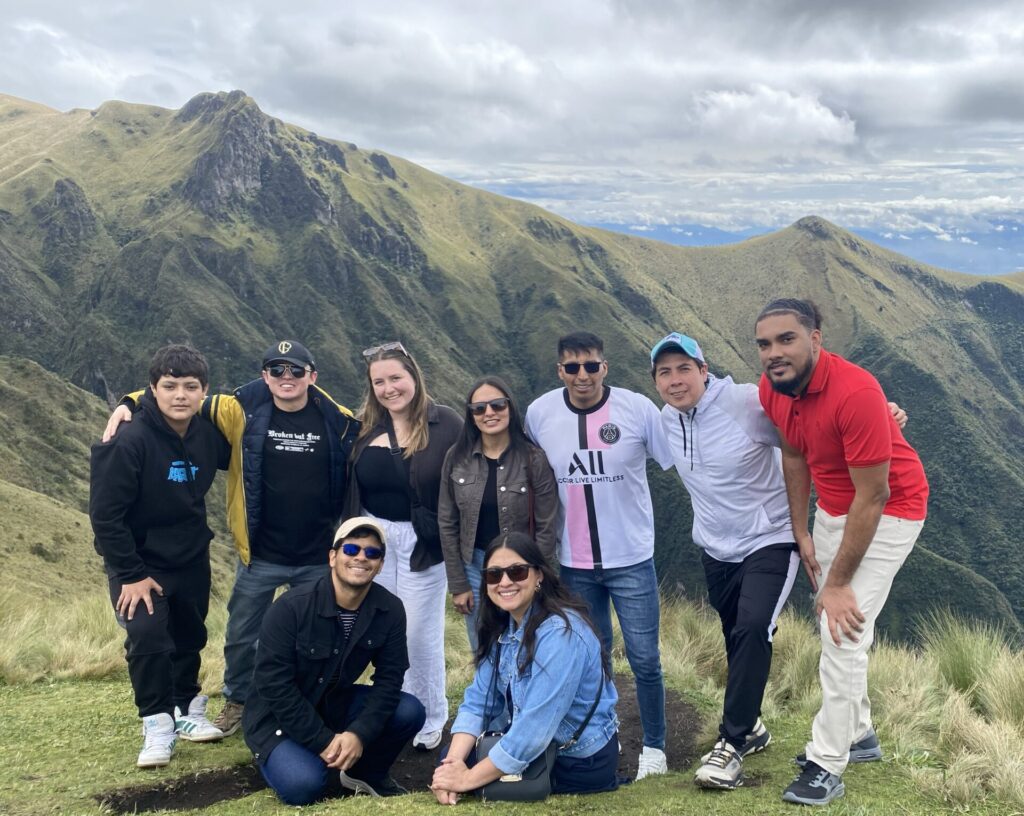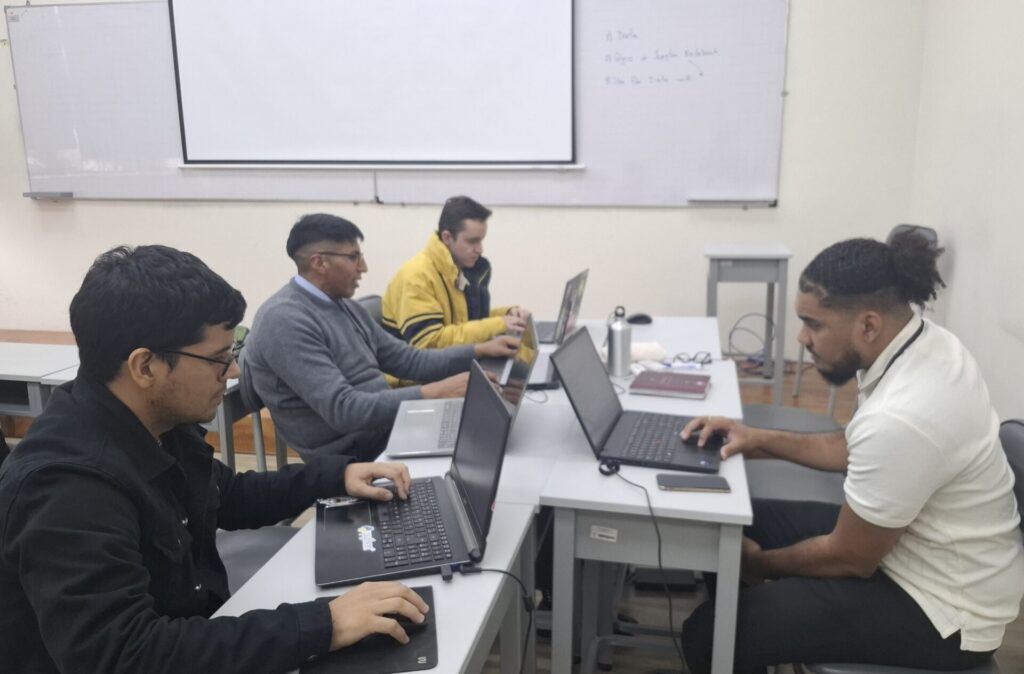
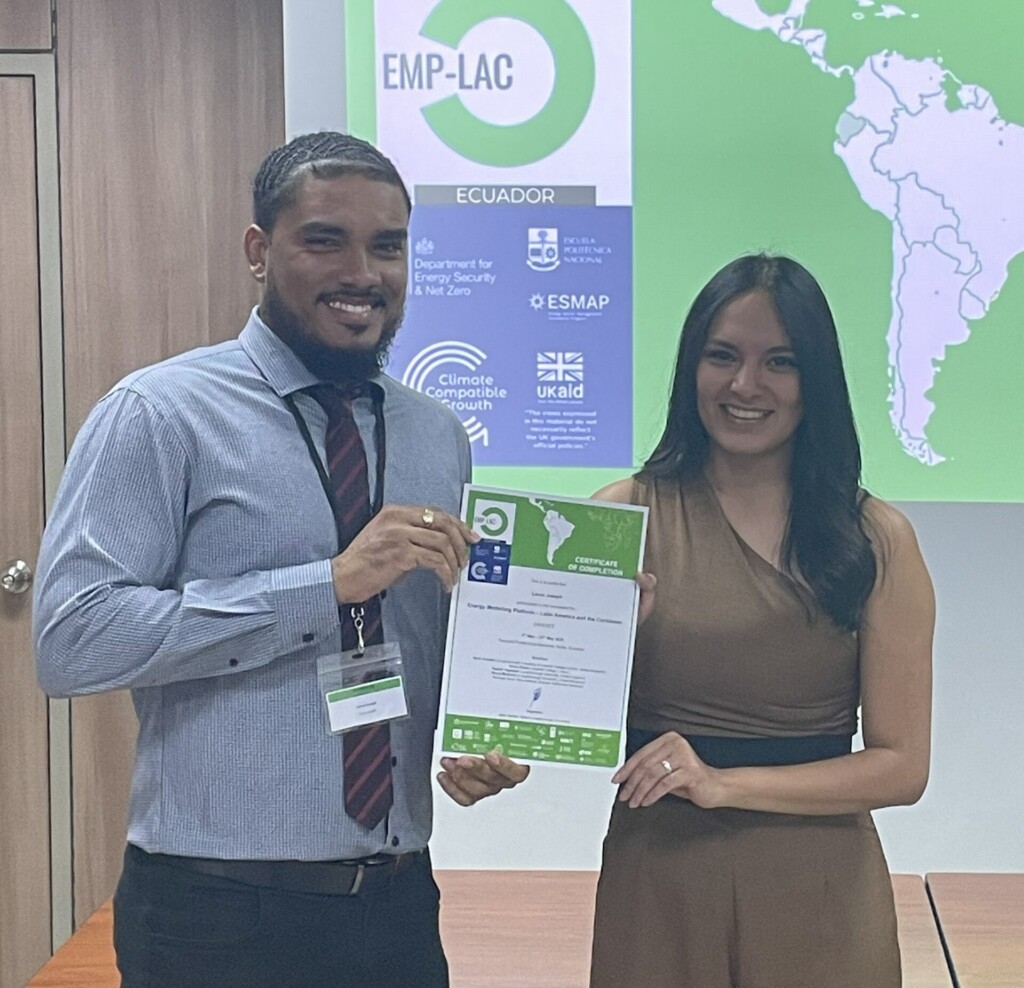
Leron Joseph recently attended the Energy Modelling Platform for Latin America and the Caribbean (EMP-LAC) 2026 in Quito, Ecuador, where he studied the OnSETT track. As a Regulatory Analyst at PURC in Grenada, he works across the electricity, water, and sewerage sectors. We spoke with him about his experience at the programme and its relevance to Grenada’s energy transition.
How did you find out about the energy modelling platform?
It was through the World Bank. They regularly communicate with PURC given our current energy infrastructure, regulatory environment and the developmental stage we’re in. They’ve supported us considerably through consultation and they recommended the EMP-LAC programme as a capacity-building opportunity.
Why did you decide to study OnSETT rather than another model?
OnSETT has a particular range of benefits as it relates to geospatial mapping and planning for the electric grid. In Grenada, 99 per cent of the grid is currently powered by fossil fuels, and we are actively trying to transition to renewable energy. That includes photovoltaic systems, geothermal, and other technologies. We are also exploring grid modernisation to integrate these new renewable resources, and OnSETT is well suited for that kind of planning.
Did you do a real-life project while you were at the EMP?
Yes, and it’s actually a funny story. Grenada doesn’t yet have all of the necessary datasets to do a full OnSETT analysis. Out of the 18 geospatial layers that are needed, Grenada only had about three usable layers.
So what I did was select an area in Brazil, the state of Acre and completed the analysis on that, with very positive results. The results were aligned with existing policies for the region, which goes to show that OnSETT analysis is not just theoretical; it’s also practical.
What are the data issues in Grenada? Does the data not exist or is it held by people who don’t want to share it?
While I was in Quito, I was communicating with the regulatory engineer at PURC (Mr. Raheem Elliotte) back in Grenada. Through that process, we identified that the data is available, but it is held by the utility company, the only electricity utility company on the island. So it’s going to be a process of communicating with them through official channels to gather that data, and then we can start the process of the OnSETT analysis.
That’s positive. Is that a commercial company or government owned?
It’s government owned. It was repurchased fairly recently from WRB, which was a private company. Since then, electricity rates have generally trended lower, particularly due to changes in fuel prices and regulatory arrangements
What was your group like at EMP? Did you enjoy the teaching?
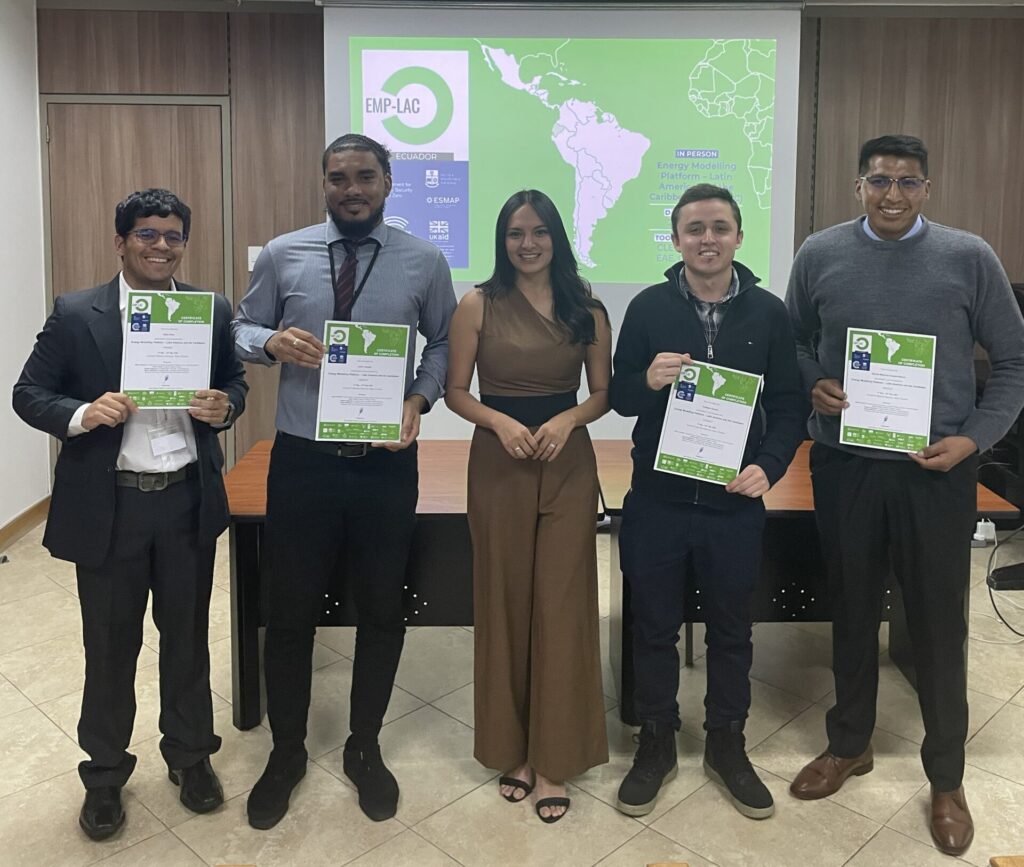
It was a relatively small group for OnSETT, led by Alexandra Falcon. She’s an excellent teacher – bilingual in Spanish and English, which was essential for me since I only speak English. She led the class well, translating all the technical terms and guiding us through the entire process. It was a very informative two weeks. I learned quite a lot, and I don’t regret going at all. I’m grateful to the World Bank and CCG for funding my place.
Tell me a little bit about your current role in the regulatory commission; what is your focus?
As a Regulatory Analyst, my core responsibilities include research and monitoring, compliance and assessments, reporting and documentation, and policy and advocacy. We track and propose new regulations to regulate the utility sector. We also regulate the electricity, water and sewerage sectors.
How are you going to put your new knowledge to work now?
Grenada is preparing to deliver a large photovoltaic project that will be crucial going forward. I intend to apply the skills I gained at EMP-LAC across various aspects of geospatial electricity planning.
What kind of percentage of the population have access to electricity?
Grenada has a very high electrification rate at 95%, with access to electricity available to the vast majority of the population.
And you have a commitment to reduce fossil fuels. What is Grenada’s experience of the climate crisis?
Because Grenada relies heavily on imported fossil fuels, we are exposed to global commodity price volatility, geopolitical disruptions and supply-chain shocks. These factors can significantly affect electricity prices
I see. And so the government is planning to get away from that fragility, and create their own energy security through renewable energy?
Yes, that’s definitely the plan. The government is exploring geothermal energy development, and there is currently a project funded by the UK’s FCDO as well as the Caribbean Development Bank. I believe the investment is approximately $10 million GBP from IK’s FCDO and $9.4 million from CDB respectfully, with the goal of establishing a 15-megawatt geothermal facility that would provide up to 44 per cent of Grenada’s energy needs.
The OnSETT model will support our future planning for the broader energy mix – not just geothermal, but renewable energy in the form of photovoltaic systems, mini-grids, and off-grid systems as well.
As an island, Grenada has a lot of coastline. Do you have the potential for wind power too?
Yes, there is strong potential. Grenada sits in the path of the Caribbean trade winds, and a wind resource assessment by the Caribbean Development Bank and the UNDP identified several high-potential sites along the eastern coast. But Grenada is a tri-island state Grenada, Carriacou, and Petite Martinique each with distinct energy infrastructure challenges. OnSETT has a particular application here, since it was built to model exactly this kind of environment across multiple geographic areas.
From a sustainable energy point of view, what would you like Grenada’s future to be? I’d like to see a sustainable energy mix incorporating geothermal, mini-grids, and photovoltaic systems, one that ensures customers have the lowest possible electricity prices, and that the majority of the population has access to electricity. Energy is one of the key drivers of the economy, and getting this right matters for everyone on the island.
Thank you very much for your time, Leron.