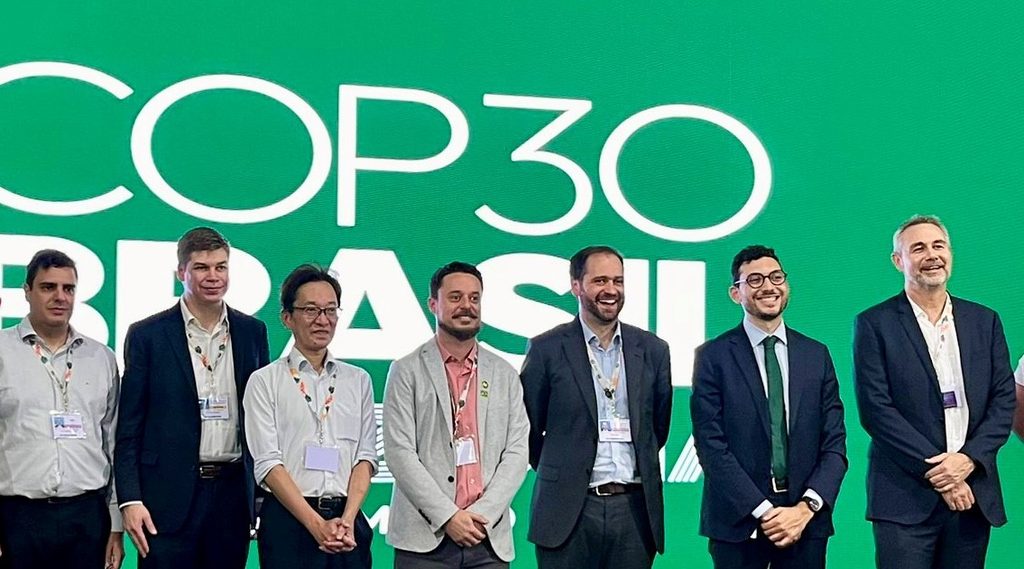
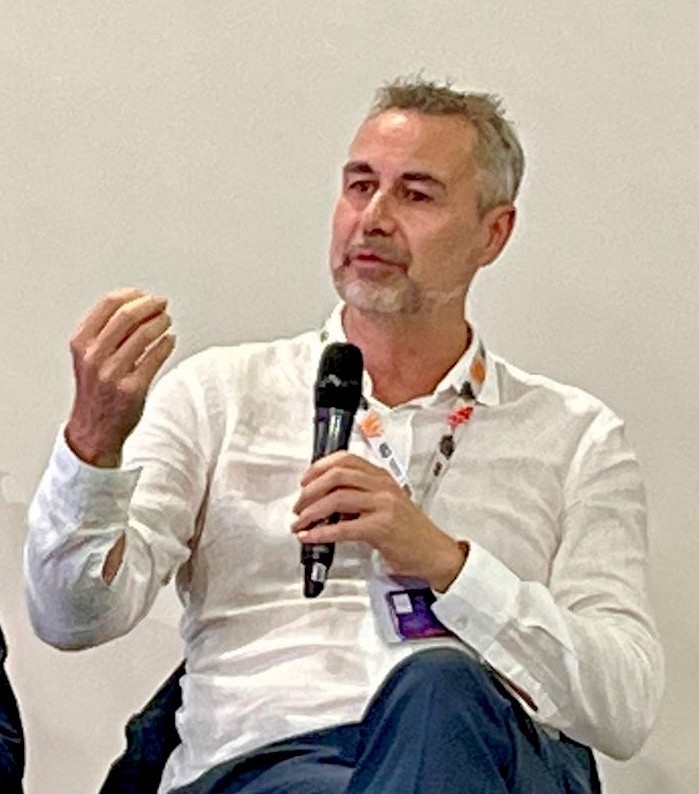
CCG’s Sustainable Transport Lead, Holger Dalkmann, shares his thoughts on the state of Sustainable Transport action as he makes his way to COP31 in Antalya.
MORE COMMITMENTS, LESS TIME
Transport arrives at COP31 carrying more commitments than it has ever held, and less time to deliver them. Fossil fuels still supply 95.4% of transport energy, and while global emissions are slowing, transport’s are not. The Presidency’s 35×35 pledge, lifting electricity from roughly a fifth of global final energy use to 35% by 2035, cannot be met without transport moving faster than any other sector: its electricity share has to climb from 2% to 13% within a decade, the steepest increase anywhere in the energy system.
SLOCAT’s Transport @ COP31 brief sets out the task as four messages for negotiators: electrify while cutting energy demand, put transport at the centre of the second Global Stock take, build transport into national fossil fuel transition roadmaps, and finance a just and resilient transition.
The coalitions are growing alongside the targets. The Ministerial Declaration on resilient and low-emission transport, was launched at COP30 in Belém by eleven countries and came out of Chile’s 2025 presidency of the International Transport Forum and its Call to Action. It has since handed its presidency from Chile to the Dominican Republic and added new signatories. Its Global Transport Effort commits to cutting total transport energy demand by 25% by 2035 and shifting a third of what remains to sustainable biofuels and renewables.
That pairs neatly with the Presidency’s 35×35 pledge, which lifts electricity’s share of global final energy use from about a fifth today to 35% by 2035. The two work from opposite ends of the same problem: 35×35 on what energy transport runs on, the Global Transport Effort on how much it needs in the first place, both landing on the same 2035 midpoint. Antalya is where the coalition publishes its first annual report and the methodology for tracking that commitment.
The argument is no longer about whether transport belongs in climate policy. It is about whether countries can turn what they have written down into projects that actually get built.
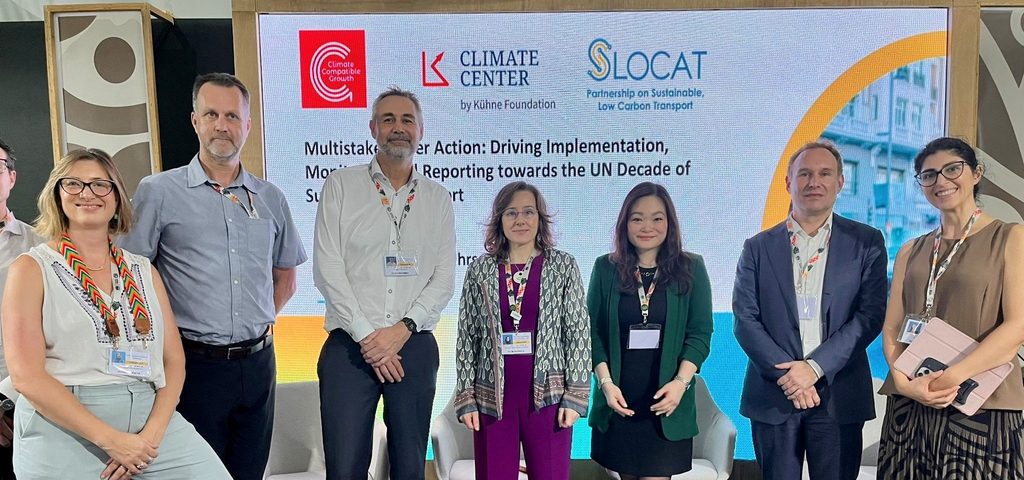
Transport is also more than decarbonisation, being a question of access, safety and affordability as well, which is why it matters that COP31 falls in the first year of the UN Decade of Sustainable Transport, 2026 to 2035. A session at the SDG Pavilion on the morning of 11 November asks how the Decade turns global commitments into practical action, taking stock of its first year of Sustainable Transport Action Commitments.
THE PLEDGES ARE IN, THE PLANS ARE NOT
The submission phase is effectively over. The UNFCCC’s 2026 synthesis report covers 127 new NDCs from 154 Parties, together accounting for around 71% of global emissions in 2019. Transport is in them: SLOCAT and GIZ’s analysis of the latest generation finds 88% include measures to cut transport emissions and 64% include transport adaptation and resilience. Half of all Parties now report measures on charging infrastructure, up from under a third in the previous round.
That is real progress, and it moves the problem rather than solving it. A measure named in an NDC is not a budget line, a procurement process or a bankable project. Quantified transport targets remain scarce. The work that decides the next decade is national implementation, meaning action plans with timelines, institutional mandates at the level where projects are delivered, and targets written so they can be tracked.
This is also where finance is won or lost. A target that is not costed, sequenced and attached to an institution cannot be appraised, so the quality of this NDC round determines whether transport projects reach the climate finance queue at all.
The same shift is visible outside the UNFCCC process. Informal and shared mobility has to become an integral part of future transport systems, as the Bangkok Declaration on Informal and Shared Mobility set out in October. It also asks for mobility data to be published in machine-readable form, in line with the Transport Data Commons that TDCI is building.
FREIGHT GETS A HEARING
Freight has long been the quieter half of the transport agenda, and COP31 changes that. A Transport Ministerial on the Global Green Cargo Corridors Initiative takes place on 10 November, Energy and Transport Day, giving cargo corridors ministerial attention for the first time. It is a sensible place to start, because corridors are where mitigation, adaptation and trade policy actually meet. They carry the freight that drives emissions, they are exposed to the climate hazards that disrupt supply chains, and they are the assets that attract investment.
That combination is the premise of RIDE, the Research on Infrastructure in Developing Economies programme funded by the UK Foreign, Commonwealth and Development Office, whose corridor work spans low-carbon corridor development, railway climate resilience and the network data needed to decide which corridors matter most.
Its session at the Transport Pavilion on 11 November brings those three strands together with UIC and the University of Birmingham’s African transport systems database, and launches a RIDE and CDRI Community of Practice on resilient transport corridors.
The analytical groundwork is already being laid where it is needed most. Last June, CARISCA at KNUST hosted a Regional Expert Workshop on Freight and Logistics Policy Modelling in Africa in Kumasi, with the Kuehne Climate Center, CCG, and Deep Decarbonization Pathways, an initiative of IDDRI. Its starting point was that the modelling capacity already exists on the continent and is unevenly recognised. That collaboration continues, with the aim of building a standing base of African freight modelling capability, so that corridor and freight decisions rest on analysis done in the region rather than imported for the occasion.
FROM PLANS TO PIPELINES
Asia and the Pacific’s low- and middle-income economies need around US$2.6 trillion a year for transport between 2025 and 2035, roughly three times historical levels. The binding constraint is rarely ambition. It is that countries lack the data, the models and the prepared pipelines to turn a stated commitment into something a financier can appraise.
This is the problem CCG’s Data-to-Deal approach was built for, applied with the Asian Development Bank and funded by UK FCDO. It links open data and modelling to national planning processes, including NDCs and national transport strategies, and then to specific financeable interventions. It is now being tested in Tajikistan and Papua New Guinea, two countries with very different transport geographies and the same underlying problem of converting intent into investable projects. The partnership with ADB is what makes it concrete: a development bank brings the pipeline, the appraisal discipline and the capital.
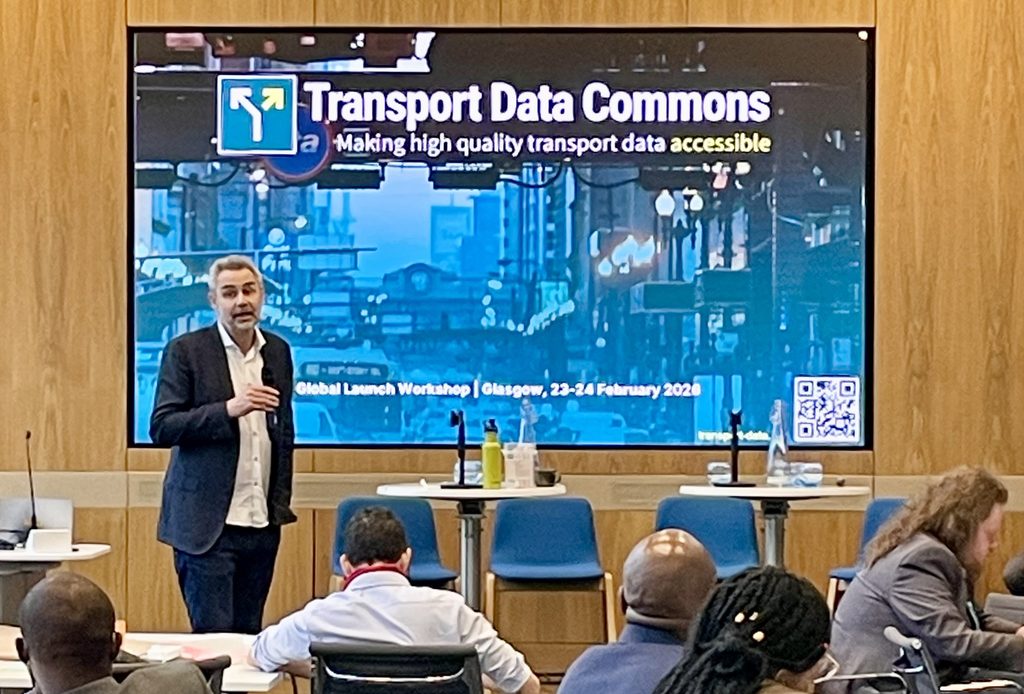
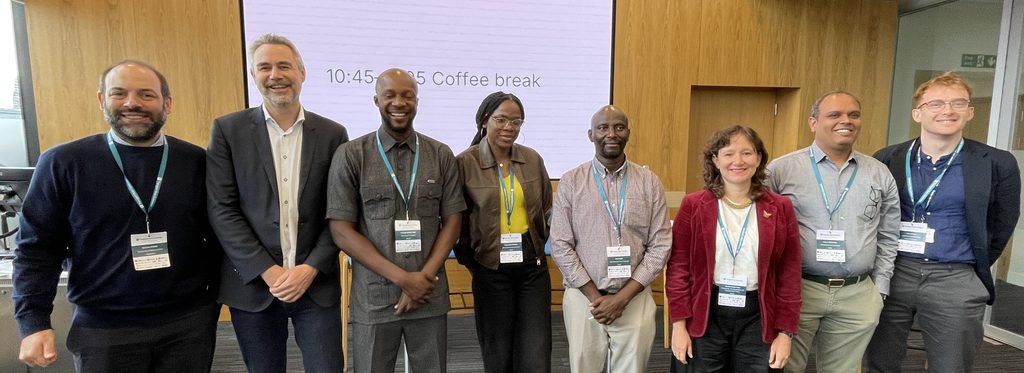
Open data underpins all of it. The Transport Data Commons Initiative exists so that transport data is findable, interoperable and usable by the people writing national plans, rather than scattered across incompatible sources that no one can build a business case on. TDCI will be presented at COP31 and is becoming part of the toolkit offered to country partners. This is the unglamorous machinery that turns a plan into a pipeline.
WHERE TO FIND CCG
At the Transport Pavilion, CCG is involved across the week. Data-to-Deal with the Asian Development Bank runs on 11 November at 10:00, followed at 11:00 by the RIDE corridors session. On 13 November the Ministerial Declaration coalition marks its first year, with the tracking methodology and a first dashboard mock-up for the Global Transport Effort. Advocacy opens the week on 9 November. The full pavilion programme is on the SLOCAT website.
THE ROAD TO ADDIS
This work never really finishes, and that is the point: every COP hands its unfinished business to the next one. COP32 goes to Ethiopia next year, and with a Ministry of Transport that has genuinely championed low-carbon transport, Addis Ababa is a real milestone for this sector rather than simply the next venue. So the question worth carrying out of Antalya is not what was pledged here. It is what each country takes home: which ideas, which partnerships, and whether they add up to arriving in Addis with an action plan more ambitious than the one they brought to Türkiye.