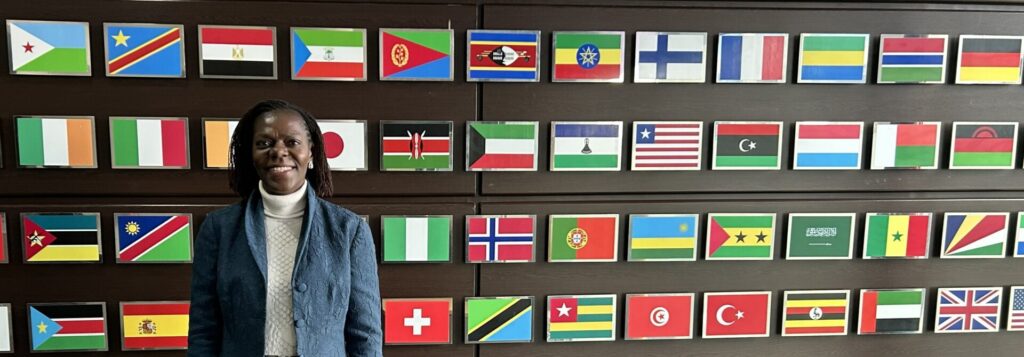
Catherine is an Electrical Engineer currently working in the Energy Sector. She is passionate about Renewable Energy, Sustainability, Green solutions, Innovation Management and Operations Excellence. She has experience in the Energy, Telecommunications, ICT, Manufacturing and Education sectors. She says of herself, “I have had a front seat in several Infrastructure revolutions in Kenya namely the Internet revolution in 1998, the ICT revolution in 2002, and the Telecoms revolution in 2006. I currently have a front seat in the energy transition.”
At the moment I am working at AfDB as the liaison between AfDB and CCG. I look at the priorities within AFDB and match them to CCG’s capabilities, particularly the modelling tools and as well as other resources such as the Special Interest Groups and the starter data kits.
AFDB current priority projects include Mission 300 – an ambitious initiative to connect 300 million people in Sub Saharan Africa to electricity by 2030. To make this happen you need to create an enabling environment and support access to finance. This can be done through – technical assistance. Some of the other Energy projects at AfDB include Desert to Power and the Africa Energy Transition Catalyst amongst many others. I’m based within the Sustainable Energy Fund for Africa within AFDB, which provides technical assistance and concessional investments.
My strength lies in the scientific and technical, given that my first degree was in electrical engineering, followed by an MBA. I have been in the energy sector for at least 15 years; 13 years at the largest power generating company in the East Africa region, followed by a short stint at the Power Africa programme. So, I bring in a wide range of skill sets, targeting generation, transmission, distribution, renewable energy in terms of solar, PV, hydro, wind, and regional integration. I’ve also done some gender and social inclusion work.
HOW IT STARTED
I studied electrical engineering because I really loved Maths and I was advised that this was the most maths-intensive course that would also support a professional career. What then got me hooked on the engineering side was the impactful nature of engineering solutions and the fact that electrical engineering is very interesting and practical. My first working role was in the software development space which is really helpful now when it comes to data analytics and reports since I worked with the backend relational database management systems. Later I had a short stint in Research and Development before moving to manufacturing, specifically rotomolding. From there I moved on to telecoms because I was feeling under-used so I kept looking for a role in which I would be more stretched. I felt my career was in a better place when I got into the telecom sector – I was applying what I had learned; the impact of my work was high, and the service we were providing was critical. We were maintaining the Power Systems of several cellular networks in East Africa. It is from there that I transitioned to the Kenyan Electricity Generating Company (KenGen).
KENYAN ELECTRICITY GENERATING COMPANY
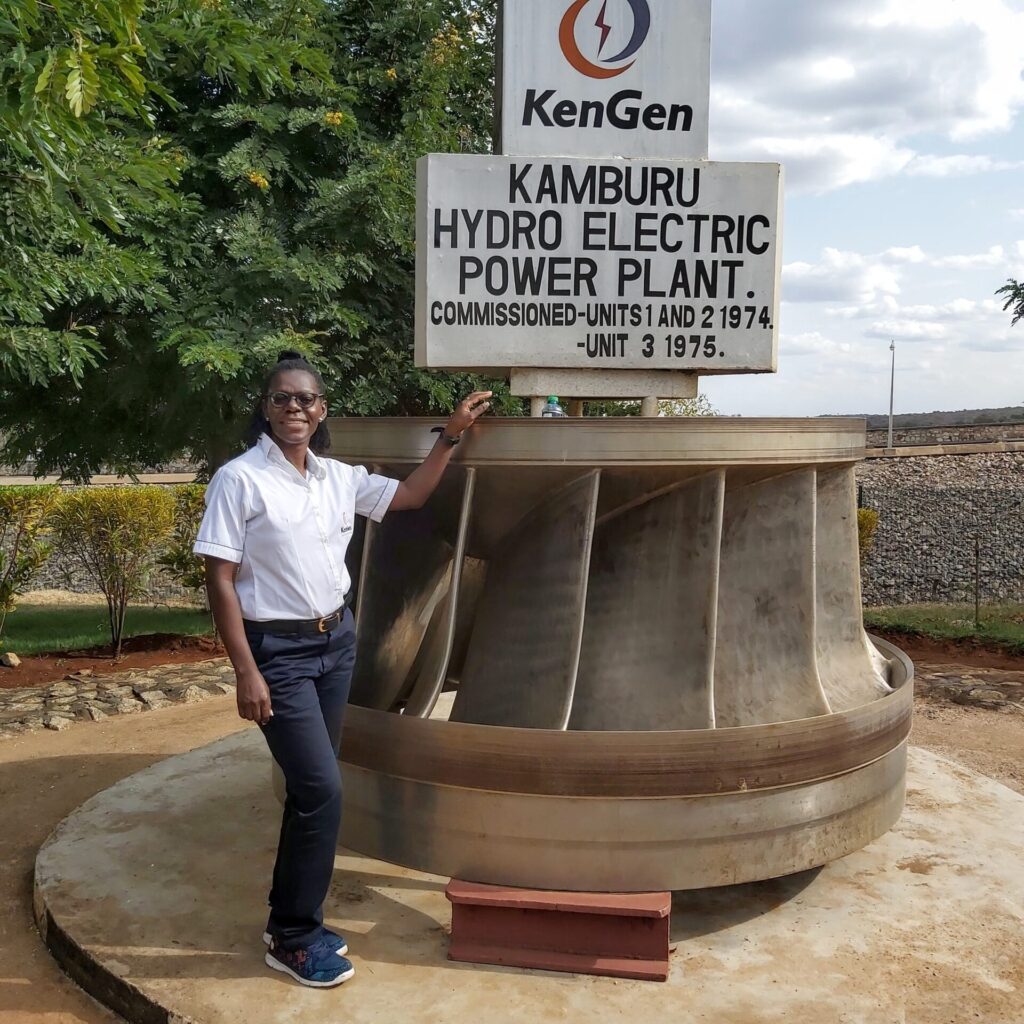
This is the largest power generator in Eastern Africa, so it was an exciting opportunity for me to learn more about the energy sector. It was a good decision because KenGen is very dynamic. It has a variety of generation technologies including Geothermal, Hydro and Wind. Hydro was the largest at the time and Geothermal has been growing steadily. They also have wind and are just starting to get into solar. So, the technology alone was enough to make me move. Then the strategy around KenGen, the big vision, the boldness of always trying to do new things was another.
KenGen had an ambitious Geothermal led strategy dubbed G2G with the double meaning of “Good to Great” and “Generation to Generation”. It was quite exciting to be a part of that strategy, contributing to it and learning from it
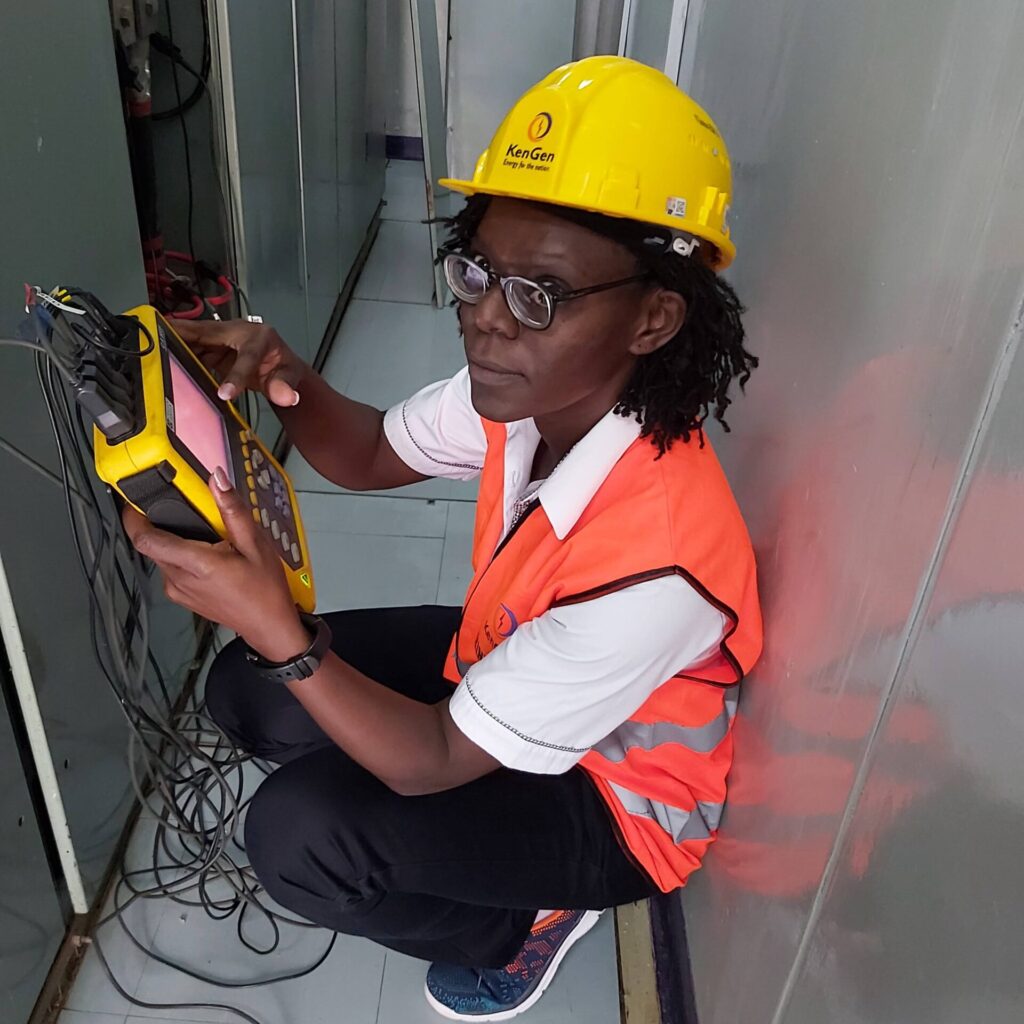
KenGen was also involved in quite a bit of innovation, always looking for ways to exploit technological advancements and innovate business processes. This made it a vibrant company to work in. Some of the projects I participated in include Battery energy storage projects, e-mobility infrastructure pilots, the set-up of the Geothermal Centre of Excellence, and others.
I was there 13 years and completed my MBA during that time. After that, it was a natural progression to join a regional energy programme such as Power Africa – the US presidential initiative launched by President Obama in 2013. I joined its third iteration. My scope covered the Eastern African region including eight countries and spanned generation, transmission distribution and regional integration.
The highlights of this period for me were working with the Kenyan distribution company on a Smart Grid Strategy and commencing work on the wheeling tariff methodology for the East African Power Pool – a prerequisite for regional power trade. It was interesting to learn more about the Somalia metro grids.
WHAT I’VE LEARNED
My experience during my career has made me realise that one of the main challenges we need to address is the Productive use of energy. Energy needs to be used not just to light up but to power livelihoods. Access to Power should be accompanied by access to a new source of income arising from the energy.
Whether through service provision (salon services), cold chains, e-mobility. This is what makes for a sustainable future not only for the individual but also for the investors. Productive use of energy contributes directly to the economic growth of the country.
ISSUES FOR THE FUTURE
I’m quite intrigued by the idea of regional power trade and the variety of dynamics around that including wheeling across countries, optimization of power sources, grid stability, pricing and others. It should create competition on price which will benefit more customers.
I’m in agreement with transmission grids being eligible for climate finance to support transmission of clean energy to where it is most needed. Independent power transmission line companies need to be able to move with speed while being profitable. This calls for financing.
One other thing that I think it’s important to talk about is Human resource. There’s a reasonable amount of brain drain in the energy sector right now. Engineers who have grown and build competence over a period from distribution and transmission companies, soon leave the company for opportunities in the west. So the idea that CCG is promoting – of sustainability and capacity building – is very important. The concept of a pipeline is more critical than ever.