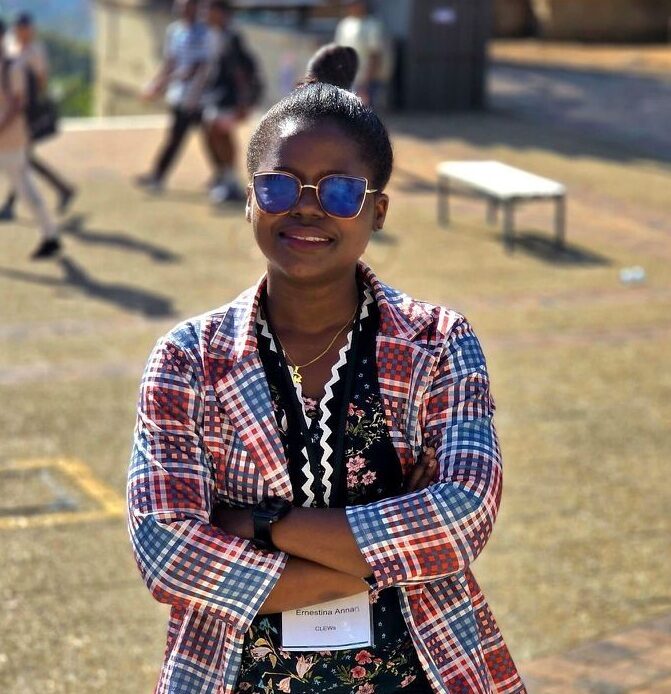
Dr Ernestina Annan who works at WASCAL, (the West African Science Service Centre on Climate Change and Adapted Land Use) discusses her love for modelling and her journey to becoming a CLEWs trainer for Ghana. Interview by CCG’s Peter Allen
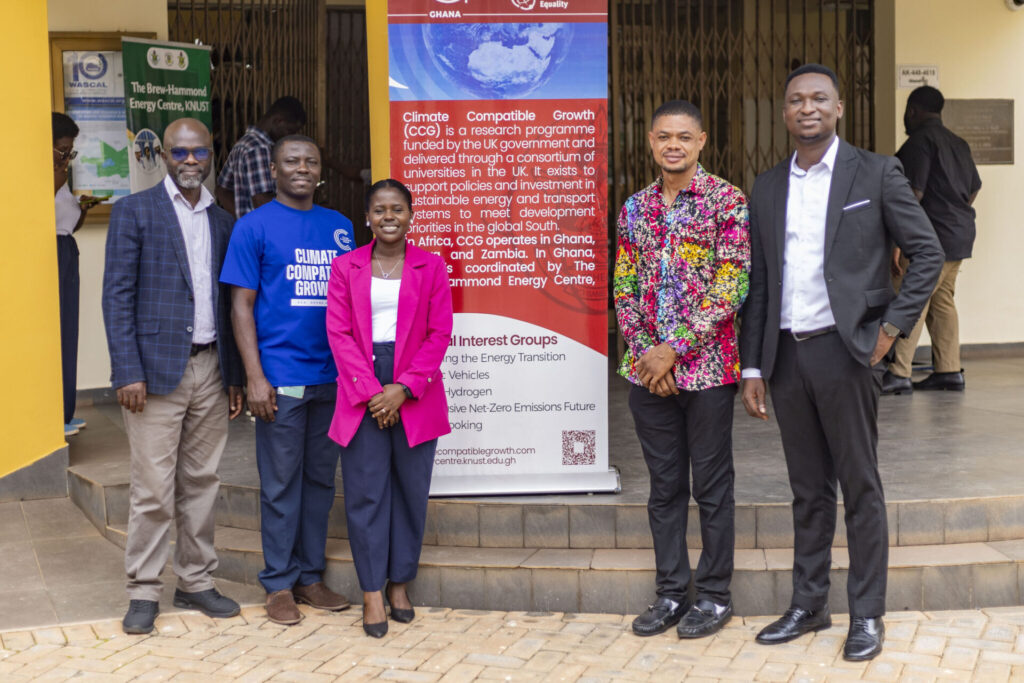
Dr Jerome Lavie (KNUST)
Tell us about your early education and where your interest in climate change came from
I started my first degree in agricultural engineering and then continued with my master’s in soil and water engineering. One thing I noticed during my master’s thesis was the difficulty with farmers accessing water for irrigation. So, for my PhD, I did research on hydrological modelling. I was looking at how changes in land use could affect how water also moves and is distributed on land. This is directly tied to water availability for other users, including farmers. That is where my interest in climate issues came from; we all use water a lot and the weather has changed recently affecting, not only farmers, but also industries. The energy system is also a part of it, because water is used for cooling powerplants.
Was there an interest in that kind of thing when you were younger?
I didn’t even know what climate was then, but I have always been interested in making good use of what is available. Growing up from a humble background, we were taught to maximise the opportunities we got or the resources we had. I believe now that that’s a significant part of mitigating or adapting to climate change.
Tell us about your current role.
Okay, currently I’m serving as a scientist at WASCAL and in charge of office management and Information Technology (IT). I did my PhD with WASCAL, (the West African Science Service Centre on Climate Change and Adapted Land Use) and the key focus of WASCAL is building capacities in climate adaptation and in providing climate services. I would like to be a lecturer as I like mentoring other young people and imparting knowledge.
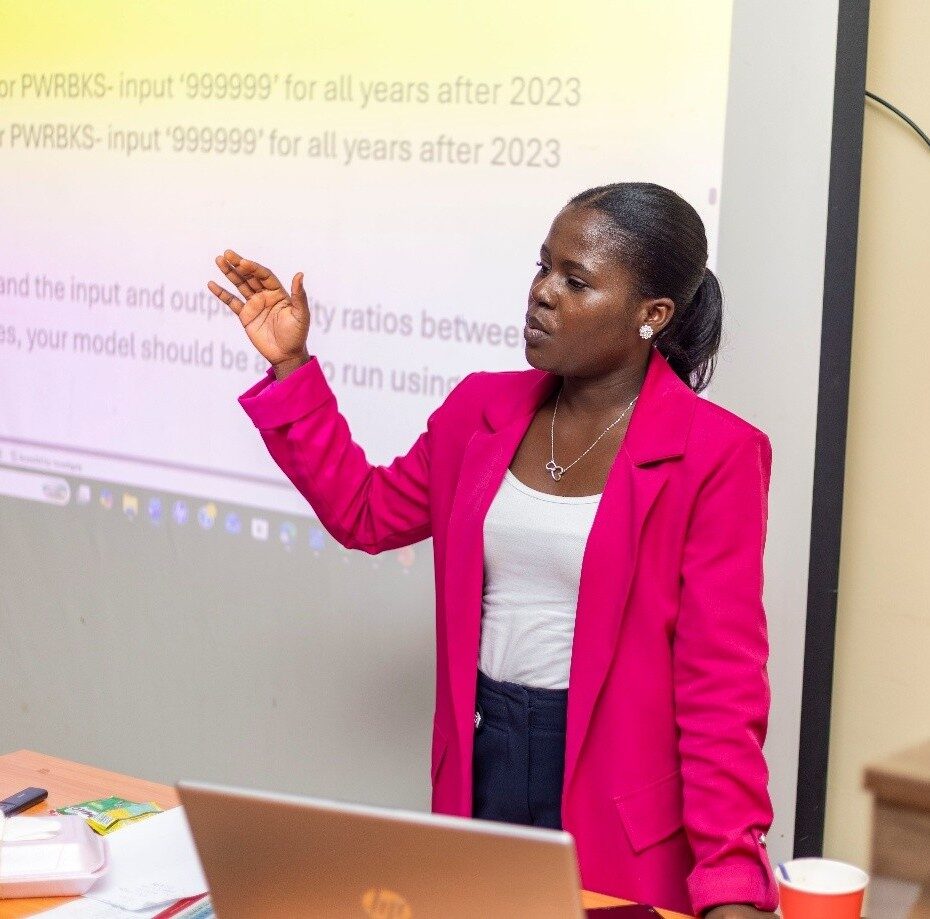
You were also a trainer at the recent training event run by the Brew Hammond Centre?
Yes, for our workshop on Monday with CCG Ghana and the Brew Hammond Centre. That developed from the training we received in South Africa during the EMP-Africa in January. I was part of the CLEWs track, together with two of my colleagues, one is a lecturer and the other is a PhD candidate. When we came back, the directors and the CCG coordinator thought it would be good to transfer part of the knowledge we got from the training to the students.
The South African training was very interesting for me, particularly because I’m not from an energy background. So, when I got the opportunity to do CLEWs, which had the addition of energy, that was great. It was important for me to meet people from the energy and access industry one-on-one, to share knowledge. I’m used to mostly being with researchers so having the industry people made it more real.
When I later got a chance to participate in the Ghana workshop as a trainer, I got good feedback and I was impressed by the commitment from the participants. You know, when people are really interested in something, you can tell. That was a highlight for me.
You seem to have studied quite a lot of modelling tools and done quite a lot of professional development. What would you like to do next?
Yes, I’ve come to love modelling. In future, I would like to also learn other models particularly the geospatial data management track, and then Energy Access Explorer. There is a CLEWs ++ now, isn’t there, a more advanced version of CLEWs. Yes, I heard about it. I’m still contemplating whether to apply to the EMP-G. I would love to take the Advanced CLEWs course. I really want to build my CLEWs capacity a bit more. Yes.
Let’s talk about the relationship between energy modelling training and the impact it’s having on government policies in your country.
After interacting with some of the industry players who work with the Energy Commission and Ministry, you can see that, yes, so far there are certain decisions that have been taken in the ministries where they have actually listened to some of the suggestions from modellers. Some of these people have been part of the training for quite a while so I was happy to hear that they are making certain progress when it comes to translating this modelling information into the policy space. I also heard that models like LEAP have been applied in our ministries. There is still some work to do, but there’s some progress that’s been made.
What is the thing what you would most like to see happen next in Ghana’s journey towards a sustainable future?
I think that the understanding of climate change itself hasn’t gone that deep for everyone. There are still some doubts in the heads of many, maybe because they don’t understand the impact of their actions and inactions. I would like to see us reach everyone to explain it to them so that they’ll appreciate it better and then we could reach our targets even faster.
Other people I’ve spoken to have said similar things. Perhaps people who are very poor have other problems to worry about instead of climate change. What impact has Ghana seen so far in terms of flooding, drought or blackouts?
One thing that comes to mind is the recurrent flooding we’ve had in Accra for the past ten years, that has cost many lives and properties. This is an area where there is a lot of development and yet with drainage systems challenges. In the cities, everyone has aspirations for the latest gadget, everyone wants to use a car.
And even now, the seasons have changed, and our rainy season is very unpredictable. Last year, particularly, we had rains where we weren’t expecting rains. So these are some of the impacts of climate change that we are currently experiencing in Ghana.
Thank you for talking to me.