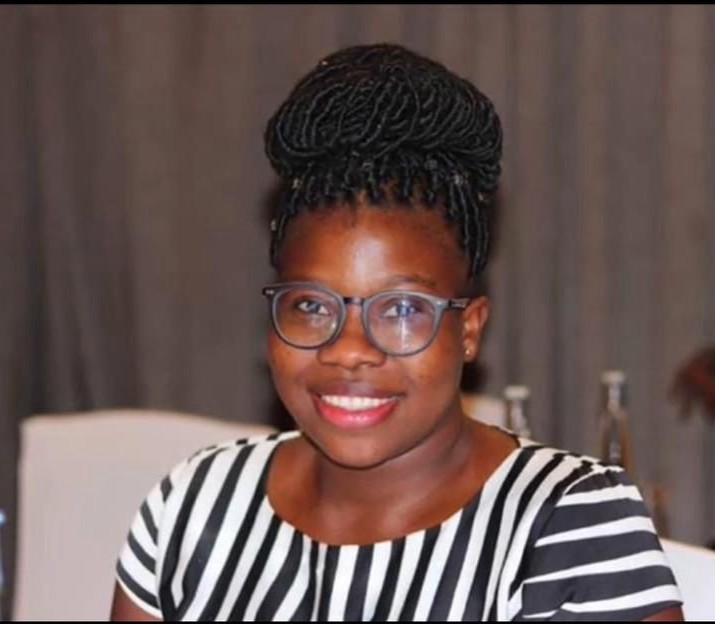
Queenstar is the Founder of Maiseville Agro, a female-led business transforming locally grown pineapple and chilli pepper into value-added products with strong market potential and a clear sustainability mission. She started the company to reduce post-harvest losses, improve farmer incomes, and turn fresh produce into products customers can trust and enjoy. She secured a USD13,000 Mastercard Foundation grant and the support of two mentors, to expand operations in 2026. Queenstar studied Finance at the University of Ghana.
Tell me about your company, Maiseville Agro. Why did you start it?
I am the co-founder. I’ve worked in the energy space for the past seven years and my main goal has been towards reducing greenhouse gas emissions, improving clean energy access and reducing the energy poverty gap; I’d implemented projects around that but I realised that we had not really paid attention to farmers. When it comes to methane emissions and greenhouse gas emissions, there are issues pertaining to post-harvest losses, which farmers are at the centre of. Maiseville aims to provide benefits both to farmers and the environment so two birds with one stone.
Are you the type of entrepreneur who had all the skills necessary to create a business, or did you have to learn them?
As I said, I have another co-founder, and they are a full-time engineer. My expertise is primarily around general operations, like sustainability and financing. I’ve been very privileged to learn from other people over the years. When I started, I was fresh from graduate school in finance, and I didn’t know anything about climate action, sustainability, or greenhouse gas emissions. It’s taken 8 years of painstaking learning to get me this far. If there was a skill I needed, I learned it on my own. So Maiseville is the icing on the cake because it uses all my learning. Starting a business is a lot, and my experiences in finance and business have really helped me know exactly what business is about, and I’m quite a versatile person which helps.
Are you pleased with the performance of your business so far?
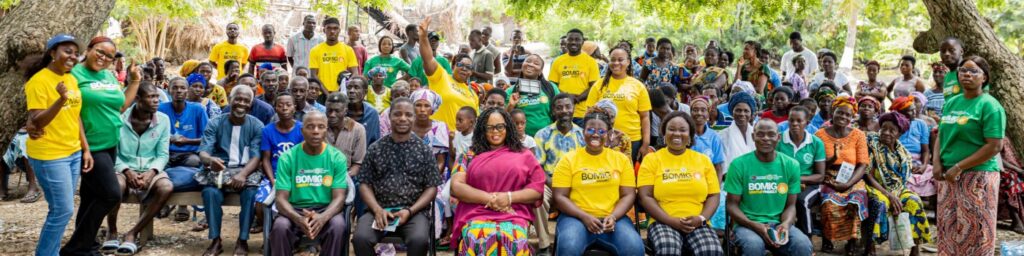
Yes, we are an early startup and we’re just trying to get the hang of it. But luckily for us, we got funding from the Mastercard Foundation Fast program – $13,000 to invest in our infrastructure and our product testing, which has really helped pivot us to a particular level. And it was not just the funding. We had back-to-back mentorship sessions with two experts from Nigeria and across Africa, so it’s been a great privilege to be able to tell our story.
What do the mentors help with?
Sandra helps with business development, market development, market penetration, and Dr. Charles helps with brand development including social media platforms, and how to get people to listen to your story. We started this programme in November, and it’s been really eye-opening and very holistic. It’s great that MasterCard provide this for young entrepreneurs like myself and they’ve even helped us establish our own investment portfolio pipelines to attract more investors.
Tell me a little bit more about the business setup in terms of your infrastructure, size and your processes.
Most of our processes are manual. After we have sourced the peppers and pineapples, they come to our factory for quality testing from our quality assurance manager. Then a group of our workers peel, wash and slice the pineapples in hygienic conditions and then we dehydrate them. And after that, they are packaged and shipped to distribution outlets for sale.
How wide is your distribution?
We started by primarily targeting the informal and local markets, but our mentors advised us to target the mini malls and then the superstores. So, we just started doing that and it’s looking very promising if we can agree on appropriate margins.
What are the other green aspects of your company?
We believe that in our end-to-end production process, nothing should go to waste. We use a solar dehydrator for all our processing, our drying, our power boiling, everything of that sort. The pineapple waste is churned ina micro distiller where our sister company uses the juice and leftovers to produce ethanol and fertilizer for the farmers. We believe in the circular economic principles.
Currently, we have 5 employees – two are part-time and three are full-time.
Do you use your green credentials as a selling point for your products?
Yes, we were advised to do that but in the local context, no one particularly cares about how many emissions you are avoiding. They don’t really understand it. With my experience over the years, like in clean cooking, all the person wants to hear is that whatever initiative we are doing, doesn’t interfere with their basic physiological needs of food, clothing and shelter.
They don’t understand what sustainability is. They don’t understand what greenhouse gas emissions are. So, I try to make sure that whatever message I’m putting out, ties in directly with their physiological needs as well as educating them about the context of climate action. We have several examples of the consequences of climate change – for example where people have actually died from indoor air pollution so it’s becoming part of their lived experience.
I have heard from others that I’ve interviewed that if ordinary people have heard of climate change, it’s not a number one priority for them. They have many, many other things to think about ahead of that.
Exactly, yes.
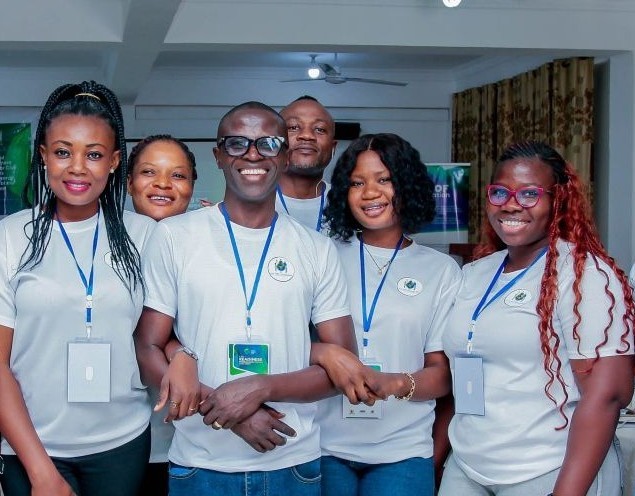
Thinking about your gender, how do you feel this has helped or hindered your journey to this point?
I think it has really helped. The first organisation I joined started with creating an enabling environment for me to learn. Any time we went for meetings with the ministries of energy and other government partners, I was pulled along to learn. The structure has been really inclusive. So, I believe inclusivity and the involvement of women starts in the context of an organisation’s structure, because if society doesn’t allow it, how can women thrive? You can’t thrive. I have had to jump through hoops and overcome things like harassment and safeguarding at the workplace, stupid conversations and comments, all these things. Really, it’s been difficult. But again, it wasn’t my focus.
If as a human being, you know exactly what you are aiming to do and the goal you want to reach, you don’t listen to naysayers, you don’t let them distract you. In a sector that’s male dominated, there are a number of serious safeguarding issues we have to look at. In the context of Ghana, we have a few policies promoting inclusivity of women in certain areas. I wouldn’t say it’s perfect, but we’ve done better than previous years. It’s been challenging because you have to learn and learn but knowledge is power and information is power, and so I just keep going.
You have great confidence and determination; where does this come from?
My dad taught me to be assertive, to push beyond the status quo and not to settle for less. He taught me to be strong, to be assertive, to stand my ground. I don’t give up easily. If there’s something I don’t understand, I believe in asking about it. I’m far from timid but again, having worked with people has taught me to be respectful to others’ needs; to be firm, and to have boundaries.
What kind of person is your father?
My dad is a surveyor by profession, so, he’s in the area of land, space, geography, geometry. He’s an educated person.
So, he knows the value of education and has passed that on to you.
Exactly. And even beyond that, he came from a family where he was the only person that went to school up until A levels. He vowed that as a parent he would make sure his children got a step higher than him. He took me through my secondary school, my high school education, my first degree, my second degree. (And I’m looking forward to doing another degree before my doctorate as well.) He believes in the concept of empowerment for women. He saw firsthand how his sisters were actually kept from going to school and he vowed never to do that to his children. He’s a kind human being.
How did your mother support you?
She doesn’t give up easily when she’s set her mind to something, so I get that from her. In terms of my traits and how my brain works, I feel like I took 50% from my dad and 50% from my mom because they are both very hard working.
Looking to the future, what would you like to see happen, in terms of your business growing, and also how the world responds to the climate crisis?
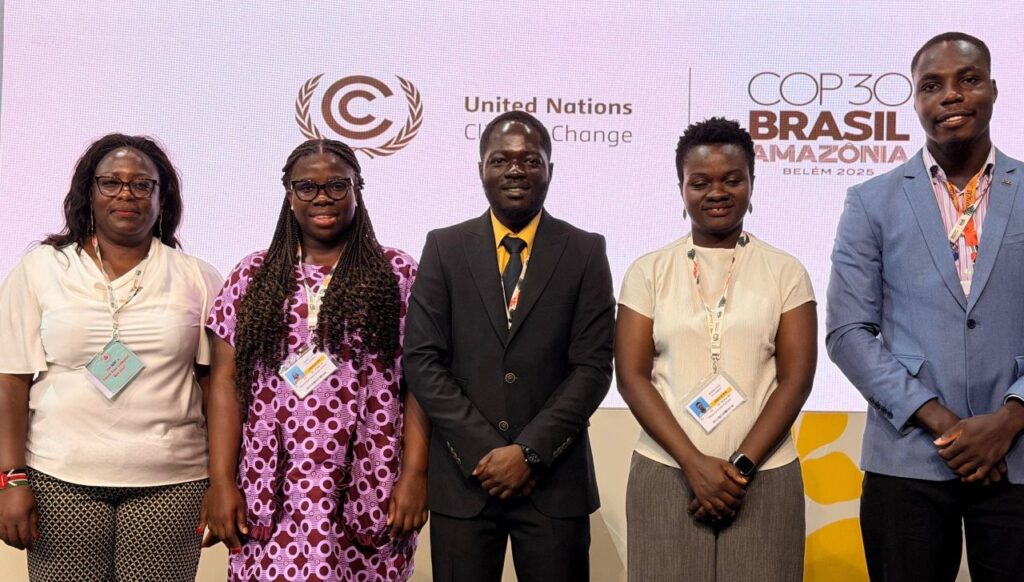
I’m really happy you asked this question. I was at COP30 in Brazil, it was my first time. I wanted to see what the fuss was all about because people have been going since Glasgow and, to be honest, I was disappointed. It was just talk and talk and talk and talk and talk. I was bored, really bored. And I realised that we talk too much. There’s too much talk without action. And coming from a background where action is needed to allow people to close the energy gap or have access to clean energy solutions, it is too much. The talk is too much. I believe in action. In five years, that would be beyond 2030, where our NDCs are supposed to be fulfilled.
I’m looking for a world where policy transforms into action and doesn’t just sit on the shelves collecting dust; where people come and take huge per diems and DSCs and just say they have created a policy when it hasn’t been implemented. I’m looking at a proper inclusivity, not just on paper, where you see not just women and girls (and men, because gender includes men as well), not just that, but people with disabilities taking the forefront and having sustainable businesses too. Because people are suffering. You see policies that speak to inclusivity, job creation, and economic empowerment. But if you go to the field, it is lacking. People are suffering, so I want to see action.
For my business, I’m just looking forward to expanding my brand, exporting to Germany and other parts of the European Union. I hope to make it the number one brand name in households because we want to be in business for the foreseeable future, employing more people and then diversifying our business portfolio. That’s what I look forward to achieving as well in the next five years.
Thank you so much for your time, I really enjoyed talking to you.