
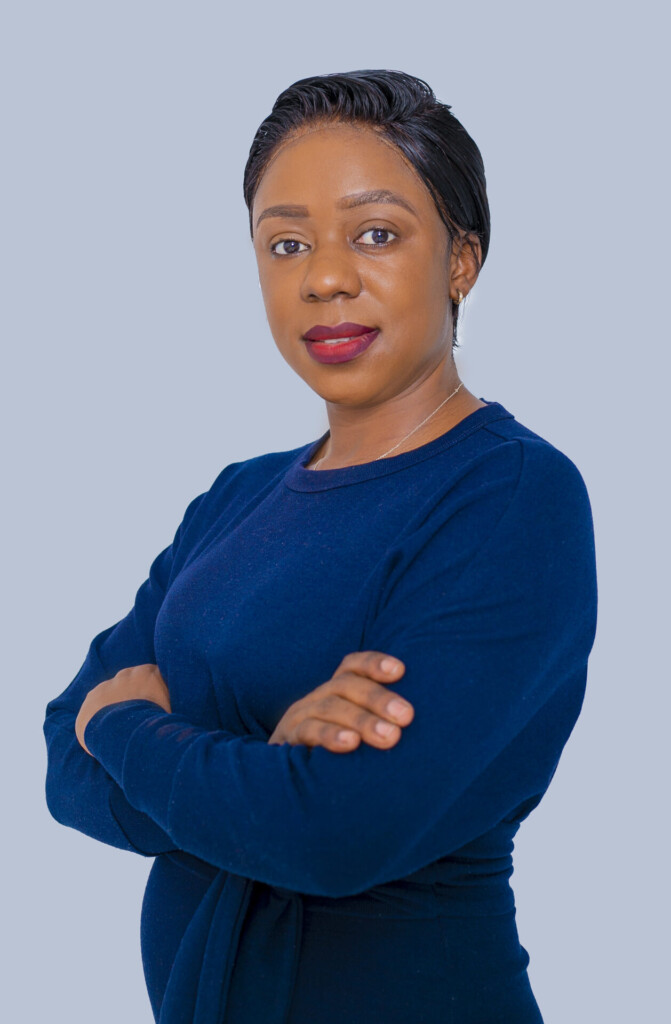
Bwalya Funga has a wealth of experience in climate-related issues. She works with Lusaka City Council in urban planning and community development. Here we discuss one of Bwalya’s many areas of expertise – GEDSI (Gender, Equity, Disability and Social Inclusion, sometimes also referred to as GESI) and the progress being made in this area. Interview by Peter Allen.
I am an urban planner and senior community development officer with Lusaka City Council, where I’ve worked at the intersection of urban planning, climate resilience, community development and local governance over the last 15 years.
I’ve also led and supported programmes in local area planning, food systems, disaster risk reduction, road safety, a little development and youth climate action.
During this period, I’ve also worked with different partners and organisations, such as the Bloomberg Philanthropies, GIZ, ICLEI, Big Win Philanthropy, Van leer Foundation, Vital Strategies and UNDP, among others.
What has kept me motivated is that everything I’ve been doing has helped me to make sure that our cities are more inclusive, resilient, and also able to respond to all the needs of our residents, especially those whose voices are overlooked, because mainly I work in peri-urban areas/informal settlements.
What’s the reality of everyday life for people with, say, physical disabilities, who use a wheelchair or walk with crutches. What are the needs that they have from a transition to cleaner energy?
The reality on the ground is that most of our infrastructure is not GEDSI responsive. I feel that there’s a gap in the training of the engineers and the planners regarding gender and social inclusion, especially when it comes to infrastructure development. They usually build infrastructure for people who are physically able, but they leave out the physically challenged. So those people have limited access when it comes to road infrastructure.
A few weeks ago, I posted on LinkedIn about this where I said: ‘these are beautiful roads that we’re making, but are we thinking of the person living with disability and accessibility?’ A huge number of our population is using non-motorized transport so are we creating pathways or walkways for them? After my post, someone reached out to me that is working on the road.
I had a discussion with them, and they were able to make some adjustments. I’ve seen that on certain roads, there’s a walkway that they’ve improvised there. Though the width is also not big enough for someone with a wheelchair, it’s a great start.
climate action is not only about reducing climate emissions. It’s also about improving the lives of people at community level. When we make plans for cities that work for women, children, persons with disabilities, we create cities that work better for everyone. So, inclusion is not an option or an extra. It should be the foundation of resilience, sustainability, and building prosperous communities.
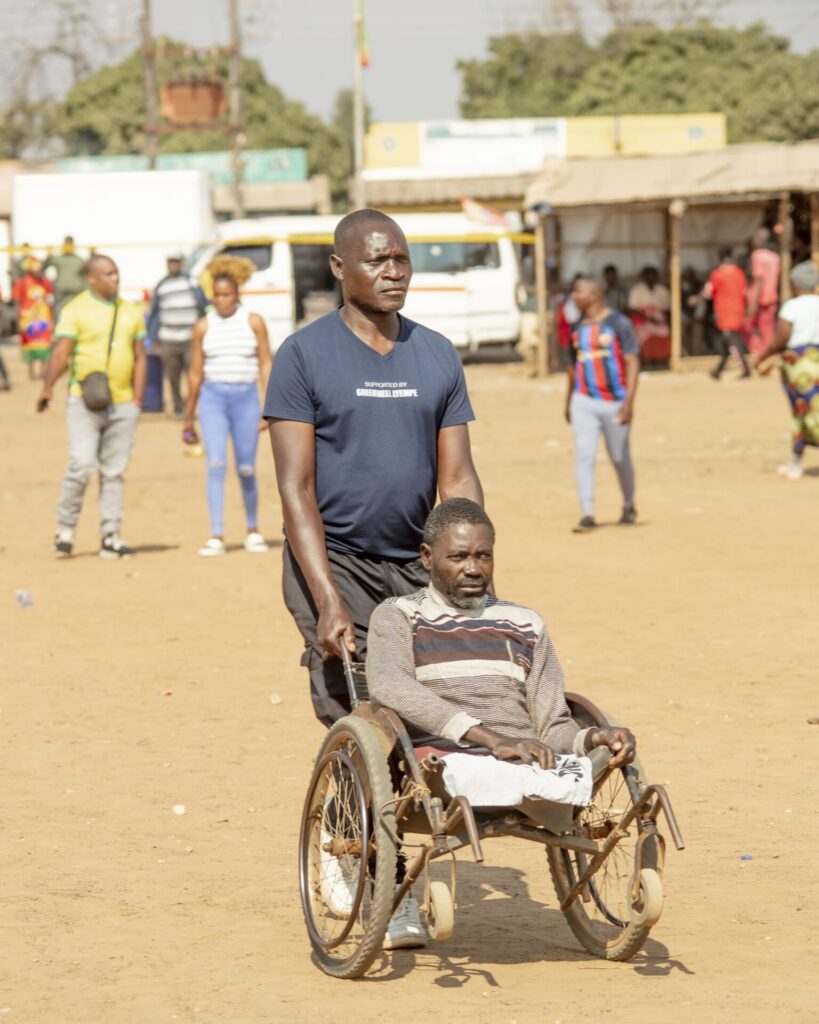
But that’s interesting, isn’t it? Because like you said, even when somebody does include pedestrians, they still don’t remember that there might be somebody who has a wheelchair. Why do people keep forgetting and what does it take to make them remember?
I think that we should really look at GEDSI as something that is cross-cutting; it shouldn’t be an add-on to planning or engineering projects at city level, it should be incorporated from the start for everything that we are implementing. It’s about ensuring that everyone can participate and influence development regardless of their gender, age, disability or income or social background.
For me, GEDSI is not an additional activity, it should be a principle that guides our everyday planning decisions and policy and also any investment that we’re making at city level.
Do you think the failure to remember GEDSI at the planning and policy level has anything to do with the makeup of the decision makers?
I think it is an information gap; we need to do more training because when you look at the curriculum for the engineers and planners, GEDSI is not there. It’s something that we need to introduce and maybe provide as a short training course. I had a conversation with some planners who were saying that they really did not look at it from that point of view. Even the width of the road itself does not allow a mother who is carrying a baby or with a stroller to cross confidently, or a young child on their own. That’s the reason we need to provide this information and make sure that training is done at different tiers – policy level, professional level, institutional level – so that people truly understand what is needed. It should be enshrined in their planning, decision making and investments.
So, would we need to go as far as, for example, issuing guidance about how wide a pavement should be to accommodate people using a wheelchair?
Yes. We also need to look at infrastructure designs from now on; there should be a gender and social inclusion specialist that actually vets that design to ensure that all the different social groups are comfortable to use that infrastructure. Previously in meetings I have attended, I’ve asked a simple question: ‘if today you found yourself in a wheelchair, would you be comfortable to cross over a three-lane road?’
Tell us more about your initiative Climate Mothers.
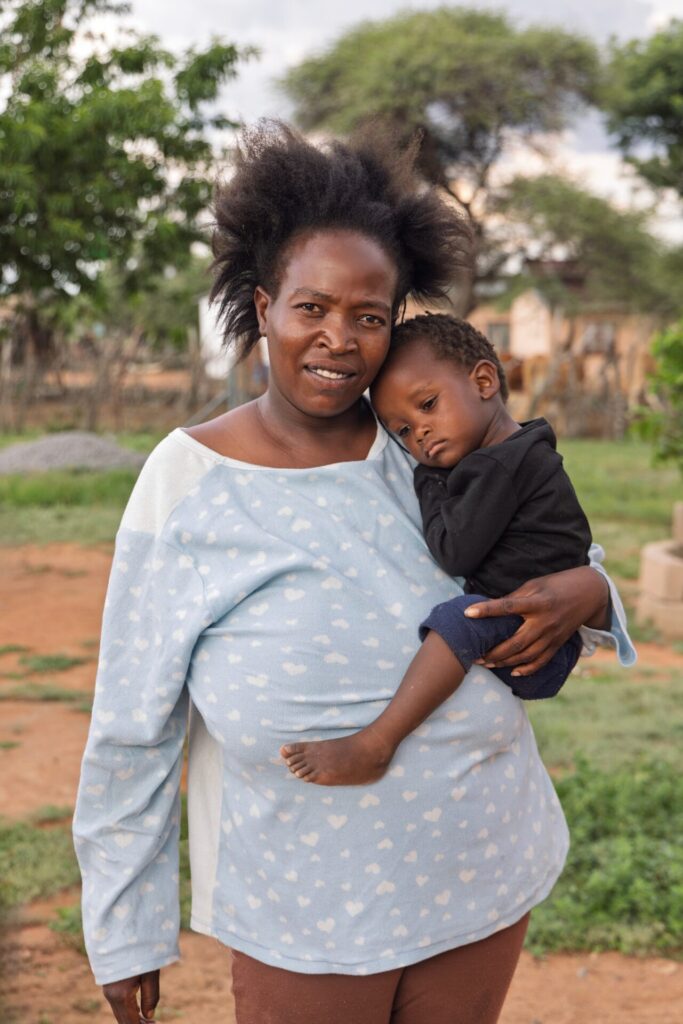
I’m so happy to talk about it because it’s an initiative that I started, realising that mothers are among the most affected when it comes to climate change. And they are also some of the strongest leaders in building resilience in communities because I feel mothers make decisions every day about food, water, health, education, caring for children and older people.
I think this initiative is unique in its way because it will help mothers have an understanding of the effects of climate change on their households. And it aims to equip the mothers with the necessary knowledge, leadership skills and practical solutions when it comes to championing climate resilience and addressing the impacts at family and community level.
What activities are included in it?
The purpose of it is mainly to equip women with the necessary skills and knowledge. I’m looking at having programmes that are tailored towards building food security systems, where mothers can champion that, first. Second, equipping them on how they become more resilient when the impacts of climate change such as drought or flooding are felt.
We want to equip them with leadership skills, so that they can participate in governance at community level. So, if a community is developing a local area plan, they should be able to bring out their issues and participate because we have cultural barriers that have hindered women before. So, this initiative is trying to equip them with the confidence to participate effectively.
Currently I’m working with 25 women, but we plan to expand to different wards. The first engagement was to help them understand what climate change is and how it affects them. The second was to equip them with leadership skills such as being able to speak out, because most of them have experienced gender bias. The third one that we want to do is tailor a programme about generating income. We have realised that most of them are not financially stable, so we are hoping to encourage them to make soap and sell it to generate income at household level. We also hope to promote urban gardening to strengthen their food security, so we’ll train them on how to mix manure and have clean food by removing all the pesticides.
You mentioned that part of the objective would be to get women represented at community level. Tell me a little more about the established structure of community management, are there positions where women are already in those community leadership groups, or would they need to break into them to have more influence?
The governance structure right now is male dominated. My own experience as a woman in the climate sector has been rewarding and challenging at the same time. But when you look at climate and urban planning, it’s traditionally male-dominated. In technical discussions or leadership positions, you find that most of the people holding those positions are male.
When I started engaging in climate issues, it was sometimes hard to work with the males because I had to work harder to prove that I could do it and to earn my credibility. Over time, I have learned that you need to be consistent to have results. You need to be prepared. You need to collaborate and speak out rather than just making assumptions. This is the type of woman that we are trying to build; a woman that is able to demonstrate that, if I’m going to be given a seat at a table, I should be able to deliver all my tasks.
I’ve reached out to other mentors, like people that have gone ahead of us, to ask if they can come to mentor us so that we have a diversity of experience and we’re building people who are comfortable to speak even when we are not. At community level, we have development committees and we would like our representatives to be part of those committees, so they are able to participate in governance issues and influence decisions when it comes to planning.
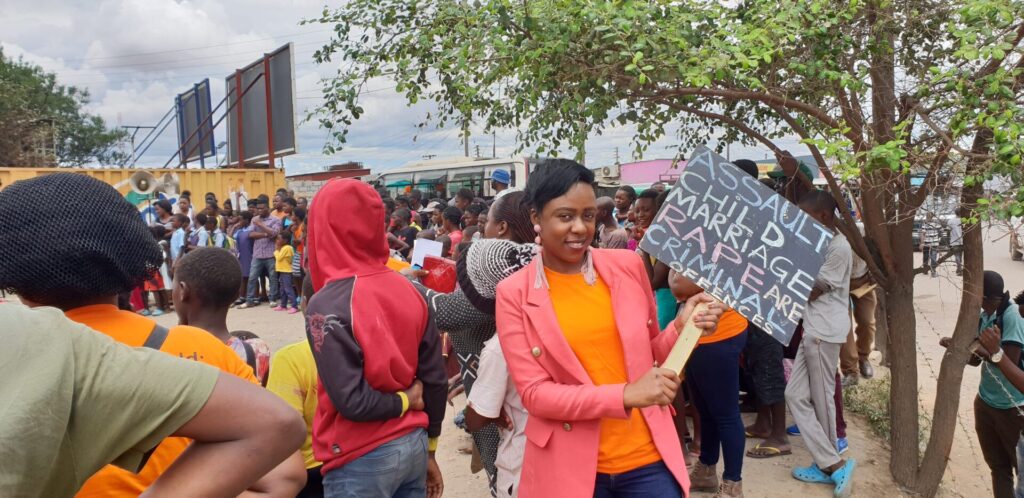
The culture in several countries seems to include male dominance. Do you think that ultimately this will change because of having successes in smaller areas?
Yes. There have been a lot of strides taken. We cannot overlook the fact that culture has a very big impact on how we interact or we behave or work. But we’ve seen a lot of women that have come forward recently and that has been a positive change.
We are seeing more women initiatives at national, district, and even community level. For me, that gives us hope as women, because we become more encouraged to work towards finding solutions for the issues that affect us.
If I look back at my work in the community 10 years ago, you would go in a community, you would literally force women to speak or separate them from men. But today, if I go into a community, so many empowerment programmes have been brought in by NGOs and government to provide a platform where women can confidently speak and even participate. I think there’s a real shift that has happened and is still happening. That’s why we want to take advantage of this opportunity now.
Do you see people with disabilities or representatives of that community moving into the same level of having that kind of representation? Is there any progress where somebody is a champion of disability?
Yes, there’s a lot of progress. Even in the guidelines for the White Development Committee, there’s a provision that requires one of the representatives to be a person living with disability. That’s something that you couldn’t see five years ago. But we need to bring them more on board.
That’s fantastic. Finally, what’s the message you would like to leave with us?
My closing message would be: climate action is not only about reducing climate emissions. It’s also about improving the lives of people at community level. When we make plans for cities that work for women, children, persons with disabilities, we create cities that work better for everyone. So, inclusion is not an option or an extra. It should be the foundation of resilience, sustainability, and building prosperous communities. If we get it right at community and family level, we will have resolved most of the problems.
Thank you so much for sharing your expertise with us.