
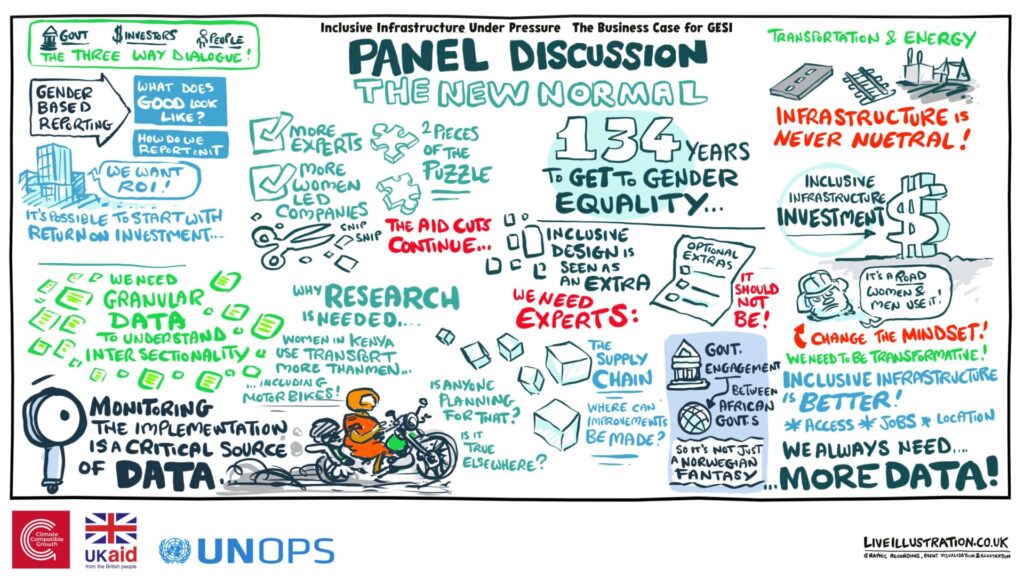
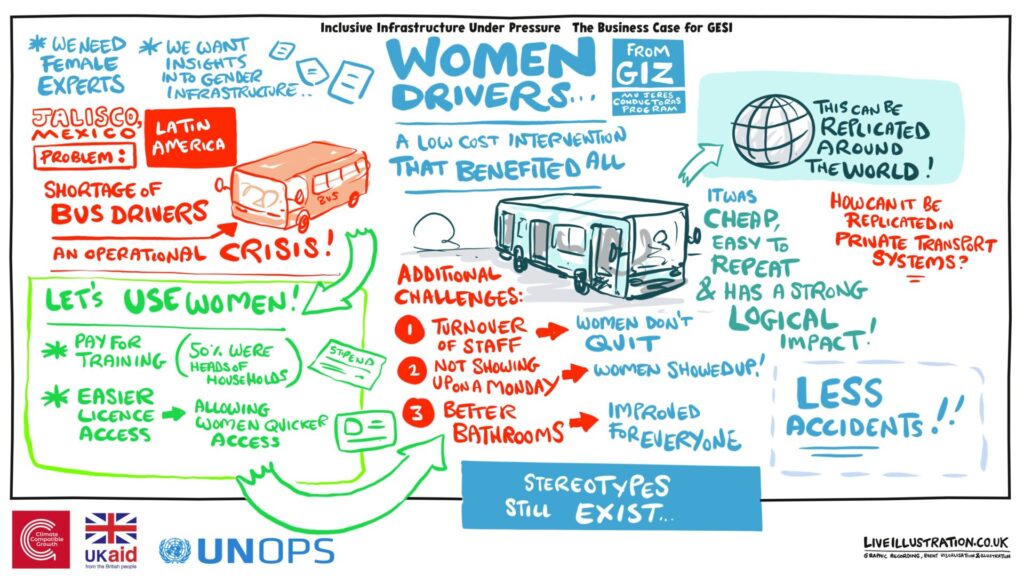
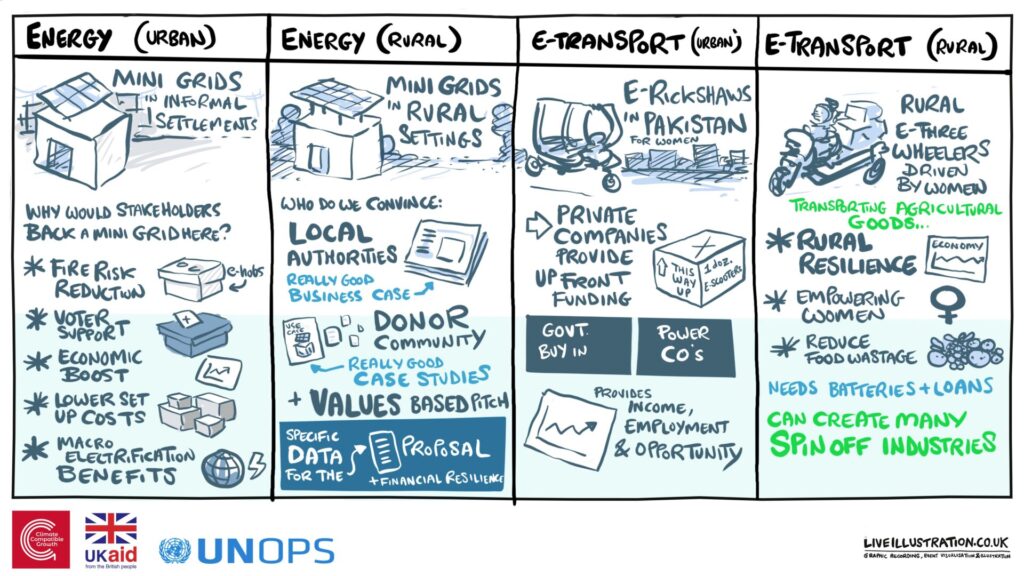
On 30 March 2026, CCG’s Gender Equality and Social Inclusion (GESI) Unit and the United Nations Office for Project Services (UNOPS) hosted the 2nd Annual Oxford GESI Event at Christ Church College, Oxford as part of their new partnership. Policymakers, practitioners, financiers, and researchers participated in a cross-sector workshop on how GESI can be better embedded in energy and transport infrastructure development. In this blog, Marissa Bergman, one of the event coordinators, reflects on the day itself, alongside live illustrations capturing the workshop’s key takeaways.
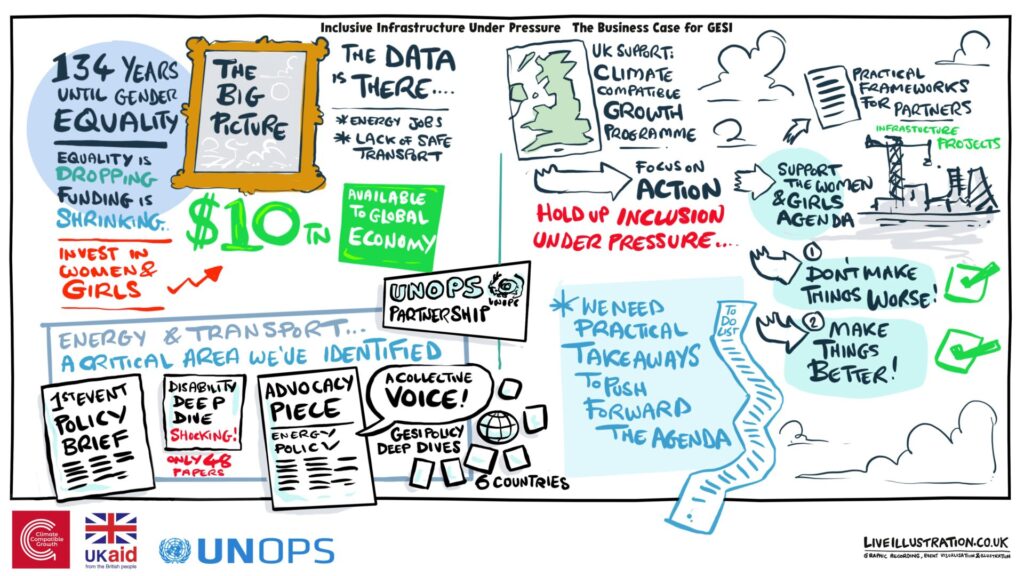
Our second Oxford convening, Inclusive infrastructure under pressure: the business case for GESI, was about momentum, moving from problem-mapping to solution design. It built on our first Oxford GESI workshop in 2025, the insights from which were analysed in our new policy brief, Beyond the tick-box: Barriers and solutions to inclusive infrastructure planning. Last year, participants identified a wide range of barriers to embedding GESI in energy and transport. The business case emerged as the highest ranked: the persistent challenge of making inclusion stick when political will and accountability are weak and GESI must be justified repeatedly, project by project. This year, we explored what constitutes ‘good’ justification for GESI, who it needs to persuade, and where it continues to fall short – particularly within a challenging global landscape of reduced aid, political polarisation, and pressure on both sustainability and equity agendas. Our guiding question was therefore: how do you make the business case for GESI in environments that are not set up to support it?
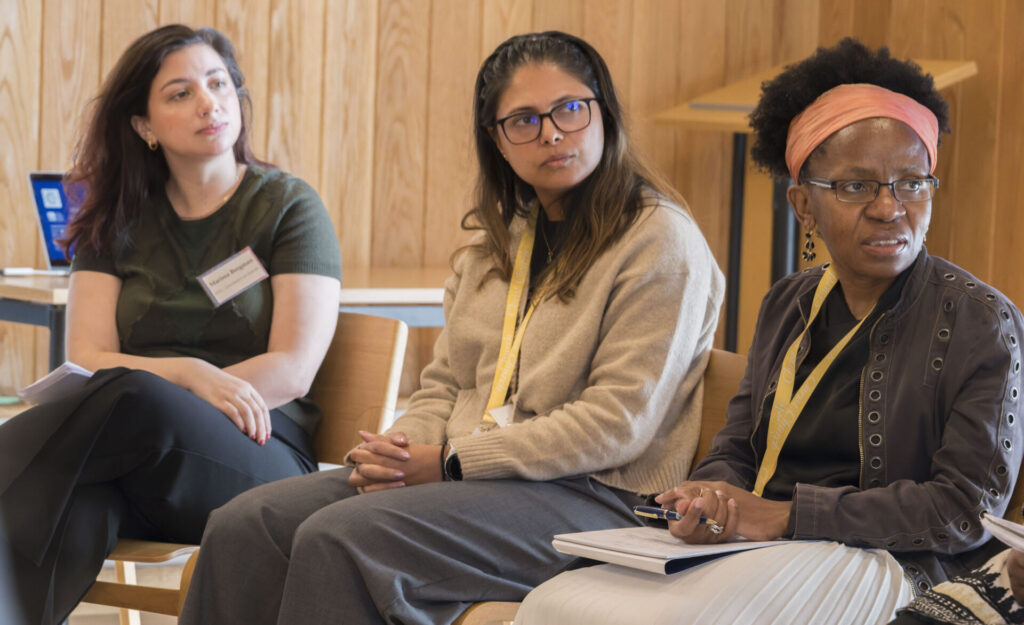
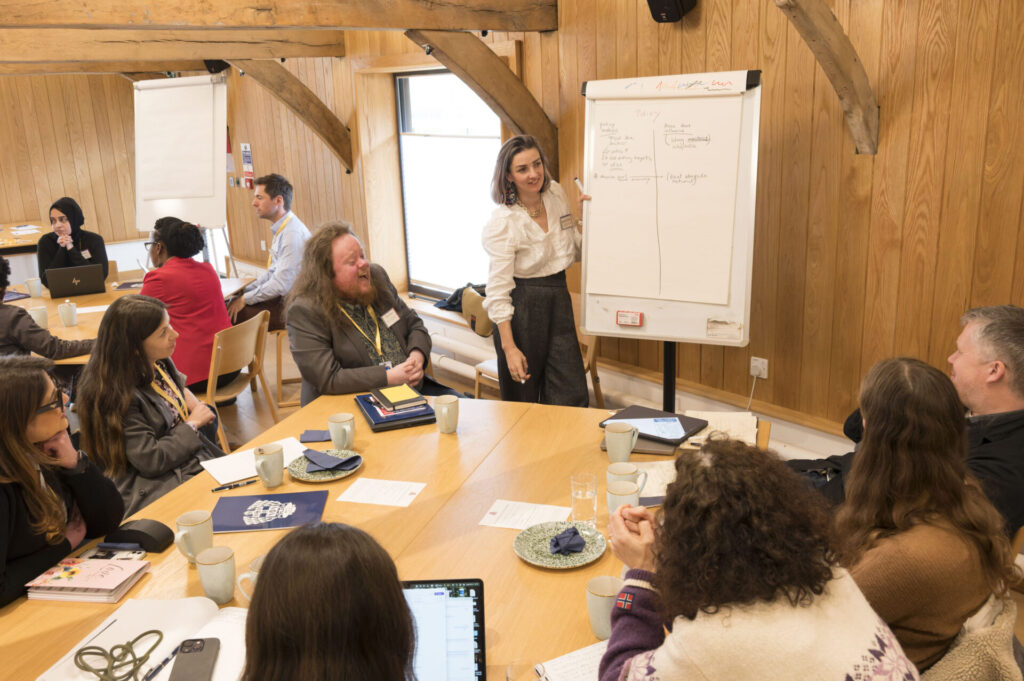
The day brought together around 30 participants, with many returning from the first workshop and some welcome newcomers, too. We opened with a panel on the ‘new normal’ of geopolitical fragmentation to ground our discussions, before moving into rapid-fire presentations highlighting the GESI business case in action.
From there, we used breakout sessions to unpack what the business case means for different actors, practise tailoring the case to distinct energy and e-mobility contexts, and collate what evidence is still needed to make those arguments more impactful.
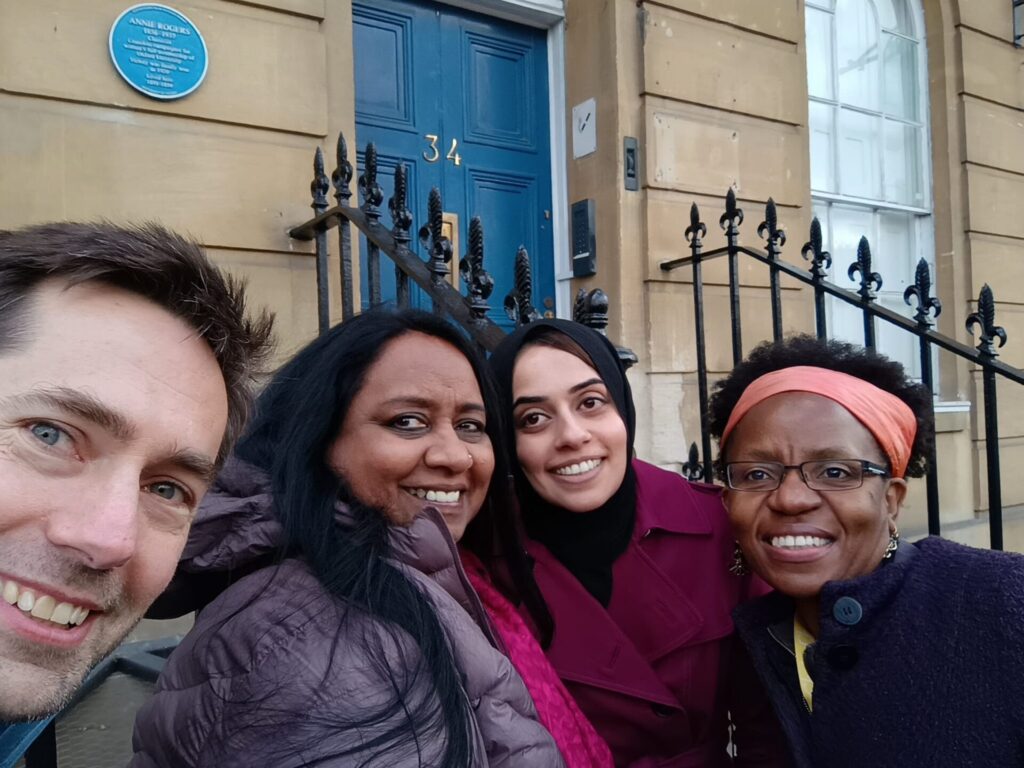
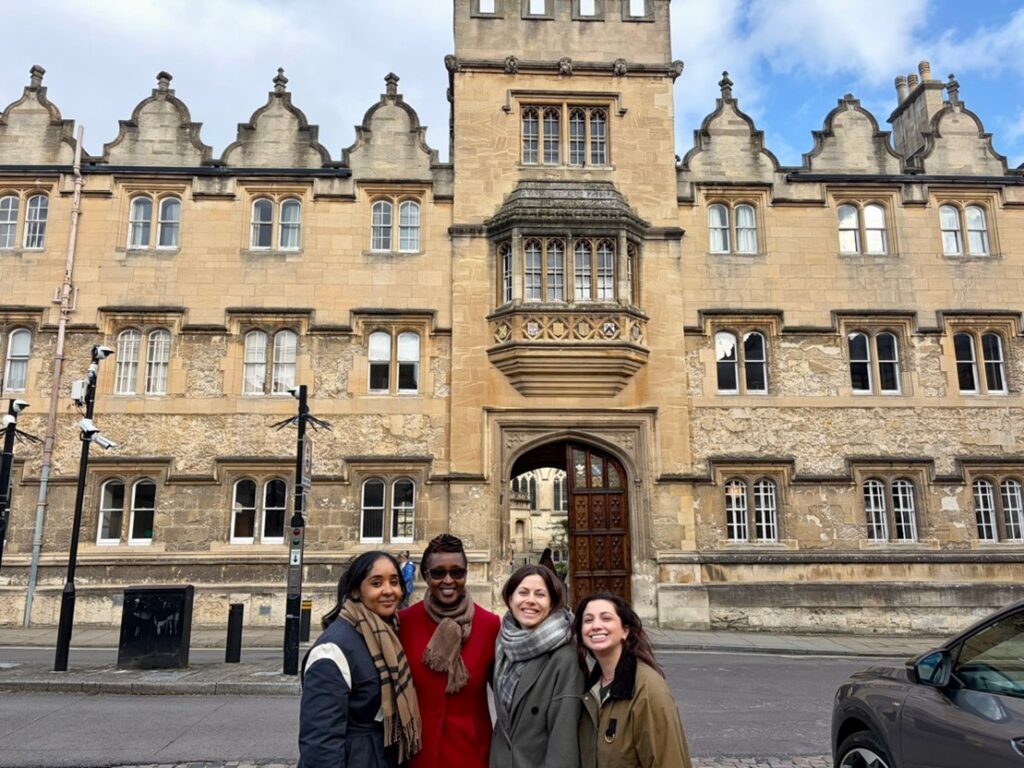
As is now our tradition, we took everyone outside for the final session. Last year, participants discussed GESI on punts; this year, with the weather looking less generous, we instead went on a walking scavenger hunt across Oxford. Small groups were sent to different locations with their own GESI link, connecting the workshop theme to the city itself. For example, St Hilda’s College (one of the first colleges to admit women); the Christian Cole plaque in Logic Lane (the first African graduate of Oxford); and the Cecil Rhodes statue at Oriel College (of the Rhodes Must Fall movement). Questions about access to institutions, whose voices are reflected in official narratives, how accountability works in practice, and what meaningful inclusion looks like all felt a bit less abstract when discussed while standing in places shaped by those histories.
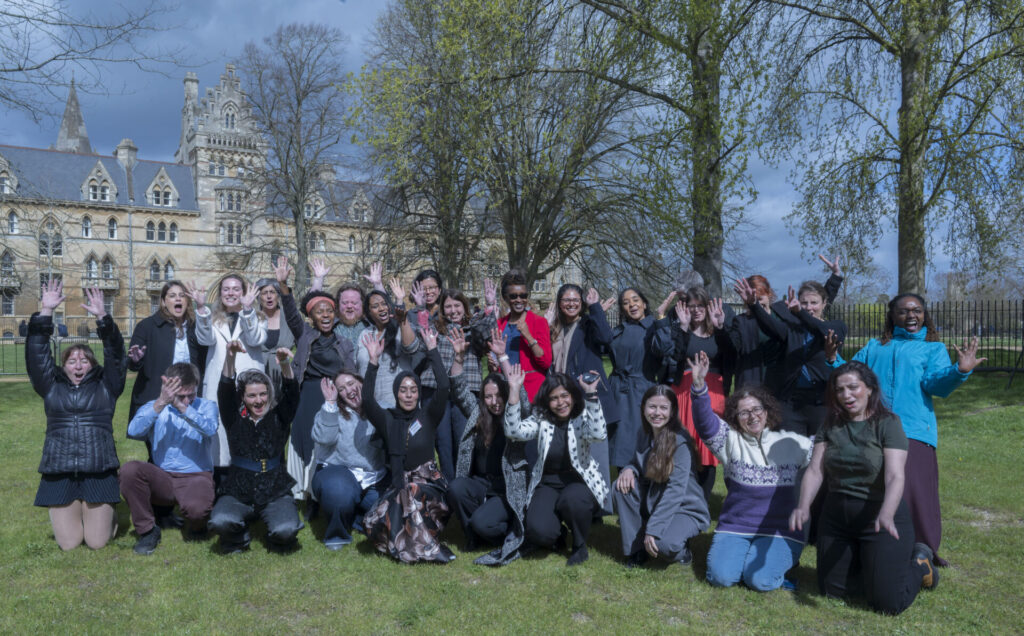
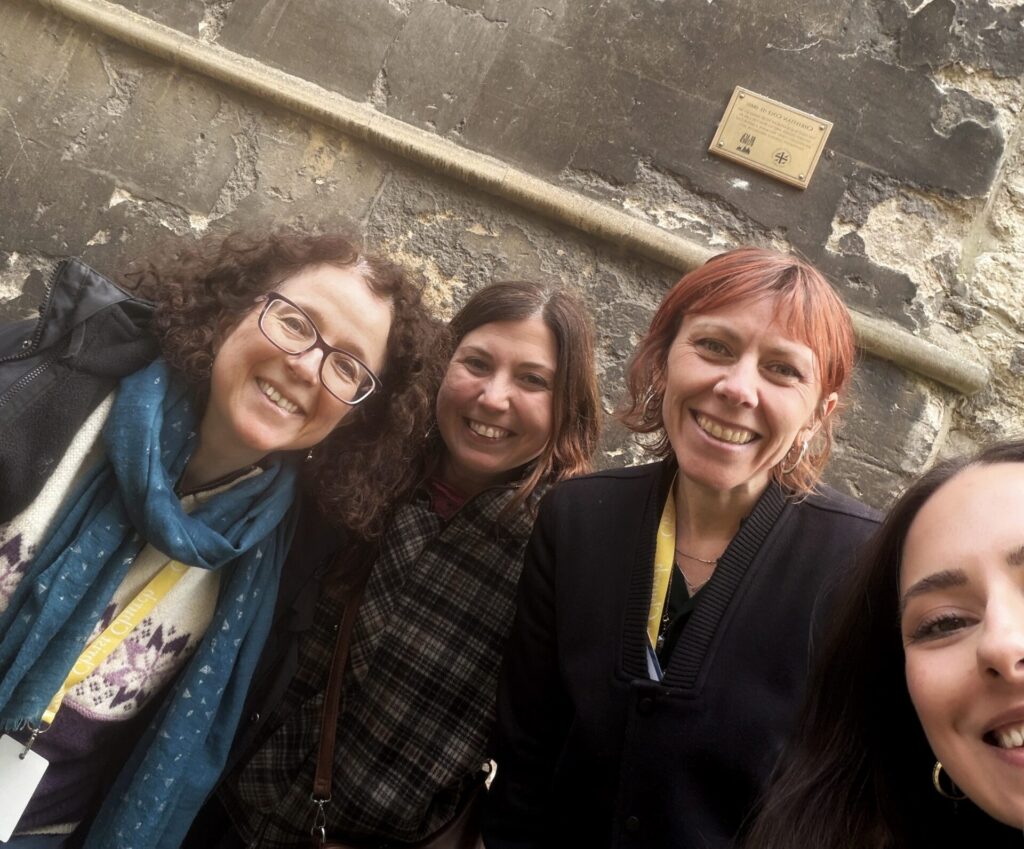
Ultimately, supporting inclusive infrastructure requires more than data, frameworks, and compliance. It also requires rethinking whose experiences are valued, whose priorities shape decisions, and how institutions respond under pressure. Those are not insignificant constraints to overcome, but, if anything, the 2nd Oxford GESI Event made clear that this workshop should not remain only a two-part conversation. The camaraderie, appetite for practical action, and number of ideas for a third event in 2027 all point to the value of annualising this convening. After all, grand challenges are a little easier to tackle when people are invited to think, walk, and occasionally hunt for a historical plaque together.
Author’s Note:
We thank all of those who made this event possible: CCG – and specifically Programme Director, Mark Howells– for its pioneering leadership in inclusive climate-compatible growth; our funding body, the Foreign, Commonwealth & Development Office (FCDO), for its support of GESI research, especially Alfie Alsop and Lily Ryan-Collins as our responsible officers; our new partners in the UNOPS’ Sustainable, Resilient, and Inclusive Infrastructure team, including Geoffrey Morgan and Seema Gaikwad; and, of course, the 27 participants for their candour, passion, and engagement. The CCG GESI Unit is co-led by Stephanie Hirmer and Julia Tomei, with support from Beatrice Stockport, Gerald Arhin, and myself (Marissa Bergman).
Watch this space for future outputs stemming from this event, including a formal workshop report and academic work further down the line.