

WEDNESDAY 11 NOVEMBER, 10.00-10.50, TRANSPORT PAVILION, BLUE ZONE
The event aimed to share the latest progress and thinking from D2D pilots in Tajikistan and Papua New Guinea, presented by government representatives themselves. Two open tools were showcased: the Asian Transport Observatory’s Transport Development Finance Explorer and the Transport Data Commons Initiative (TDCI). A panel including representatives from UNESCAP, FCDO, and the Asian Development Bank then discussed how to scale finance for low-carbon, climate-resilient transport, and which models, tools and partnerships are needed to do so.
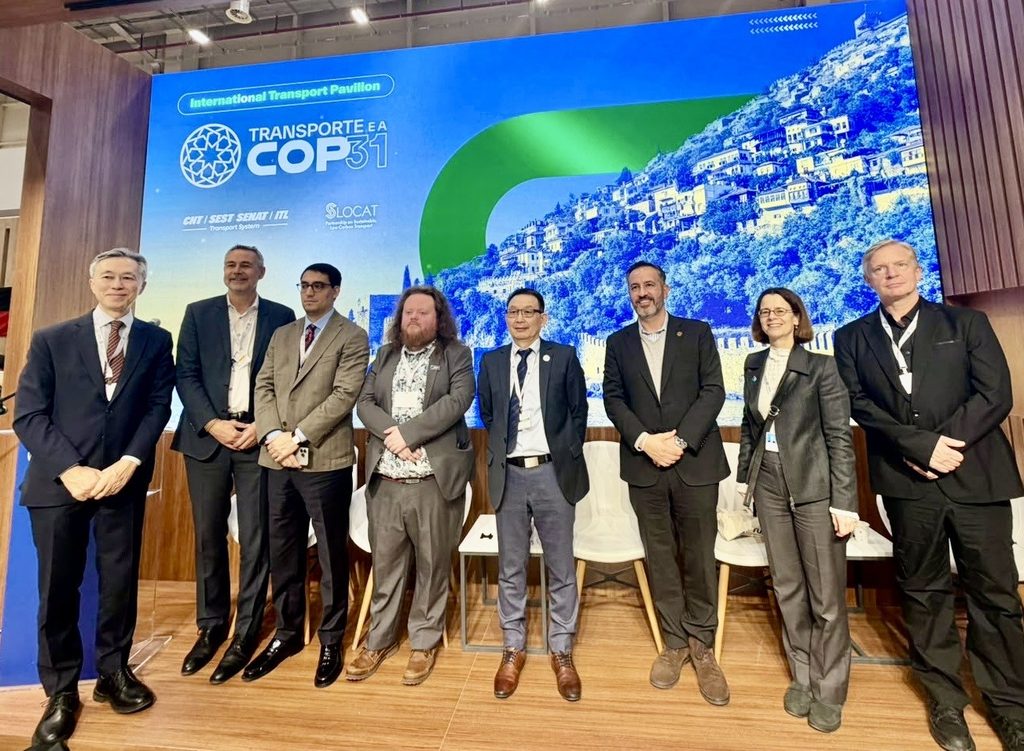
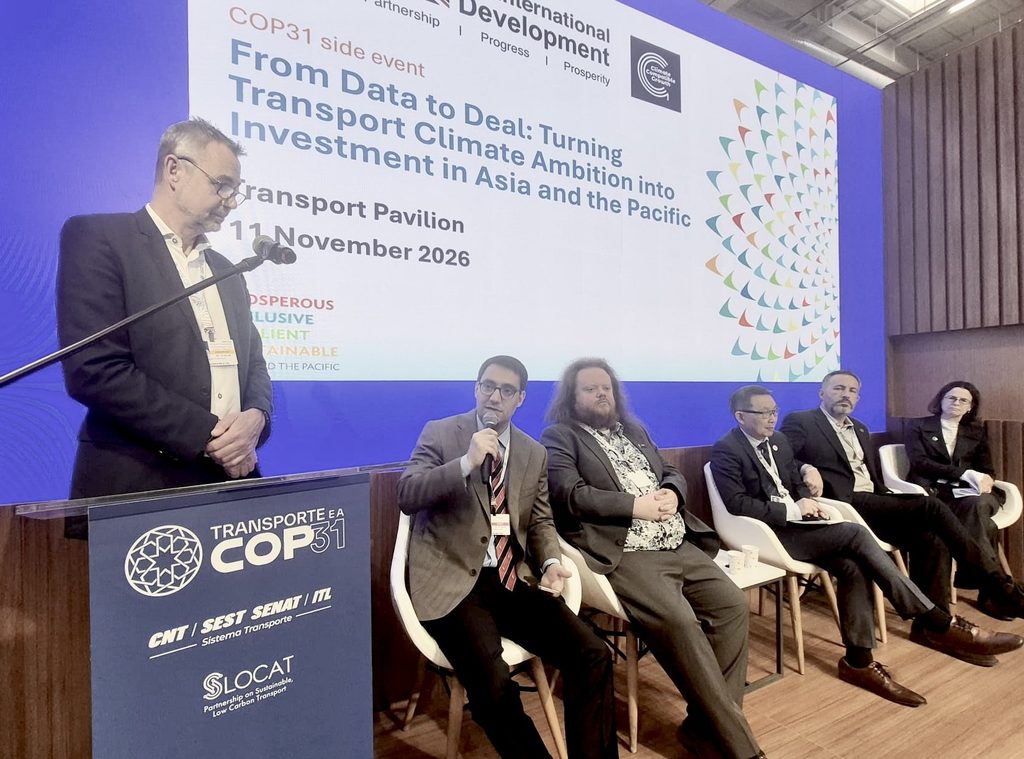
Welcome Remarks – Hideaki Iwasaki, Asian Development Bank (ADB)
The event was opened by Mr Hideaki Iwasaki from the Asian Development Bank who commented: “Transport is one of the major contributors to greenhouse gas emissions, and emissions continue to rise in many developing economies. In 2024, domestic transport emissions in Asia and the Pacific exceeded the combined emissions of Europe and North America.At the same time, rapid motorization, congestion, road crashes, lack of connectivity, and air pollution are placing growing costs on economies and communities. And addressing these challenges requires substantial investment. According to estimates by the Asian Transport Observatory, low- and middle-income economies in Asia and the Pacific will need approximately 2.6 trillion US dollars annually in transport infrastructure investment over the coming decade. This is around three times historical investment levels.
Mr Iwasaki went on to say: “Through our partnership with the Climate Compatible Growth Programme, supported by the United Kingdom’s Foreign, Commonwealth and Development Office, ADB is applying the Data-to-Deal approach to help Developing Member Countries connect data and evidence with national planning, policy development, and ultimately, investment. The approach recognizes that mobilizing finance starts well before a project reaches a financier. It requires a clear national vision, sound evidence and modelling, strong institutions, stakeholder engagement, and an enabling policy environment. By connecting these elements, we can help countries identify priority interventions, strengthen investment planning, and develop credible pipelines of low-carbon and climate-resilient transport projects”.
“Scaling up finance also requires close collaboration between governments, technical partners, and financing institutions. In piloting Data-to-Deal across Asia and the Pacific, ADB has, for example, worked closely with the United Nations Economic and Social Commission for Asia and the Pacific (ESCAP) on supporting countries in implementing their NDCs.
For example, in Tajikistan, where ESCAP supported the development of the transport sector chapter for the NDC and a related action plan, ADB is working with the government to align the NDC transport priorities with other national strategies under development, as well as supporting preparatory studies on e-mobility deployment to help move from planning towards implementation.”
Keynote on the Data-to-Deal approach – Mark Howells, Climate Compatible Growth
Mark said it was an honour for CCG to work with the Asian Development Bank (ADB) and that he saw the partnership as critical to supporting governments across Asia and the Pacific. He introduced Data-to-Deal (D2D) as a framework that strengthens government-led planning and helps countries translate climate and development priorities into investment plans. He traced the approach back to Costa Rica, where a data-driven long-term strategy that cost 200,000 US dollars to develop helped secure 2.4 billion US dollars in climate finance. Subsequent applications in Latin America, including in the Dominican Republic, Chile and Uruguay, helped mobilise more than 9.5 billion US dollars in further climate investment. In the Dominican Republic, the framework helped mobilise 85 million US dollars from the Climate Investment Funds, which was expected to attract more than 1.1 billion US dollars in co-financing.
Mark went through the seven interconnected components of D2D. Securing Political Support means obtaining a high-level mandate, assigning responsibilities across government and reviewing existing commitments. Developing Institutional Capacity starts with mapping the country’s needs and identifying which institutions and external advisers can fill specific gaps while building national expertise. Aligning the Development Vision brings climate commitments and national development priorities into a shared long-term strategy. Undertaking Deliberative Modelling uses transparent data and fit-for-purpose tools to compare pathways, communicate results and translate them into plans that fit national planning and budget cycles. Engaging with Stakeholders brings government, industry and civil society into the process so that their input informs decisions. Enhancing the Enabling Environment addresses policy, regulatory and institutional barriers that can hold back implementation and investment. Developing Finance Strategies brings these strands together through a government-led strategy that assigns responsibilities, maps financing sources, assesses sector revenues and affordability, and structures packages that can combine public, private and concessional finance.
Tajikistan was used to illustrate where CCG and ADB could apply the framework. The proposed entry points included aligning the draft NDC 3.0 with the draft National Transport Sector Strategy for 2026–2040, supporting policy and business models for managing electric vehicle batteries at the end of their useful life, and organising a study tour to the Republic of Korea focused on digitalisation. Papua New Guinea was another example of CCG and ADB working together. Mark emphasised that these partnerships can help governments link transport and climate investments to their wider economic growth objectives.
Mark closed by mentioning CCG’s free, self-paced, 16-hour Data-to-Deal course on The Open University’s OpenLearn Create platform, which covers all seven components through lectures, practitioner interviews and exercises.
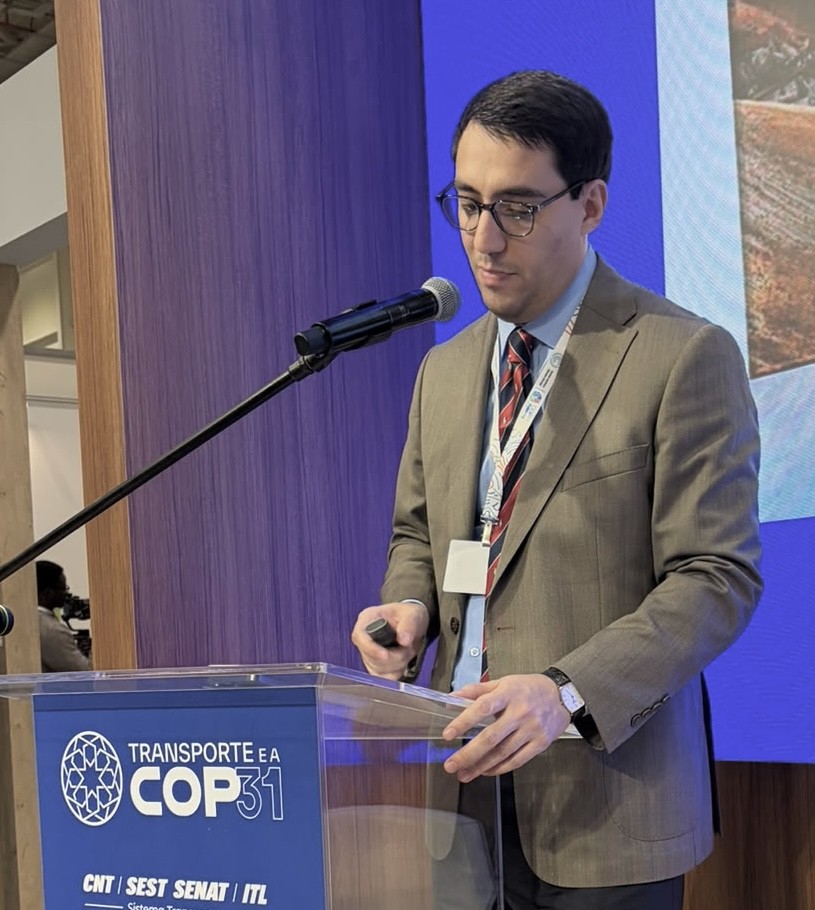
Transport priorities under Tajikistan’s NDC 3.0 – Sorboni Sirojiddin, National Centre for Implementation of the Paris Agreement, Tajikistan
Sorbon Sirojiddin outlined two priorities for transport in Tajikistan’s draft NDC 3.0: reducing emissions through electrification and designing infrastructure to withstand a changing climate. According to the country’s 2022 greenhouse gas inventory, transport generated 2.08 million tonnes of CO₂ equivalent, with road transport accounting for more than 99% of the sector’s emissions. Sorbon highlighted the potential for electrification given that hydropower supplies more than 90% of Tajikistan’s electricity. He also presented the modelled emissions ceilings for 2030 and 2035. Under the unconditional pathway, the ceilings are 2.91 and 3.04 million tonnes of CO₂ equivalent, respectively. Under the conditional pathway, which depends on international support, they are 2.81 and 2.77 million tonnes. In 2035, the conditional ceiling is 270,000 tonnes lower than the unconditional ceiling.
The presentation set out targets for electric vehicles to account for 50% of new vehicle sales by 2030 and 75% by 2035. Tajikistan also aims to deploy 500 electric buses by 2030, starting in Dushanbe before expanding to other cities. The proposed charging network would start in cities and transport hubs before extending along interregional corridors. We also heard about improvements to bus routes, walking and cycling connections, and links between road and rail freight.
On adaptation, Tajikistan aims for 550 km of roads and associated infrastructure to meet climate resilience standards by 2030. Measures include improving drainage and protection for roads and bridges, monitoring vulnerable sections, and identifying alternative routes. The plan also calls for safer, more accessible stops and services that reflect how people travel. The presentation estimated that transport decarbonisation under the With Measures scenario would require approximately US$700 million in investment over 2026–2035.
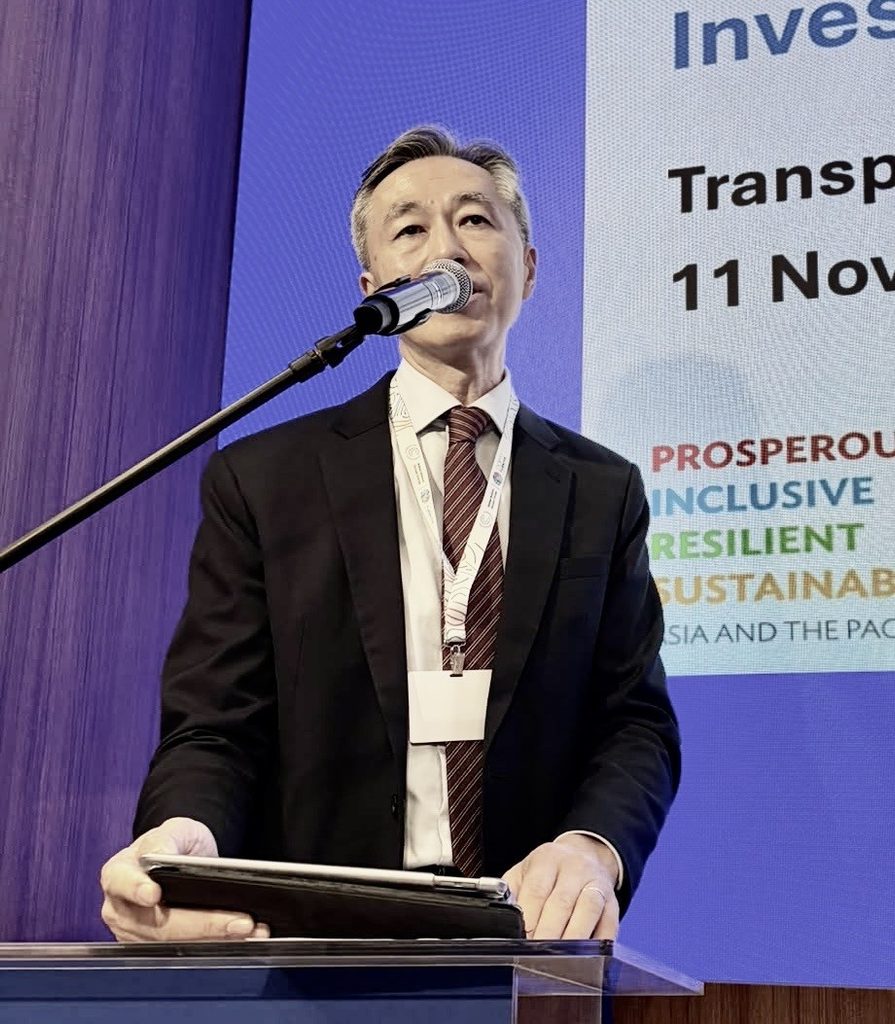

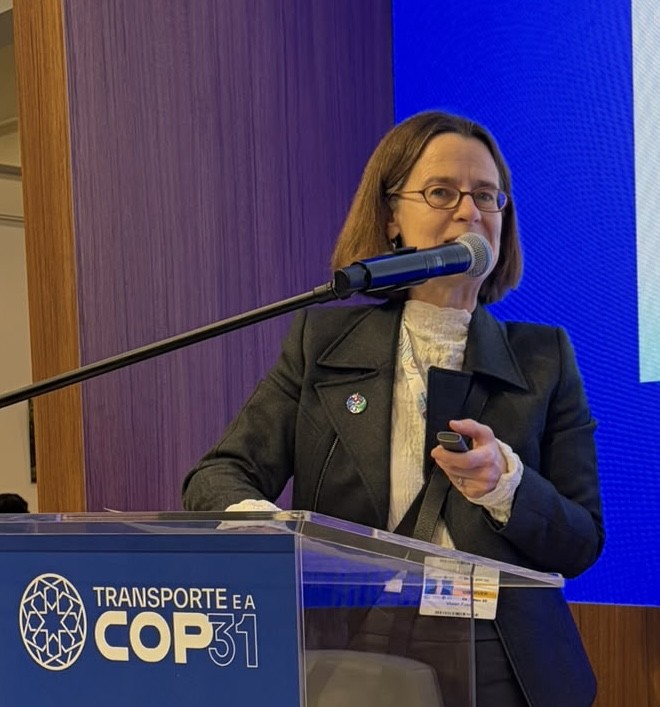
Vivien Foster, CCG and Imperial College London
Vivien introduced FinTrack, an open-source tool that CCG developed to support the financing stage of the Data-to-Deal process. She framed the tool around the questions finance ministries face when looking for climate finance. How much funding is available for different types of projects? Which climate and development funds is the country eligible for, and which has it already secured? Which facilities offer the most favourable terms, and what barriers stand in the way of obtaining them?
FinTrack brings together more than 30 financing facilities in a single dashboard that shows funding availability, eligibility, financing terms and current use by country. Users can filter opportunities by sector, project stage and whether a project focuses on mitigation or adaptation.
The tool compares options across four dimensions: accessibility, based on how countries have historically accessed the funds; concessionality, or how favourable the financing terms are relative to market rates; complexity, based on the eligibility criteria and other access requirements; and scale, the potential volume of funding available. Vivien illustrated these comparisons with a chart of global climate finance available in 2026. The dashboard helps ministries shortlist facilities that fit their projects and identify the requirements they need to address when preparing applications.
Holger Dalkmann, ADB/CCG Consultant
Holger highlighted a recurring problem in transport research and planning. Published reports make the findings visible, but the datasets behind them are often difficult to find or reuse. Transport data are scattered across institutions, can be costly to access, and vary in format across countries. As a result, teams often repeat the same work of collecting and cleaning data, running models and publishing their findings in PDFs, while the underlying datasets remain hard to access.
Holger presented the Transport Data Commons Initiative (TDCI) as a practical response. The initiative brings together more than 30 partners from UN agencies, multilateral development banks, research institutions and civil society. Its shared open-data portal helps users find transport datasets and makes them easier to compare and reuse through common standards and clearer documentation. He also highlighted the Glasgow Declaration on a Transport Data Commons, which calls for stronger cooperation on data sharing, capacity building and long-term support for the initiative.
He linked this work to the UN Decade of Sustainable Transport (2026–2035), explaining how reliable, comparable data can help countries design low-carbon, climate-resilient transport policies and track their progress.
Panel discussion on scaling finance for low-carbon, resilient transport:
Sorboni Sirojiddin drew on Tajikistan’s experience with electric buses to emphasise the value of involving financing partners early in project development. A successful demonstration project, he said, can show how the approach works in practice and provide a basis for expanding it.
Guoping Zhang of the Asian Infrastructure Investment Bank pointed to the gap between a transport strategy’s ambitions and the investments needed to deliver it. Emissions modelling can help identify promising pathways, while governments may need to intervene to turn those pathways into clear investment priorities. He highlighted CCG’s work to connect these stages and stressed that institutions need to coordinate so that data and modelling inform actual decisions. He also noted that AIIB prioritises sustainable transport while applying its investment principles.
Felipe Buitrago of the World Resources Institute called for closer coordination between the institutions responsible for climate policy, transport and finance. He identified gaps in both project preparation and implementation. Securing capital is one part of the challenge. Projects also need a credible plan for how that capital will be used and how the investment will be delivered.
Alfie Alsop of the UK Foreign, Commonwealth and Development Office highlighted the value of learning from approaches that have worked elsewhere and considering how to apply them in a new context. He also called for transparent and inclusive data. If the data overlook how women, older people, children or other groups travel, the policies built on those data can overlook their needs too.
Vivien Foster of Climate Compatible Growth focused on the transition from planning to financing. She noted that a pathway can have the lowest overall cost in a model and still be difficult to finance in practice. Her point was that financing assumptions need to be tested alongside the technical analysis, while there is still room to adjust the plan.