
Bridging the gap from transition planning to bankable delivery
Zambia’s first Integrated Resource Plan (IRP), launched in 2024, sets out a least-cost pathway to ensure long-term energy security and climate resilience. Delivering this ambitious plan will require a step change in investment, with total capital needs estimated at US$31bn in cumulative terms by 2050, far exceeding historic financing levels.
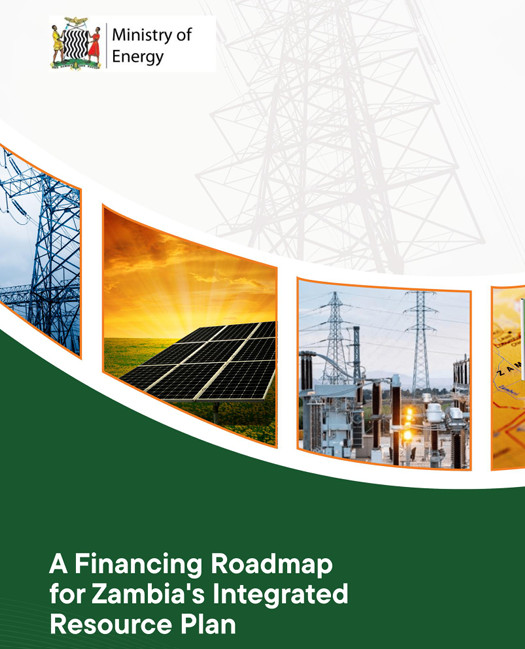
At the request of Zambia’s Ministry of Energy (MoE), who identified a gap between technical planning and financially viable implementation, CCG supported on the development of an IRP Financing Roadmap. Produced in collaboration with Cities for Infrastructure Growth Zambia (CIGZ) and Kukula Capital, and published by the MoE in April 2026, the roadmap provides a practical framework for mobilising, prioritising, and sequencing investment to support Zambia’s long-term power infrastructure needs.
The need for the Roadmap reflects a broader systemic issue observed across many countries, where energy investment plans and financial decision-making are often undertaken in separate institutional silos. While energy sector stakeholders typically possess strong expertise in system planning and infrastructure development, financial stakeholders are more familiar with fiscal constraints, debt sustainability, and investment mobilisation. Bringing these perspectives together can help strengthen understanding of the financial implications of energy transition pathways and support more integrated planning across government institutions.
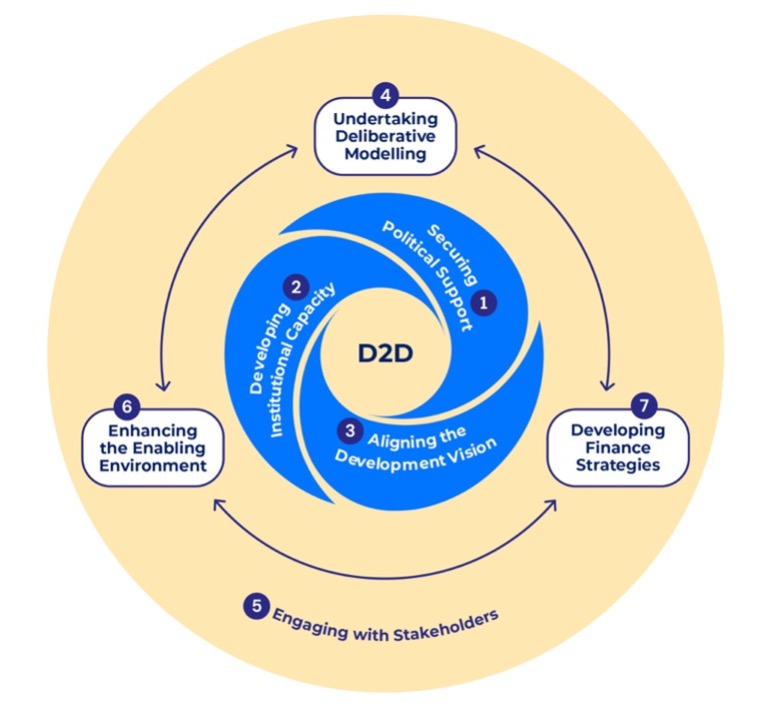
The Data-to-Deal (D2D) Framework connects transition planning to financing realities in order to enable delivery
The Data-to-Deal (D2D) framework builds on concrete experience across emerging and developing economies and draws on contributions from a broad network of 60 international experts.It brings together 7 core components required to develop technically robust transition plans and translate them into implementable, financeable strategies with broad-based institutional support.
A key feature of the framework is the integration of financial analysis into the planning process. By linking financial modelling tools (FinTrack, FinCoRE, MINFin, and FINPLAN) with upstream energy planning models, D2D enables policymakers to assess financing requirements, capital availability, affordability, and delivery feasibility alongside technical planning considerations.
CCG’s Partnership and Capacity Building Approach
The Roadmap was developed through a strong partnership approach and capacity building process, bringing together energy and finance experts from more than 30 institutions spanning government, academia, utilities, development partners, and the private sector. Key elements include:
- Extended in-country engagement: A UK-based CCG consultant spent four months working closely in Zambia with local counterparts, stakeholders, and decision-makers to ensure the analysis reflected local policy priorities and institutional realities.
- Technical working group (TWG) meetings: During the first six months of the project, bi-monthly meetings were convened with a core group of technical experts. These sessions provided a platform to review the modelling approach, validate assumptions, and reflect ongoing sector developments in the analysis.
- Interviews with domestic financial institutions: Structured interviews were conducted with local banks, pension funds, and development finance institutions to better understand their appetite for energy investments, the perception of various sector risks, and the constraints in the domestic capital market. The findings were subsequently incorporated in both the qualitative and quantitative analysis.
- Interim reporting and engagement with the Ministry of Energy: Preliminary findings were presented to the Ministry at key milestones throughout the project, enabling feedback to be incorporated and ensuring alignment with evolving national priorities.
- Steering Committee Workshops: Interim findings were also presented to a high-level advisory group who provided strategic guidance and technical input as the work progressed.
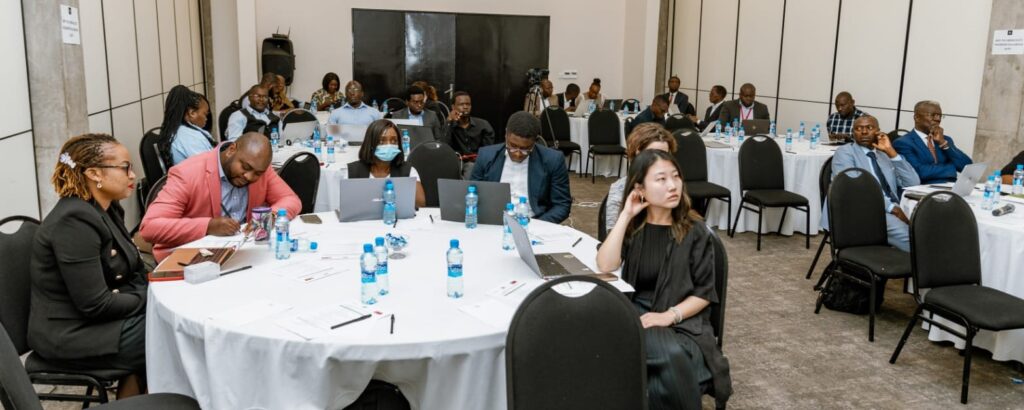
- Capacity building on financial modelling tools: A four-day training programme introduced over 30 stakeholders to the financial modelling tools underpinning the analysis, helping to strengthen local capacity to assess financing needs and investment strategies beyond the life of the project.
Lessons Learned
As the first real-world application of CCG’s financial modelling toolkit, the Zambia IRP Financing Roadmap provided an important opportunity to test, refine, and strengthen the underlying methodologies. While some tools were already well established, others were still under active development at the outset of the project and evolved significantly over the course of the work. The practical insights gained from applying the tools in a live policy context helped identify areas for enhancement, improving both their analytical robustness and usability for future applications.
The project also took place during a period of significant reform in Zambia’s electricity sector, including the introduction of open access arrangements. As a result, several aspects of the analysis required updating after the initial phase of work to reflect changes in the evolving market structure and policy environment. While this extended the analytical process, it also ensured that the final Roadmap remained relevant to policymakers and highlighted the importance of maintaining flexibility when undertaking financing analyses as local conditions and policy priorities inevitably evolve.
Next Steps
Following publication of the Roadmap, CCG, together with CIGZ and Kukula Capital, is exploring follow-on activities to support implementation of the Roadmap’s recommendations that will take Zambia closer to the “deal” end of the D2D pipeline. In parallel, continued capacity building efforts are underway to further embed CCG’s financial modelling tools within key government institutions and national planning processes towards eventual full country ownership. A particular focus is ensuring that financial feasibility considerations are integrated into energy planning from the outset, rather than assessed only after technical plans have been developed – an approach currently being explored as the Integrated Resource Plan undergoes its first update.

Article written by Ginny Ip who was a key part of the overall process.